The Shift from Court to Coaches' Box
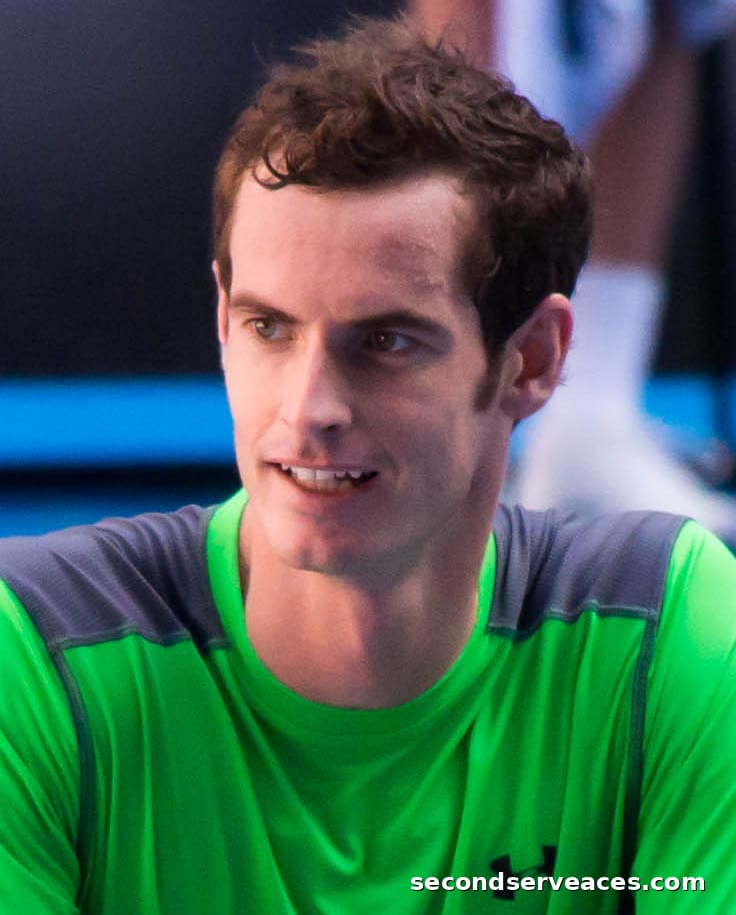
There is a specific, quiet melancholy that attends the retirement of a champion. When Andy Murray, a man whose career was defined by the relentless, often grinding pursuit of perfection—resulting in three Grand Slam titles and two Olympic gold medals—stepped away from professional tennis after the 2024 Olympic Games, the sport lost more than a player. It lost a structural architect of the baseline.
Listen to the Second Serve Podcast
Get our daily AI-synthesized audio briefings and match reviews on the go.
Now, however, the vacuum left by his retirement is being filled with a different kind of labor. Murray has openly expressed an interest in mentoring the next generation, a transition that feels less like a departure and more like a recalibration of his lifelong obsession with the physics of the ball.
The Tactical Breakdown
To understand Murray’s potential efficacy as a coach, one must consider his own history. His career was a study in rally tolerance and extreme court geometry. Murray thrived by forcing opponents into uncomfortable patterns, utilizing his preternatural ability to absorb pace and redirect it with interest. His work with Novak Djokovic—a partnership spanning six months that concluded just before the 2025 French Open—was, in many ways, a meeting of two of the most tactical minds in the history of the sport.
- Rally Tolerance: Like his previous collaborations with Ivan Lendl or Amelie Mauresmo, Murray’s coaching philosophy is rooted in the suppression of unforced errors.
- Positional Awareness: His game was built on shifting court geometry to expose defensive gaps, a skill he likely imparted during his short tenure in the Djokovic camp.
- Pattern Recognition: Drawing from the wisdom of mentors like Pato Alvarez, Murray understands that elite tennis is less about the singular, highlight-reel shot and more about the degradation of the opponent's resolve over a three-hour window.
The Bigger Picture
Murray’s coaching resume is a tapestry of varied influences, from the strategic rigors of Jamie Delgado and Jonas Bjorkman to the analytical depth provided by Miles McClagan and Dani Vallverdu. He has been molded by the best, and his openness to returning to the tour in a guiding capacity suggests a man still deeply invested in the intellectual puzzle of match momentum.
Whether he leans into the structural approaches favored by Alex Corretja or the more modern, data-driven methodologies, his presence on the sidelines would be a significant development for the ATP Tour. As the sport continues to evolve, seeing a former titan like Murray pivot toward the development of young talent—much like the trajectories of coaches who transitioned from elite play to the box—remains one of the most compelling narratives in professional tennis.
What Novak Djokovic Plays With
Head Speed Pro
Luxilon ALU Power 125
Head Prime Tour (12-Pack)
Asics Court FF 3 Novak
Analyze Andy Murray vs. Novak Djokovic
Predict tactical adjustments, momentum swings, and serve strategy options for this match-up using our AI simulator.
The Aces Tactical Panel
This report was curated and edited by Bhaskar Goel. Tactical analysis and technical insights were provided by our specialized panel of expert correspondents.
Julian Price
Senior Tactical Correspondent
Stuffy, pedantic British academic and historian specializing in match momentum and historical context.
Elena Cruz
Director of Analytical Research
Data scientist specializing in court surface physics and movement patterns.
Bhaskar
The Editor & Fan
Passionate tennis player and site editor bringing everyday amateur insights and relatable fan commentary.
Arthur Vance
Senior Existential Analyst
Deep, eccentric, and DFW-inspired. Models court metaphysics, kinetic beauty, and player psychology.
Leo Sterling
High-Performance Consultant
Hard-nosed ex-trainer from Melbourne with a no-nonsense view on tour fitness.