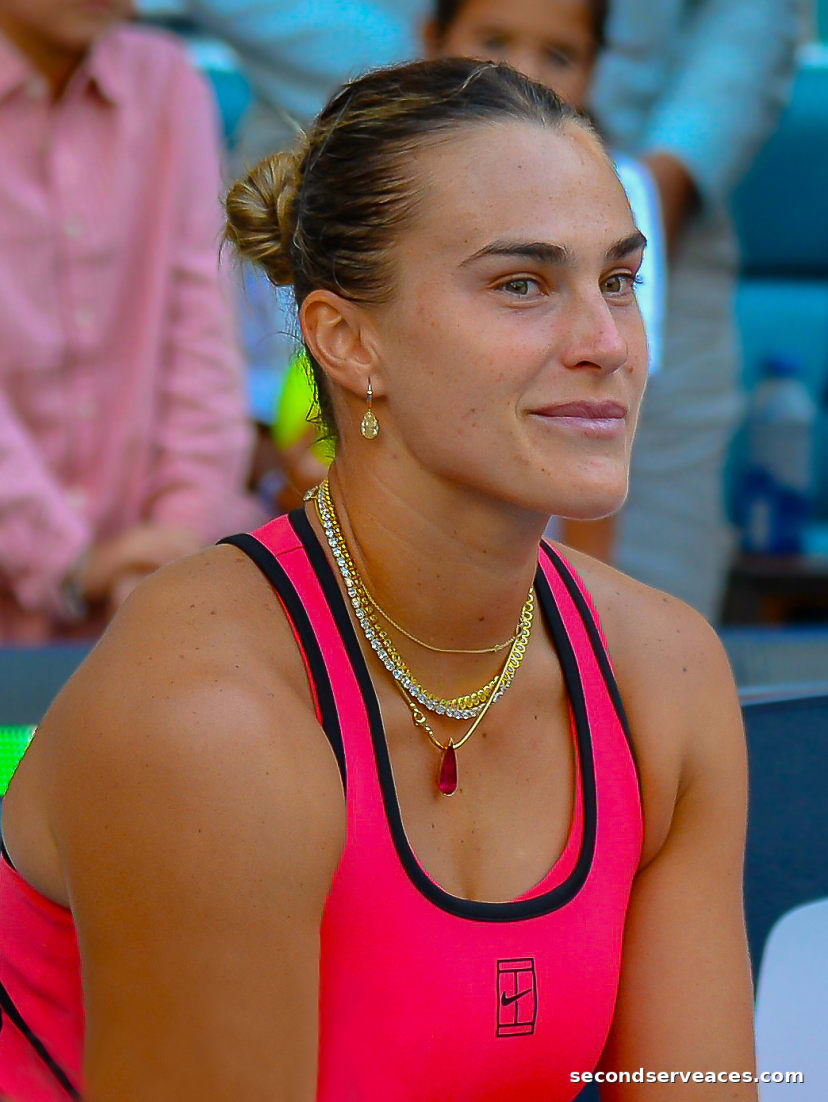
In the evolving landscape of the WTA, where consistency often grapples with the volatility of the surface, Andrea Petkovic has cast a stone into the pond. Her recent assertion—that Jessica Pegula is the favorite to hoist the Venus Rosewater Dish at Wimbledon in 2026—is a curious study in both optimism and the dismissal of historical constraints. Petkovic’s endorsement suggests a faith in the structural evolution of Pegula’s game that defies the veteran American's previous struggles on the manicured lawns of SW19.
Listen to the Second Serve Podcast
Get our daily AI-synthesized audio briefings and match reviews on the go.
The Tactical Breakdown
To evaluate Petkovic’s hypothesis, we must strip away the narrative and look at the geometry of Pegula's movement. Historically, Pegula has relied on a high-percentage, flat-hitting game built from the baseline. This style thrives on hard courts where the bounce is predictable and consistent. However, the grass presents a stark mechanical challenge:
- Rally Tolerance vs. Surface Speed: On grass, the ball skid requires a lower center of gravity. Pegula's ability to take the ball early is a massive asset, but she must manage the unpredictable nature of the surface transition.
- Court Geometry: Pegula’s game lacks the traditional net-rushing frequency often rewarded at Wimbledon. Her success hinges on whether she can utilize lateral movement to open up the angles before the ball sits up for an opponent.
- Serviceward Mobility: To survive at Wimbledon, the second serve must be precise. Pegula must avoid the type of vulnerability that saw Elisabetta Cocciaretto dismantle her in the first round of last year’s tournament.
The Bigger Picture
The skepticism surrounding this prediction is rooted in the archives. Jessica Pegula has yet to navigate beyond the quarterfinal stage at either Wimbledon or Roland-Garros. This is not merely a statistical anomaly; it is a structural hurdle that defines her current standing in the game.
Yet, the 2026 season provides a compelling counter-narrative. Entering the Charleston Open, Pegula held a formidable 19-4 win-loss record, underscored by her victory at a prestigious WTA 1000 event in Dubai earlier this year. This form suggests a player who has reached a level of professional maturity that might allow her to recalibrate her approach to grass-court play.
Petkovic’s vision requires us to ignore the shadow of players like Iga Swiatek, Marketa Vondrousova, and the surging talents of Emma Raducanu or Amanda Anisimova, all of whom possess specialized grass-court skill sets. For Pegula, the path to the 2026 title is not merely about form; it is about rewriting a career narrative that has thus far stopped short of the championship podium.
What Iga Swiatek Plays With
Tecnifibre Tempo 298 Iga
Tecnifibre Razor Code 1.25
Tecnifibre Pro Contact Overgrip
Analyze Andrea Petkovic vs. Iga Swiatek
Predict tactical adjustments, momentum swings, and serve strategy options for this match-up using our AI simulator.
The Aces Tactical Panel
This report was curated and edited by Bhaskar Goel. Tactical analysis and technical insights were provided by our specialized panel of expert correspondents.
Julian Price
Senior Tactical Correspondent
Stuffy, pedantic British academic and historian specializing in match momentum and historical context.
Elena Cruz
Director of Analytical Research
Data scientist specializing in court surface physics and movement patterns.
Bhaskar
The Editor & Fan
Passionate tennis player and site editor bringing everyday amateur insights and relatable fan commentary.
Arthur Vance
Senior Existential Analyst
Deep, eccentric, and DFW-inspired. Models court metaphysics, kinetic beauty, and player psychology.
Leo Sterling
High-Performance Consultant
Hard-nosed ex-trainer from Melbourne with a no-nonsense view on tour fitness.