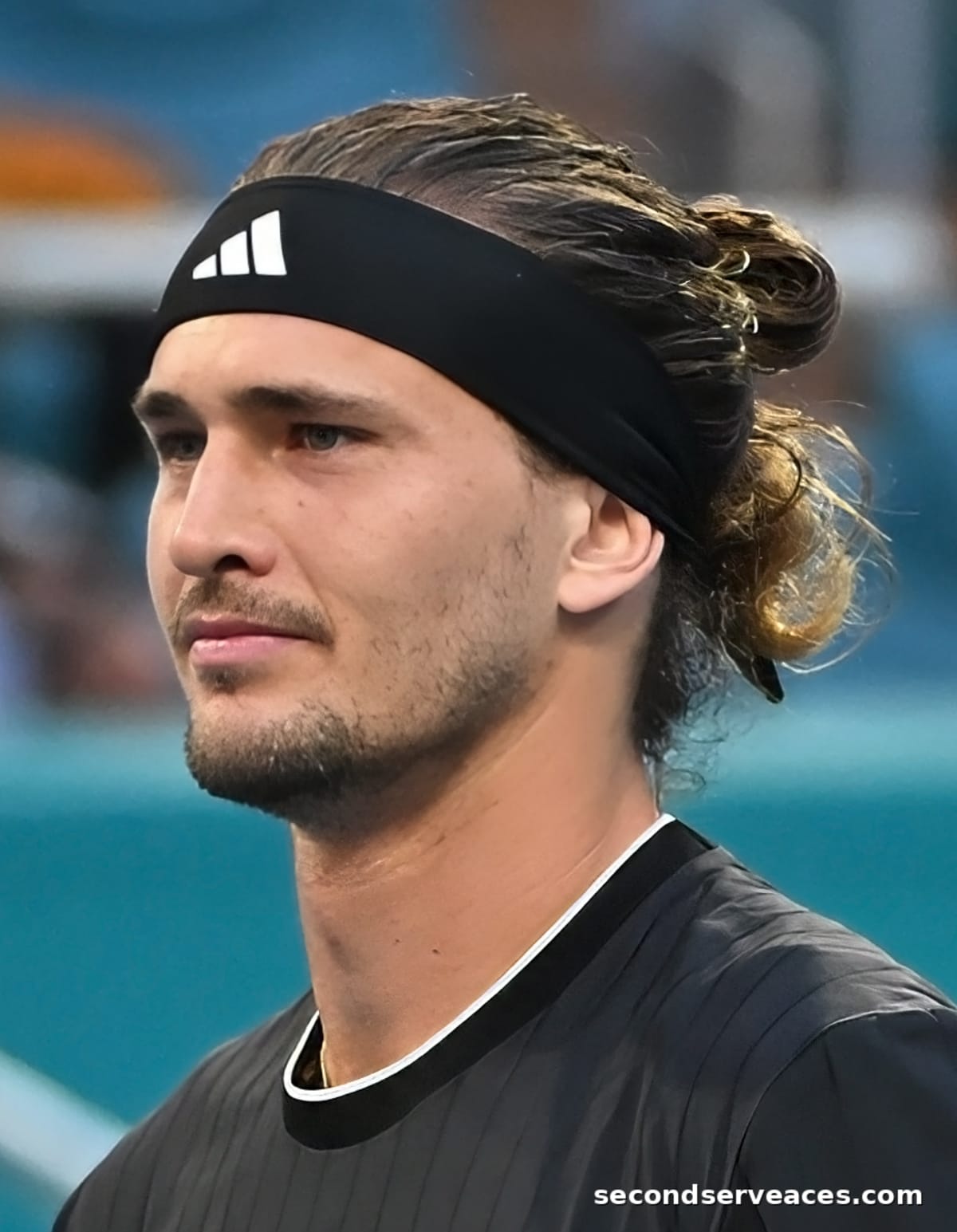
Before a single ball was struck in Flushing Meadows, the complexion of the tournament transformed. Jannik Sinner, the world's top-ranked player according to the official ATP rankings, withdrew from the bracket due to a persistent knee injury. This sudden vacancy at the top of the draw immediately shifted the spotlight and the weight of expectation squarely onto the shoulders of Germany’s Alexander Zverev, who entered the tournament as the heavy favorite.
Listen to the Second Serve Podcast
Get our daily AI-synthesized audio briefings and match reviews on the go.
For Zverev, the favorite tag is never a comfortable cloak; it is a target painted on his chest. With Sinner out and Carlos Alcaraz looming elsewhere, the mental equation altered. Every player in the locker room smelled opportunity, turning what should have been a structured path to the second week into a high-stakes gauntlet where every opponent played with house money.
Overcoming Early-Round Brinkmanship in Back-to-Back Five-Set Trials
The physical toll began immediately. Zverev did not coast through the opening week; instead, he was forced to go the distance in his first two matches. These consecutive five-set battles tested his conditioning and mental resolve, forcing him to find answers when his baseline rhythm faltered. In those grueling early rounds, Zverev had to rely on sheer physical stamina to survive, proving that his preparation was designed for the long haul.
Historically, early-round marathons can break a player's tournament hopes, but Zverev used them to build a calloused exterior. We saw a similar pattern of resilience in our analysis of his team play in the Davis Cup preview. Rather than panicking under pressure, the German stayed anchored to his baseline, wearing down opponents through relentless depth and heavy topspin, refusing to let the early scare derail his championship ambitions.
Locking Down the Baseline to Neutralize Ben Shelton on Championship Sunday
By the time Sunday arrived, Zverev had refined his game to a razor-sharp edge. Facing the explosive power of Ben Shelton in the final, Zverev put on a serving clinic. He refused to give the young American any look at a break point, protecting his own delivery with absolute authority on the fast US Open hard courts. Over the course of the entire championship match, Zverev's formidable serve was broken just once.
This serving dominance allowed Zverev to dictate the tempo from the back of the court. Shelton’s raw athleticism and big-hitting game were systematically dismantled by Zverev’s deep, penetrating groundstrokes. By securing the critical moments without facing constant pressure on his own delivery, Zverev crossed the finish line to secure his monumental triumph, a performance we detailed in our report on Zverev's US Open glory.
Mouratoglou Silences the Detractors by Applauding Zverev's Work Ethic
Despite the victory, critics quickly pointed out that Zverev's path was made easier because he did not have to face Sinner or Carlos Alcaraz. Renowned coach Patrick Mouratoglou quickly took to LinkedIn to shut down those arguments. Mouratoglou emphasized that you can only beat the players put in front of you, praising Zverev’s relentless work ethic and the persistence required to navigate a Grand Slam draw.
Mouratoglou’s defense highlights a fundamental truth about professional tennis: luck is earned through preparation. Winning seven matches over two weeks, regardless of who stands on the other side of the net, is an immense physical feat. Zverev's ability to withstand the early five-set scares and then execute a near-flawless tactical plan in the final is a testament to his elite status on the ATP Tour.
Rivalry Matchup & Player Profiles
| Metric | Alexander Zverev | Jannik Sinner |
|---|---|---|
| Rank | No. 2 | No. 1 |
| Age | 29 | 25 |
| Country | Germany | Italy |
| Height | 1.98 m (6 ft 6 in) | 1.91 m (6 ft 3 in) |
| Handedness | Right-handed | Right-handed |
| Play Style | Aggressive baseliner | Aggressive baseliner |
| Career Titles | 26 | 30 |
Jannik Sinner leads their overall head-to-head rivalry 10-4. In their most recent encounter in the 2026 Wimbledon final, Sinner defeated Zverev in a four-set battle, winning 6-7(7), 7-6(2), 6-3, 6-4. While Zverev did not have to face Sinner in New York due to the Italian's knee injury, their underlying rivalry remains one of the most physical and tactically demanding matchups in modern tennis.
What Alexander Zverev Plays With
Head Gravity Pro
Head Hawk Touch 1.25
Analyze Alexander Zverev vs. Jannik Sinner
Predict tactical adjustments, momentum swings, and serve strategy options for this match-up using our AI simulator.
The Aces Tactical Panel
This report was curated and edited by Bhaskar Goel. Tactical analysis and technical insights were provided by our specialized panel of expert correspondents.
Julian Price
Senior Tactical Correspondent
Stuffy, pedantic British academic and historian specializing in match momentum and historical context.
Elena Cruz
Director of Analytical Research
Data scientist specializing in court surface physics and movement patterns.
Bhaskar
The Editor & Fan
Passionate tennis player and site editor bringing everyday amateur insights and relatable fan commentary.
Arthur Vance
Senior Existential Analyst
Deep, eccentric, and DFW-inspired. Models court metaphysics, kinetic beauty, and player psychology.
Leo Sterling
High-Performance Consultant
Hard-nosed ex-trainer from Melbourne with a no-nonsense view on tour fitness.
Related Reports
Quick Answers
Who did Alexander Zverev defeat to win the US Open final?+
Alexander Zverev defeated Ben Shelton to win the US Open final.
Why did Jannik Sinner withdraw from the US Open?+
Jannik Sinner withdrew from the US Open due to a knee injury.
How many times was Zverev's serve broken during the US Open final?+
Zverev's serve was broken only once by Ben Shelton during the final match.