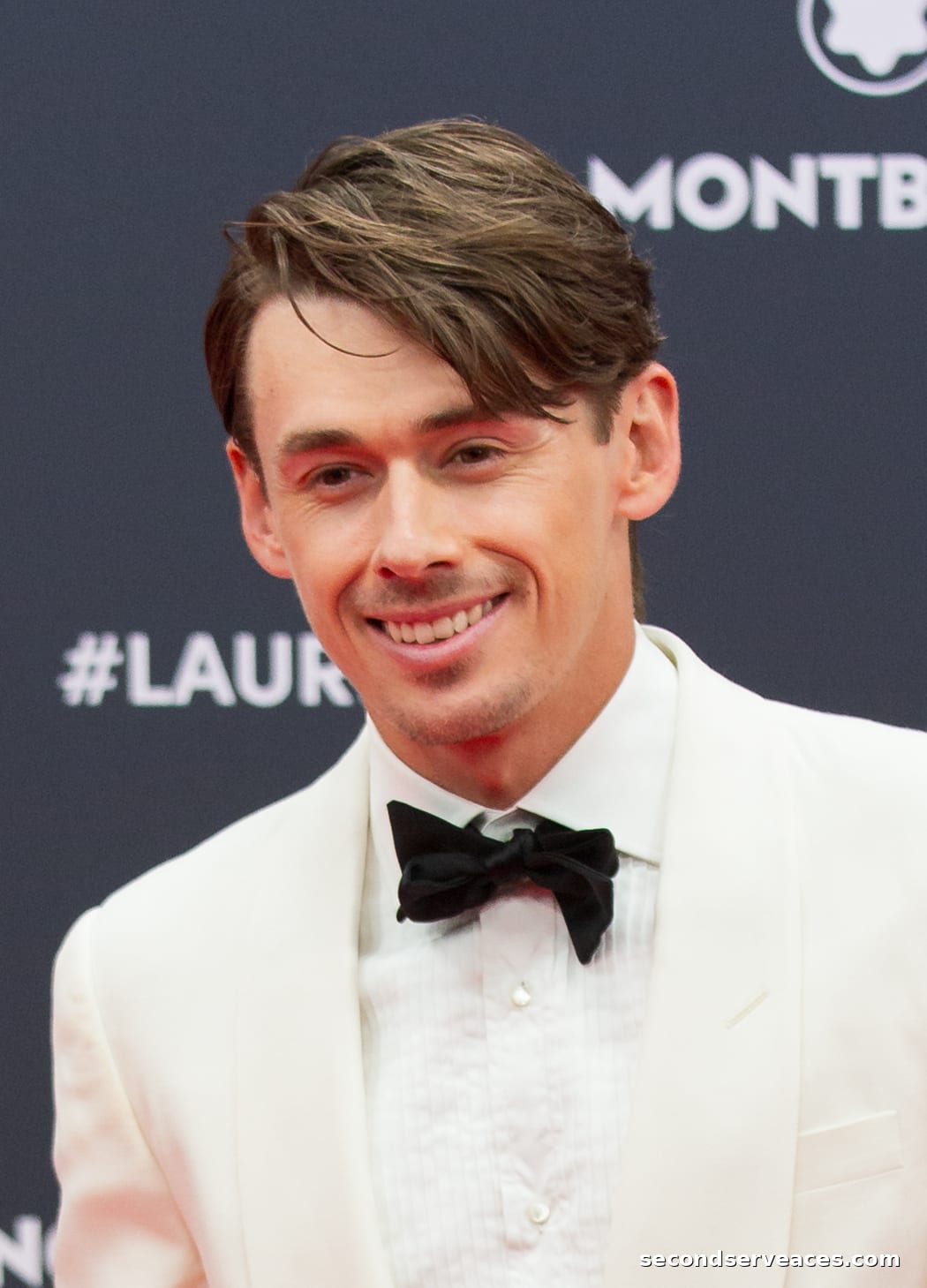
The Beijing Setback and the Early Retirement Decision
Alex de Minaur's physical limits were pushed to the brink during the final of the China Open in Beijing. Facing Novak Djokovic, the Australian counterpuncher attempted to neutralize the Serbian's precise linear depth by hugging the baseline, but the physical toll of defending the outer thirds became too severe. After dropping a grueling first set 7-6(3), De Minaur was forced to retire due to an acute physical injury, cutting short a highly anticipated clash. This retirement was a calculated decision to prevent long-term structural damage to his lower body, which relies heavily on explosive lateral changes of direction.
Listen to the Second Serve Podcast
Get our daily AI-synthesized audio briefings and match reviews on the go.
The match showcased how Djokovic exploits even the slightest hitch in an opponent's movement. As we detailed in our analysis of Novak Djokovic's triumph in Beijing, the Serb's ability to redirect pace down the line forced De Minaur into extreme defensive slides. For a player whose entire tactical identity is built on recovery defense and turning transition points into offensive opportunities, any reduction in foot speed is a competitive death sentence.
Leaving Beijing with a runner-up finish but a compromised physical state, De Minaur's immediate outlook for the penultimate ATP Masters 1000 of the season was shrouded in doubt. The quick turnaround between tournaments offers zero margin for error when dealing with muscular or joint issues. Tennis fans and analysts wondered if the Australian's movement-based game style would be severely compromised under the fast-playing conditions of the Qizhong Forest Sports City Arena.
Five Days of Recovery in the Shanghai Masters Main Draw
Fortune favored the Australian in the opening round of the Shanghai Masters. By receiving a first-round walkover due to his scheduled opponent's late withdrawal, De Minaur bypassed an immediate physical test on court. This administrative break provided him with a crucial five-day window to undergo intensive physiotherapy, targeted recovery protocols, and light hitting sessions to test his physical limits without the pressure of live competition.
In professional tennis, a five-day gap mid-tournament is an absolute luxury, essentially serving as a mini-training block. De Minaur's team focused heavily on restoring elasticity to his lower extremities, ensuring he could sit low in his backhand slice and push off explosively on his return of serve. According to the official ATP Tour website, the rapid courts in Shanghai demand immediate weight transfer and early preparation, making these recovery days invaluable.
Rather than rushing back into a high-intensity baseline battle, De Minaur was able to gradually ramp up his kinetic chain activation. This extended preparation period allowed him to adapt his footwork patterns to the specific friction and bounce of the Shanghai hard courts. With the physical alarm bells silenced, the focus of the Australian camp shifted from survival to tactical calibration.
Adapting the Counterpunching Engine to Shanghai's Fast Hard Courts
Shanghai's courts are historically known to be among the fastest on the tour, featuring a slick surface that rewards flat hitting and low-skidding slices. For a counterpuncher like De Minaur, who currently sits at No. 9 in the ATP rankings, adjusting court positioning is vital. He cannot afford to defend from three meters behind the baseline; instead, he must take the ball on the rise to redirect his opponent's pace.
Tactically, De Minaur's success on this surface depends on his ability to shorten his backswings, particularly on the forehand wing, which can become erratic under time pressure. By taking the ball early, he denies his opponents the time to set up their heavy topspin angles. His flat backhand down the line will be his primary tool to transition from defense to offense, forcing opponents into uncomfortable on-the-run passing shots.
Furthermore, serving efficiency becomes paramount on these fast courts. De Minaur must rely on spot-serving and variation rather than raw power to win cheap points. By slicing his first serve wide to open up the court, he can immediately look to drive the next ball into the open space, minimizing the physical grind of extended baseline rallies.
Renewing the Rivalry with Karen Khachanov
This physical and tactical recalibration leads directly to a highly compelling second-round encounter against Karen Khachanov. The head-to-head history between these two competitors is deadlocked at two victories apiece, representing a classic clash of contrasting styles. Khachanov brings heavy, punishing groundstrokes and a formidable serve, whereas De Minaur counters with elite court coverage and rapid directional changes.
In their previous encounters, the player who controlled the center of the court and dictated the first strike consistently came out on top. Khachanov will look to push De Minaur deep into the corners with high-velocity forehands, hoping to extract short replies. De Minaur, conversely, must use his slice to keep the bounce low, preventing the tall Russian from striking the ball at his preferred shoulder-height strike zone.
This matchup will serve as the ultimate litmus test for De Minaur's recovered movement. If his footwork is sharp enough to defend against Khachanov's heavy artillery, the Australian's transition game should allow him to exploit the Russian's lateral movement vulnerabilities. It is a battle of raw power versus tactical speed, and the winner will likely be decided by who executes their preferred patterns under pressure.
Rivalry Matchup & Player Profiles
| Metric | Alex de Minaur | Novak Djokovic |
|---|---|---|
| Rank | No. 9 | No. 8 |
| Age | 27 | 39 |
| Country | Australia | Serbia |
| Height | 1.83 m (6 ft 0 in) | 1.88 m (6 ft 2 in) |
| Handedness | Right-handed | Right-handed |
| Play Style | Counterpuncher | All-court counterpuncher |
| Career Titles | 11 | 102 |
Novak Djokovic leads the head-to-head rivalry 4-1 against Alex de Minaur. Their competitive history highlights the tactical chess match between two of the game's elite movers. In their most recent matchup at the 2026 China Open final, Djokovic took the opening set 7-6(3) before De Minaur was forced to retire due to an injury, illustrating how physically demanding their baseline exchanges are.
What Novak Djokovic Plays With
Head Speed Pro
Luxilon ALU Power 125
Head Prime Tour (12-Pack)
Asics Court FF 3 Novak
Analyze Alex de Minaur vs. Novak Djokovic
Predict tactical adjustments, momentum swings, and serve strategy options for this match-up using our AI simulator.
The Aces Tactical Panel
This report was curated and edited by Bhaskar Goel. Tactical analysis and technical insights were provided by our specialized panel of expert correspondents.
Julian Price
Senior Tactical Correspondent
Stuffy, pedantic British academic and historian specializing in match momentum and historical context.
Elena Cruz
Director of Analytical Research
Data scientist specializing in court surface physics and movement patterns.
Bhaskar
The Editor & Fan
Passionate tennis player and site editor bringing everyday amateur insights and relatable fan commentary.
Arthur Vance
Senior Existential Analyst
Deep, eccentric, and DFW-inspired. Models court metaphysics, kinetic beauty, and player psychology.
Leo Sterling
High-Performance Consultant
Hard-nosed ex-trainer from Melbourne with a no-nonsense view on tour fitness.
Related Reports
Quick Answers
Why did Alex de Minaur retire from the China Open final against Novak Djokovic?+
Alex de Minaur retired from the Beijing final after losing the first set 7-6(3) due to an acute physical injury, choosing to protect his lower body from long-term damage.
How did Alex de Minaur get five days of recovery before his first Shanghai match?+
De Minaur received a walkover in the opening round of the Shanghai Masters when his opponent withdrew before their match, giving him a valuable five-day recovery window.
What is the head-to-head record between Alex de Minaur and Karen Khachanov?+
Alex de Minaur and Karen Khachanov are currently tied in their head-to-head rivalry, with each player having won two matches apiece.