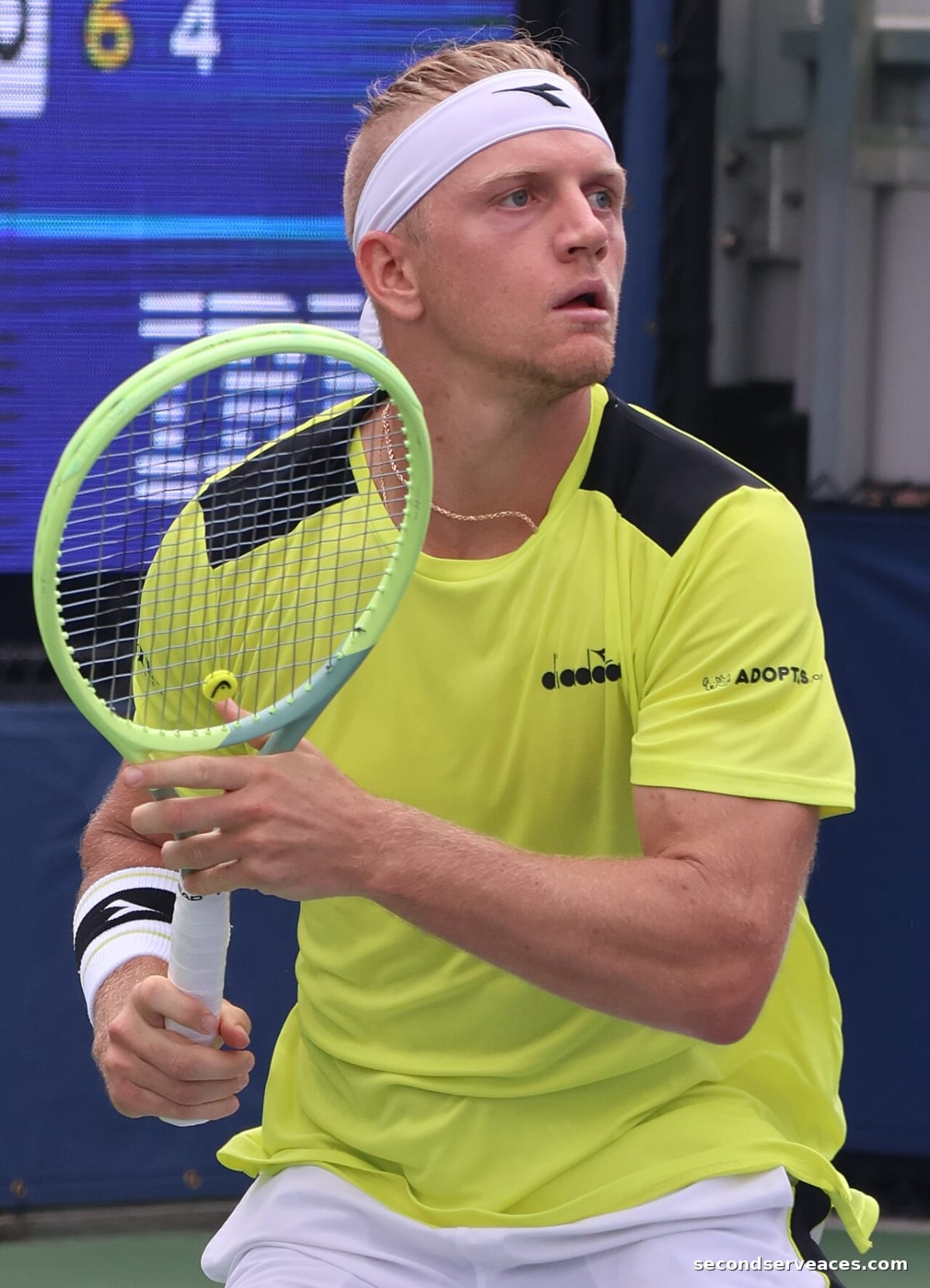
To watch Alejandro Davidovich Fokina play tennis is to witness a human body in a state of perpetual, high-velocity friction against the court. In the final of the Chengdu Open, the Spaniard completed a remarkable comeback from a three-and-a-half-month injury layoff, defeating Poland's Hubert Hurkacz 6-4, 7-6. The match was not merely a contest of tennis balls hit over a net, but a physical thesis on how to neutralize one of the most imposing serves in the modern game.
Listen to the Second Serve Podcast
Get our daily AI-synthesized audio briefings and match reviews on the go.
The Three-Month Exile and the Rebirth of Fokina's Baseline Craft
For one hundred and five days, Davidovich Fokina was sidelined, his racket gathering dust while his peers marched through the European summer. An injury layoff of this duration does strange things to a professional athlete's internal clock. The micro-adjustments required to time a 130 mph serve cannot be replicated on a practice court or in a rehabilitation gym; they require the cold, unforgiving reality of live competition.
Upon his return in Sichuan, the Spaniard looked remarkably unrusted, navigating a tricky draw with the sort of improvisational brilliance that has defined his career. His semifinal clash against Nikolos Basilashvili—a grueling 4-6, 6-4, 6-3 victory—served as the ultimate physical trial, proving his body could withstand the violent lateral shifts of hard-court tennis.
By the time he stepped onto the court for the final, Fokina had shed the tentative movements that often plague returning players. Instead, his footwork was sharp, his weight transfer immaculate, and his trademark drop shots executed with the delicate, almost casual touch of a surgeon.
Dissecting the Chengdu Final: How the Spaniard Defused the Polish Serve
Hubert Hurkacz presents a unique physical problem on a tennis court, standing at a towering 1.96 meters with a serving motion that feels less like a stroke and more like a catapult. To break him requires a returner to stand deep, absorb massive kinetic energy, and direct the ball back with interest. Fokina did this by shortening his backswing, essentially using Hurkacz’s own pace against him.
In the opening set, Fokina found his rhythm early, securing a crucial break of serve in the fifth game. He did this by targeting Hurkacz's forehand wing on the run, forcing the taller man to bend low—a physical posture that Hurkacz naturally dislikes. The Spaniard consolidated the break with ease, taking the first set 6-4.
The second set was a much tighter affair, characterized by Hurkacz finding his serving rhythm and dialing up the pressure on Fokina's service games. Yet, the Spaniard refused to blink, showing a mental resilience that has sometimes eluded him in past seasons. He defended his baseline like a man possessed, refusing to yield an inch of territory.
Statistical Truths and the Crucial Break Point Exchanges
The raw numbers of this final tell a story of efficiency under extreme duress. Fokina saved three of the four break points he faced, a statistic that highlights his composure when backed into a corner. On his own first-serve points, the Spaniard converted a highly respectable 74%, preventing Hurkacz from establishing any real momentum during return games.
Conversely, Hurkacz struggled to find his usual efficiency on his second serve, winning just 48% of those points. This vulnerability allowed Fokina to step up inside the baseline and dictate play. While Hurkacz fired 12 aces throughout the match, Fokina's ability to put the ball back in play during critical deuce games ultimately wore the Pole down, leading to the dramatic second-set tiebreak.
In that tiebreak, Fokina's variety proved decisive. Leading 8-7, he executed a delicate backhand slice that stayed low, forcing Hurkacz into a netting error to seal the match. It was a tactical masterstroke that showcased Fokina's complete tennis vocabulary, earning him his second career singles title.
From Sichuan to Tokyo: The Looming Shadow of the Asian Swing
With the Chengdu trophy secured, Fokina's attention immediately shifts to the next leg of the tour. He is scheduled to face the powerful Matteo Berrettini in the opening round of the Japan Open in Tokyo. This transition from the humid air of Chengdu to the fast-playing courts of Ariake Coliseum will test his physical recovery to the limit.
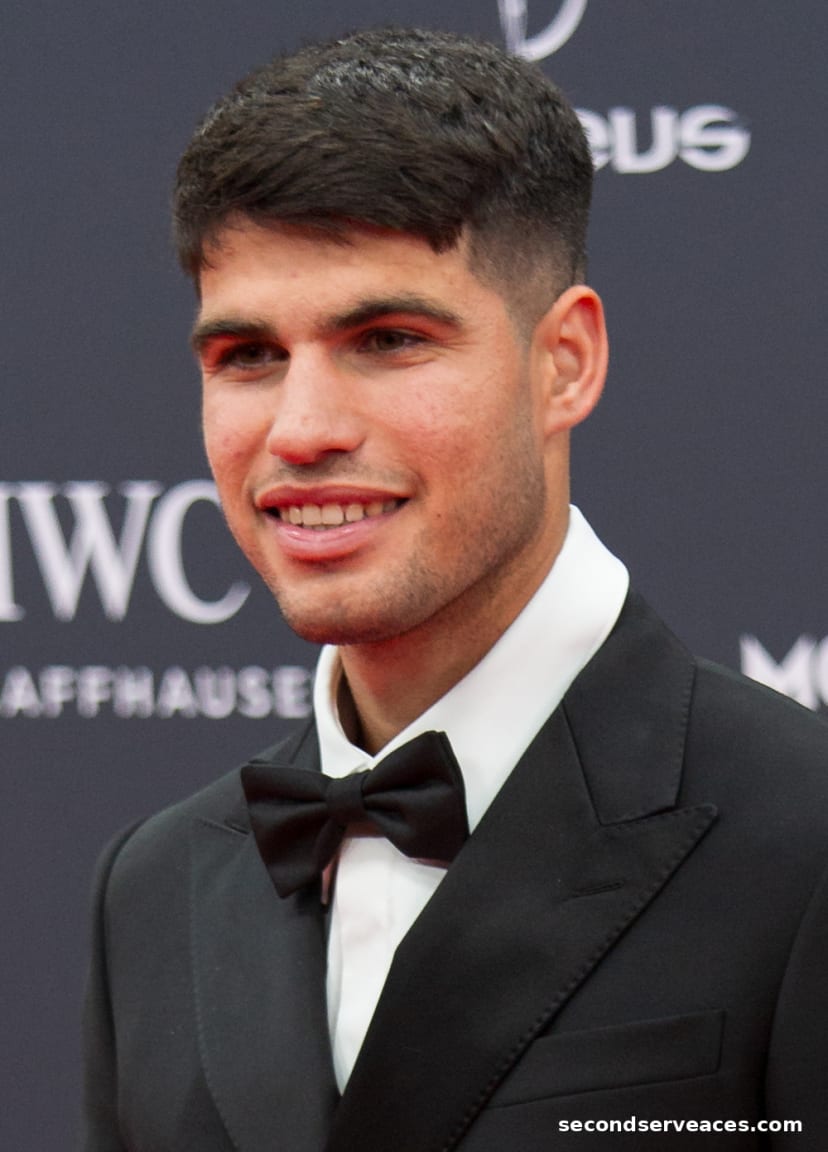
The Tokyo draw is historically brutal, and this year is no exception. Carlos Alcaraz enters as the defending champion, aiming to become the first man to defend the Japan Open crown since Pete Sampras accomplished the feat back in 1994. The presence of such elite competitors means Fokina cannot afford any post-championship hangover, especially as Alcaraz Leads ATP Tokyo as Yonex Tech Takes Center Stage.
Yet, the confidence gained from this run in China cannot be overstated. Rising to number 26 in the live ATP rankings, Fokina has re-established himself as a dangerous floater in any draw. If his physical fitness holds, his unique brand of creative baseline play will make him a player nobody wants to face in the coming weeks.
Rivalry Matchup & Player Profiles
| Metric | Alejandro Davidovich Fokina | Hubert Hurkacz |
|---|---|---|
| Rank | 26 | 39 |
| Country | Spain | Poland |
| Age | 27 | 29 |
| Height | 1.83 m (6 ft 0 in) | 1.96 m (6 ft 5 in) |
| Handedness | Right-handed | Right-handed |
| Play Style | Aggressive baseliner with heavy drop shots | Big-serving all-court player |
| Career Titles | 2 ATP Singles titles | 8 ATP Singles titles |
Following this final, Alejandro Davidovich Fokina extends his head-to-head lead over Hubert Hurkacz to 5-2. This matchup has historically favored the Spaniard, whose ability to absorb and redirect heavy pace neutralizes Hurkacz's serving advantages. Despite Hurkacz holding more career titles, Fokina's tactical flexibility on hard courts continues to present a major stylistic hurdle for the Polish star.
Their rivalry highlights the contrasting philosophies of modern tennis: Hurkacz's vertical, serve-dominated geometry versus Fokina's horizontal, variety-rich baseline craft. This victory in Chengdu solidifies Fokina's mental edge in their matchup history and sets a strong foundation for his remaining campaigns this season.
What Carlos Alcaraz Plays With
Babolat Pure Aero 98
Babolat RPM Blast 1.30
Babolat VS Original (12-Pack)
Nike Vapor Pro 2
Analyze Alejandro Davidovich Fokina vs. Hubert Hurkacz
Predict tactical adjustments, momentum swings, and serve strategy options for this match-up using our AI simulator.
The Aces Tactical Panel
This report was curated and edited by Bhaskar Goel. Tactical analysis and technical insights were provided by our specialized panel of expert correspondents.
Julian Price
Senior Tactical Correspondent
Stuffy, pedantic British academic and historian specializing in match momentum and historical context.
Elena Cruz
Director of Analytical Research
Data scientist specializing in court surface physics and movement patterns.
Bhaskar
The Editor & Fan
Passionate tennis player and site editor bringing everyday amateur insights and relatable fan commentary.
Arthur Vance
Senior Existential Analyst
Deep, eccentric, and DFW-inspired. Models court metaphysics, kinetic beauty, and player psychology.
Leo Sterling
High-Performance Consultant
Hard-nosed ex-trainer from Melbourne with a no-nonsense view on tour fitness.
Related Reports
Quick Answers
What was the final score of the Chengdu Open final between Fokina and Hurkacz?+
Alejandro Davidovich Fokina defeated Hubert Hurkacz 6-4, 7-6 to claim the title.
How long was Alejandro Davidovich Fokina sidelined before the Chengdu Open?+
Fokina was returning from a three-and-a-half-month injury layoff prior to playing the tournament.
Who is Alejandro Davidovich Fokina scheduled to play next after his Chengdu victory?+
Fokina is scheduled to play Matteo Berrettini in the opening round of the Japan Open in Tokyo.