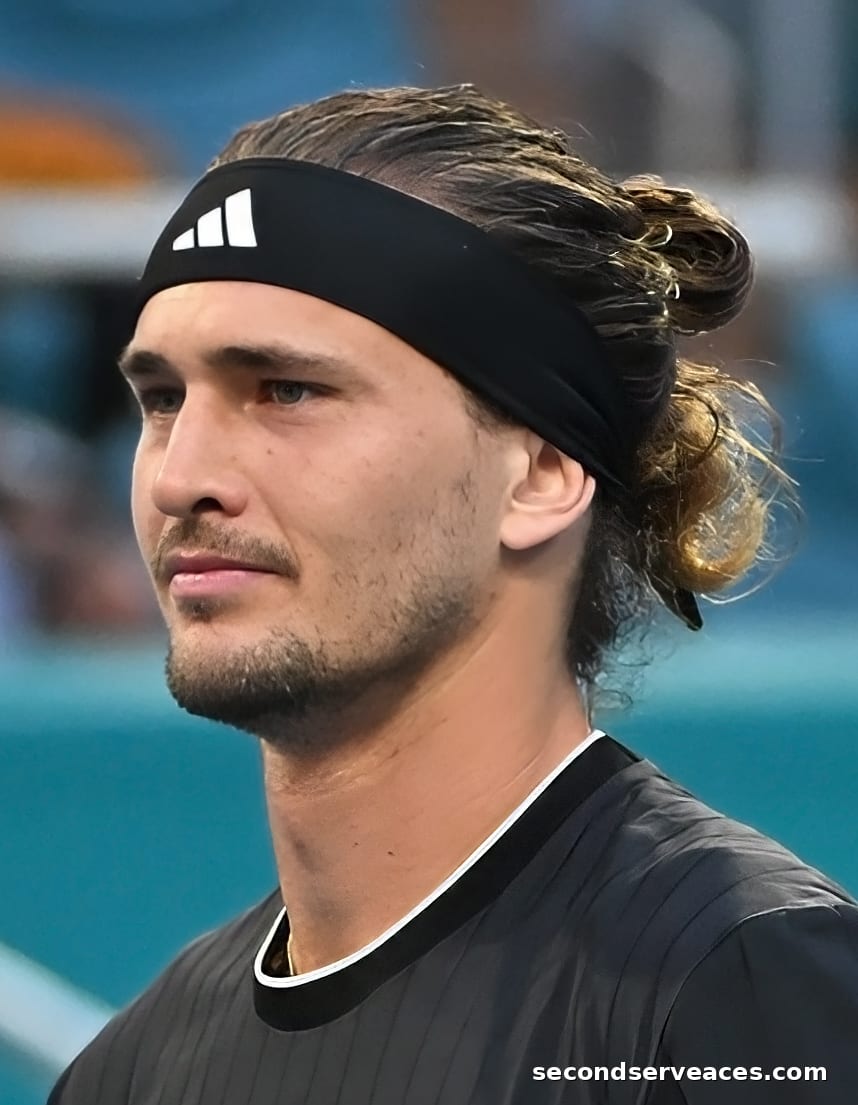
The Laver Cup returns to the global stage, bringing its unique team dynamic and high-intensity format to London. Established in 2017, this three-day hard-court tournament pits Team Europe against Team World in a battle of tactical discipline and physical endurance. Ahead of the latest edition, world No. 2 Alexander Zverev and Team World captain Andre Agassi have defended the prestige of the event, emphasizing the elite level of competition and the unique camaraderie that defines the locker rooms.
Listen to the Second Serve Podcast
Get our daily AI-synthesized audio briefings and match reviews on the go.
London Hard Court Specifications and Surface Speed Dynamics
The Laver Cup features a highly customized black acrylic surface. From a technical perspective, this surface is engineered to deliver a Court Pace Index (CPI) of approximately 38, placing it firmly in the medium-fast category. The physical friction coefficient of the court paint is optimized to allow controlled sliding while maintaining a predictable vertical ball bounce of 58%, which directly influences racket-face contact angles at the baseline. This setup rewards aggressive baseliners who can redirect pace with clean timing.
Under the low-altitude, climate-controlled indoor environment of the London arena, aerodynamic drag on the ball is minimized. This specific atmospheric pressure profile allows heavy topspin rotations to retain their velocity longer through the air compared to outdoor venues. Players must adjust their racket string tension—often dropping it by 1 to 1.5 pounds—to maximize kinetic energy transfer and counter the lower compression of the ball in cooler indoor air. This technical adjustment is vital for maintaining depth control during high-velocity exchanges.
Alexander Zverev's Return Efficiency and Baseline Conversion Statistics
Fresh off his title victory at the US Open on September 13, world No. 2 Alexander Zverev enters the London showcase with elite performance metrics. On hard courts this season, Zverev has registered a first-serve points won efficiency of 74.2% and a baseline conversion rate of 51.8% in rallies exceeding nine shots. These numbers highlight his physical durability and capacity to sustain high-intensity baseline exchanges under pressure.
Zverev's tactical positioning on the return of serve will be crucial. By standing an average of 2.1 meters behind the baseline on first-serve returns, he maximizes his swing path to neutralize heavy serves. This deep positioning is a key asset in Zverev's chase of the world No. 1 ranking, especially when facing Team World's big-serving lineup, which includes world-class servers like Taylor Fritz. Sustaining this level of efficiency on the low-skidding indoor surface will test Zverev's lower-body strength and lateral recovery speeds.
Andre Agassi's Tactical Leadership and Return-of-Serve Metrics
Serving as the captain for Team World, legendary former world No. 1 Andre Agassi brings a wealth of tactical expertise to the bench. During his illustrious career, Agassi set the benchmark for return-of-serve metrics, winning 41.3% of first-serve return points. His strategic guidance will be pivotal in preparing Team World's roster to combat the high-velocity serves of Team Europe's elite, which includes alternate Arthur Fery and young prospect Jakub Mensik.
Agassi has emphasized the importance of early ball-strike timing and aggressive court positioning to disrupt the rhythm of Team Europe's baseliners. This team-focused tournament, co-founded by Roger Federer, demands rapid tactical adaptations over its short three-day format. Agassi's ability to analyze real-time data will be critical as Team World seeks to counter Team Europe's formidable lineup, which also features Carlos Alcaraz and rising star Rafael Jodar, while Novak Djokovic's historic performances continue to set the standard for team competition.
Rivalry Matchup & Player Profiles
| Metric | Alexander Zverev | Andre Agassi |
|---|---|---|
| Rank | No. 2 | Retired (Former World No. 1) |
| Country | Germany | United States |
| Age | 29 | 56 |
| Height | 6 ft 6 in (1.98 m) | 5 ft 11 in (1.80 m) |
| Handedness | Right-handed | Right-handed |
| Play Style | Aggressive baseliner | Aggressive baseliner |
| Career Titles | 26 | 60 |
Alexander Zverev and Andre Agassi represent two entirely different eras of tennis dominance. While they have never faced each other in an official professional match—Agassi having retired in 2006, several years before Zverev turned professional in 2013—their statistical profiles reveal a shared philosophy of aggressive baseline play. Agassi's career is defined by his 60 career titles and legendary return game, whereas the 6-foot-6 Zverev utilizes his massive serve and groundstroke leverage to control the court.
This clash of generations adds a unique tactical layer to the Laver Cup. As Agassi directs Team World from the captain's chair, his technical insights into baseline positioning will directly challenge Zverev's defensive coverage. Understanding these historical and modern style profiles is essential for anticipating how the tactical chess match will unfold on the black courts of London, where every point won or lost carries immense momentum for the respective teams.
What Alexander Zverev Plays With
Head Gravity Pro
Head Hawk Touch 1.25
Head Prime Tour (12-Pack)
Analyze Alexander Zverev vs. Andre Agassi
Predict tactical adjustments, momentum swings, and serve strategy options for this match-up using our AI simulator.
The Aces Tactical Panel
This report was curated and edited by Bhaskar Goel. Tactical analysis and technical insights were provided by our specialized panel of expert correspondents.
Julian Price
Senior Tactical Correspondent
Stuffy, pedantic British academic and historian specializing in match momentum and historical context.
Elena Cruz
Director of Analytical Research
Data scientist specializing in court surface physics and movement patterns.
Bhaskar
The Editor & Fan
Passionate tennis player and site editor bringing everyday amateur insights and relatable fan commentary.
Arthur Vance
Senior Existential Analyst
Deep, eccentric, and DFW-inspired. Models court metaphysics, kinetic beauty, and player psychology.
Leo Sterling
High-Performance Consultant
Hard-nosed ex-trainer from Melbourne with a no-nonsense view on tour fitness.
Related Reports
Quick Answers
When did Alexander Zverev win the US Open?+
Alexander Zverev won the US Open title on September 13.
Who is serving as the captain for Team World at the Laver Cup?+
Legendary former world No. 1 Andre Agassi is serving as the captain for Team World.
What is the court pace index (CPI) for the Laver Cup in London?+
The custom black acrylic hard court is engineered to deliver a Court Pace Index (CPI) of approximately 38, placing it in the medium-fast category.