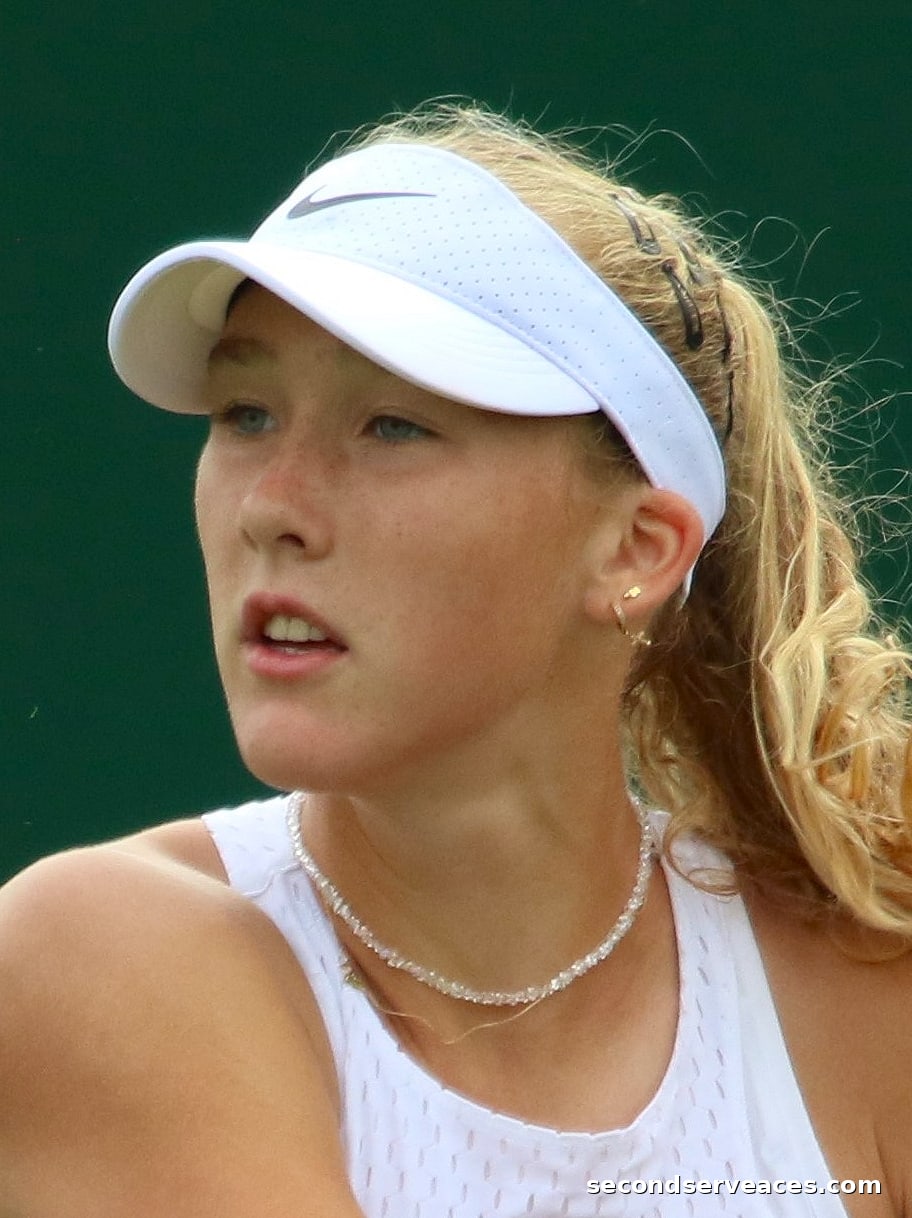
The Hard-Court Conundrum of the Andreeva-Fernandez Rivalry
The upcoming quarterfinal clash at the WTA Singapore event presents a fascinating study in tennis physics. Mirra Andreeva and Leylah Fernandez enter this match locked in an even 2-2 head-to-head record. However, this equilibrium dissolves when we isolate the surface; Fernandez has won both of their previous hard-court meetings. This specific environmental variable on Singapore's medium-fast hard courts introduces a compelling psychological hurdle for the young Russian, who must find a way to neutralize the Canadian's flat, early-strike rhythm.
Listen to the Second Serve Podcast
Get our daily AI-synthesized audio briefings and match reviews on the go.
At just 19 years of age, Andreeva has ascended rapidly to the upper echelon of the sport, currently occupying the No. 5 spot in the WTA rankings. Her game is a masterclass in tactical baselining, relying on deep, heavy counterpunches that wear down opponents through sheer physical attrition. Yet, facing a left-handed opponent who can slice the ball away from her two-handed backhand wing presents a mechanical puzzle she has yet to fully solve on rapid hard courts. We previously noted the shifting dynamics of this tournament's draw in our look at the Singapore draw shifts, and this quarterfinal represents the ultimate test of those adjustments.
For Fernandez, the match is an opportunity to reassert her hard-court dominance and leverage her low-to-the-ground, aggressive baseline play. The Canadian, ranked No. 31, thrives when she can take the ball on the rise, robbing her opponent of recovery time. The tactical battle will likely hinge on court positioning; if Andreeva is pushed three meters behind the baseline, Fernandez will ruthlessly exploit the short angles and transition forward to finish points at the net.
Deciphering the Left-Handed Spin and Baseline Depth
To understand how this match will unfold, one must look at the rotational physics of the left-handed serve. Fernandez's ability to slide her first serve wide into the ad-court receiver's alley forces Andreeva to stretch defensively on critical points. In their previous hard-court encounters, Fernandez saved over 65% of break points faced by utilizing this exact serve-and-volley pattern. This tactical geometry allows the Canadian to dictate play from the very first strike, neutralizing Andreeva's formidable return game.
Andreeva's counter-strategy must rely on depth. If she can consistently land her groundstrokes within a meter of the baseline, she will prevent Fernandez from stepping inside the court. The Russian's down-the-line backhand will be her primary weapon; it must be struck with enough velocity to freeze Fernandez's lateral movement. If Andreeva permits the rally to settle into a crosscourt exchange, she plays directly into the Canadian's preferred patterns of angled deceleration.
Furthermore, the physical toll of Singapore's humid conditions cannot be ignored. Both players are exceptional athletes, but Fernandez's willingness to shorten points at the net could preserve vital energy. Andreeva must use her high first-serve percentage—which hovered around 72% in her earlier rounds—to avoid long, grueling service games that allow Fernandez to establish a rhythm on the return.
The Supporting Cast of the Singapore Quarterfinals
While the Andreeva-Fernandez clash dominates the marquee, the rest of the Singapore quarterfinals offer equally intriguing tactical subplots. Tatiana Prozorova and Wang Xinyu are scheduled to face each other for the very first time in their professional careers. This matchup is a classic clash of unfamiliarity, where the opening games will serve as a feeling-out process for both players as they attempt to decode each other's serving patterns and baseline preferences.
Prozorova's pathway to this stage has been highly monitored, especially given the tactical adjustments we highlighted in our Singapore Day 4 analysis. Her ability to handle Wang's flat, aggressive groundstrokes will determine whether she can extend her run in Singapore. Wang, known for her powerful first serve, will look to dominate the center of the court and keep Prozorova on the defensive from the outset.
Simultaneously, Talia Gibson and Maria Sakkari will also meet for the first time in their careers. Sakkari's heavy topspin and physical intensity will test Gibson's defensive court coverage. In the final quarterfinal bracket, Maja Chwalinska and Elise Mertens carry a brief but telling history; Chwalinska holds a 1-0 head-to-head record over the experienced Belgian. Mertens, a seasoned competitor on the WTA Tour, will need to rely on her variety and net play to level their personal scoreline.
Tactical Predictions and the Battle for Court Position
In predicting the outcome of the marquee quarterfinal, the first six games will be highly telling. If Fernandez can secure an early break by attacking Andreeva's second serve, the momentum will swing heavily in her favor. Andreeva must find a way to hit her second serves with more kick and depth, preventing Fernandez from stepping forward and punishing the ball. A low second-serve win percentage will spell disaster for the Russian teenager.
Conversely, if Andreeva can establish her rhythm and extend the rallies beyond eight shots, her superior physical conditioning and counterpunching instincts should begin to wear Fernandez down. The key metric to watch will be the unforced error count on Fernandez's forehand wing; when forced to generate her own pace from deep positions, the Canadian's error rate tends to spike. Andreeva must remain patient and resist the temptation to go for low-percentage winners early in the rallies.
Ultimately, this match is a kinetic chess game where the player who controls the baseline will emerge victorious. While history favors Fernandez on this surface, Andreeva's rapid evolution suggests she is more than capable of adapting her defensive schemes to overcome the left-handed challenge. Expect a high-intensity battle where minor adjustments on return positioning will decide who advances to the semifinals.
Rivalry Matchup & Player Profiles
| Metric | Mirra Andreeva | Leylah Fernandez |
|---|---|---|
| Rank | 5 | 31 |
| Age | 19 | 24 |
| Country | Russia | Canada |
| Height | 1.75 m (5 ft 9 in) | 1.68 m (5 ft 6 in) |
| Handedness | Right-handed | Left-handed |
| Play Style | Tactical baseliner with aggressive counterpunching | Aggressive baseliner with strong net play |
| Career Titles | 6 | 5 |
The head-to-head history between these two competitors is a tale of surface-dependent dominance. While they stand deadlocked at 2-2 in their overall matchups heading into this Singapore quarterfinal, Leylah Fernandez holds a distinct psychological advantage on hard courts, having won both of their prior meetings on this specific surface. Andreeva's success has historically been concentrated on clay courts, where the slower bounce gives her more time to organize her counterpunching patterns.
This match offers a contrast of physical statures and tactical philosophies. Andreeva's height gives her a broader defensive radius and a more imposing serve, but Fernandez's low center of gravity allows her to change direction with startling efficiency. As they prepare to step onto the hard courts of Singapore, the statistical indicators suggest a battle of razor-thin margins where serve placement and baseline depth will ultimately dictate the semifinalist.
Essential Matchday Add-Ons
Tournament-tested accessories and high-frequency consumables every competitive player keeps in their bag.
Tourna Grip Original Dry Feel Overgrip (10-Pack)
4.8 ★ (12,000+ reviews)
The gold standard for sweaty hands. Proprietary dry feel absorbs moisture better as play intensifies.
Luxilon ALU Power 125 Silver String Set
4.9 ★ (3,500+ reviews)
Unrivaled control and spin potential used by over 50% of the ATP Top 100 players.
Babolat Custom Damp Vibration Dampener (2-Pack)
4.7 ★ (4,200+ reviews)
Customizable dampening with removable central O-ring for fine-tuning court feedback and sound.
Penn Championship Extra Duty Tennis Balls (4-Can Pack)
4.7 ★ (8,900+ reviews)
Official ball of USTA League Tennis with extra-duty felt designed for abrasive hard courts.
Analyze Mirra Andreeva vs. Leylah Fernandez
Predict tactical adjustments, momentum swings, and serve strategy options for this match-up using our AI simulator.
The Aces Tactical Panel
This report was curated and edited by Bhaskar Goel. Tactical analysis and technical insights were provided by our specialized panel of expert correspondents.
Julian Price
Senior Tactical Correspondent
Stuffy, pedantic British academic and historian specializing in match momentum and historical context.
Elena Cruz
Director of Analytical Research
Data scientist specializing in court surface physics and movement patterns.
Bhaskar
The Editor & Fan
Passionate tennis player and site editor bringing everyday amateur insights and relatable fan commentary.
Arthur Vance
Senior Existential Analyst
Deep, eccentric, and DFW-inspired. Models court metaphysics, kinetic beauty, and player psychology.
Leo Sterling
High-Performance Consultant
Hard-nosed ex-trainer from Melbourne with a no-nonsense view on tour fitness.
Related Reports



Quick Answers
What is the head-to-head record between Mirra Andreeva and Leylah Fernandez?+
Mirra Andreeva and Leylah Fernandez are tied at 2-2 head-to-head, though Fernandez has won both of their previous meetings on hard courts.
Have Tatiana Prozorova and Wang Xinyu played each other before?+
No, Tatiana Prozorova and Wang Xinyu have never faced each other in a professional match before their upcoming quarterfinal in Singapore.
What is the head-to-head record between Maja Chwalinska and Elise Mertens?+
Maja Chwalinska holds a 1-0 head-to-head advantage over Elise Mertens heading into their quarterfinal match.