Indian Wells Day 4: Rybakina and the Geometry of Expectation
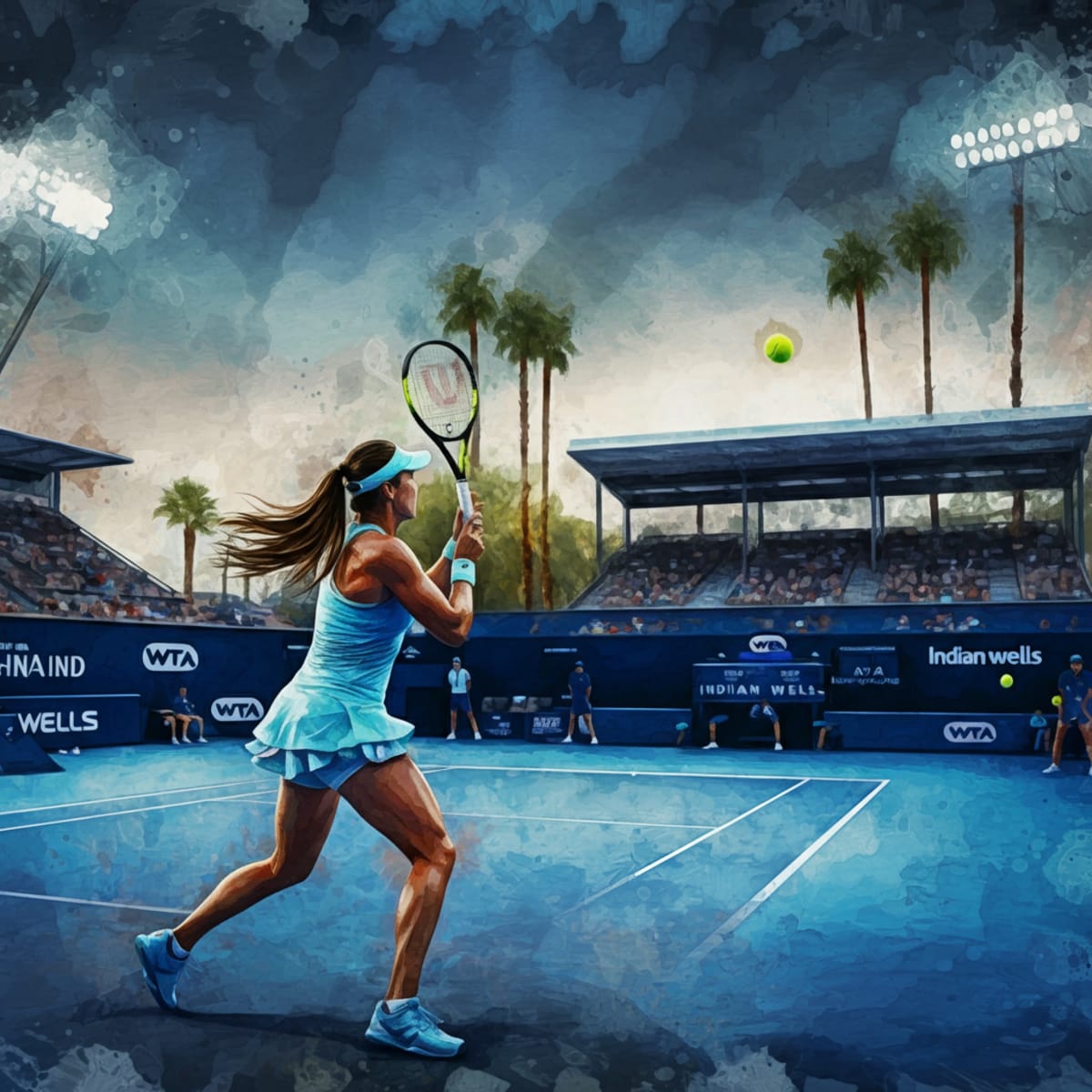
The sun beats down on Indian Wells, baking the hard courts into a shimmering expanse where dreams are either realized or cruelly deferred. Day 4 of the WTA tournament promises a compelling slate of matches, each a miniature study in contrasting styles and fluctuating fortunes. From Elena Rybakina, the 2026 Australian Open champion, navigating the early rounds, to Jelena Ostapenko’s inherent volatility, the narratives are as rich and complex as the desert landscape itself. We delve into a few key matchups, attempting to discern the subtle vectors that will determine success.
Listen to the Second Serve Podcast
Get our daily AI-synthesized audio briefings and match reviews on the go.
The Head-to-Head and the How-To
On paper, some matchups appear straightforward, preordained even. But tennis, as we know, rarely adheres to neat, deterministic models. It's a chaotic system, a dance between order and entropy, where a single errant gust of wind or a momentary lapse in concentration can alter the entire trajectory of a match.
Rybakina vs. Baptiste: A Study in Power
- Elena Rybakina enters with a 1-0 head-to-head record against Hailey Baptiste, a slender thread of historical advantage.
- Rybakina, we must remind ourselves, is the 2026 Australian Open champion, a fact that carries its own psychological weight.
Muchova vs. Bondar: An Uncharted Course
- Karolina Muchova and Anna Bondar will meet for the first time, a blank canvas upon which to paint their respective strategies.
- Muchova, fresh off a recent triumph at the Qatar Open, brings momentum and confidence.
Ostapenko vs. Volynets: Controlled Chaos
A classic contrast in styles. Ostapenko, the high-risk aggressor, versus Volynets, a more measured, defensive player. This will come down to Ostapenko's ability to maintain control of her own explosive game and dictating the tempo of the match.
Navarro vs. Kartal: Familiar Foes
- Emma Navarro holds a 2-0 head-to-head record against Sonay Kartal, a statistic that suggests a certain tactical comfort and psychological edge.
The Tactical Breakdown
Rybakina's game is predicated on overwhelming power – a serve that cracks like thunder and groundstrokes that flatten the felt of the ball into near oblivion. Against Baptiste, the key will be establishing serve dominance early, dictating rally length, and preventing Baptiste from finding any rhythm on her own service games. Historically, players who can absorb Rybakina's pace and redirect it with interest have found success, but this is a rare skill, requiring both athleticism and impeccable timing. The flat hard courts of Indian Wells favour Rybakina's game, further bolstering her chances.
Muchova vs. Bondar is a different beast entirely. Muchova's recent Qatar Open victory suggests a player hitting her stride. Her game is built around variety and guile, the ability to disrupt her opponent's rhythm with slices, drop shots, and changes of pace. Against the unknown quantity of Bondar, Muchova must probe for weaknesses, identifying patterns in her opponent's movement and exploiting any vulnerabilities that emerge. Serve placement will be crucial, as will the ability to construct points and draw Bondar into uncomfortable positions on the court.
The Bigger Picture
For Rybakina, Indian Wells represents an opportunity to consolidate her position at the top of the game. A strong showing here would send a clear message to her rivals: that her Australian Open victory was no fluke, but a sign of sustained dominance to come. The hard courts of Indian Wells are a natural fit for her power-based game, and she will be looking to leverage this advantage to build momentum heading into the clay-court season.
Muchova, meanwhile, is looking to build on her recent success and establish herself as a consistent contender at the highest level. Her victory in Qatar was a significant breakthrough, but she must now prove that she can maintain that level of performance week in and week out. Indian Wells provides the perfect stage for her to showcase her versatility and tactical acumen, further cementing her status as one of the most dangerous players on the WTA tour.
Analyze Elena Rybakina vs. Hailey Baptiste
Predict tactical adjustments, momentum swings, and serve strategy options for this match-up using our AI simulator.
The Aces Tactical Panel
This report was curated and edited by Bhaskar Goel. Tactical analysis and technical insights were provided by our specialized panel of expert correspondents.
Julian Price
Senior Tactical Correspondent
Stuffy, pedantic British academic and historian specializing in match momentum and historical context.
Elena Cruz
Director of Analytical Research
Data scientist specializing in court surface physics and movement patterns.
Bhaskar
The Editor & Fan
Passionate tennis player and site editor bringing everyday amateur insights and relatable fan commentary.
Arthur Vance
Senior Existential Analyst
Deep, eccentric, and DFW-inspired. Models court metaphysics, kinetic beauty, and player psychology.
Leo Sterling
High-Performance Consultant
Hard-nosed ex-trainer from Melbourne with a no-nonsense view on tour fitness.