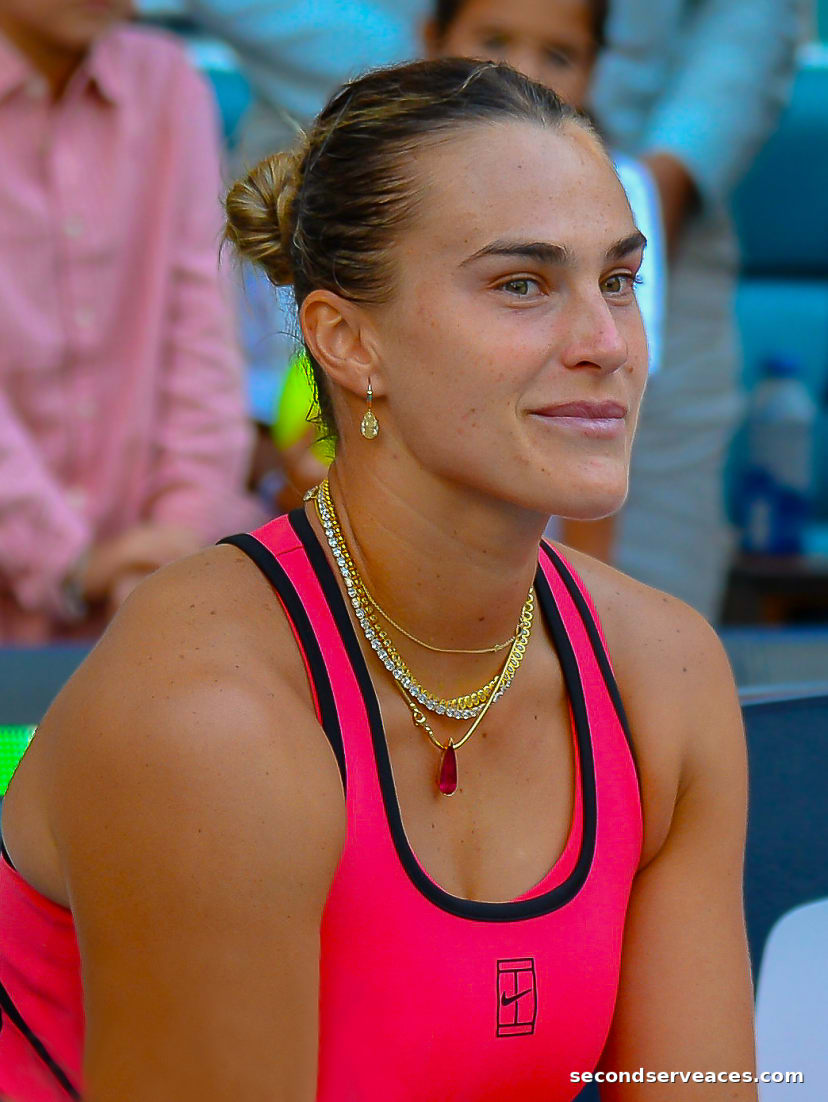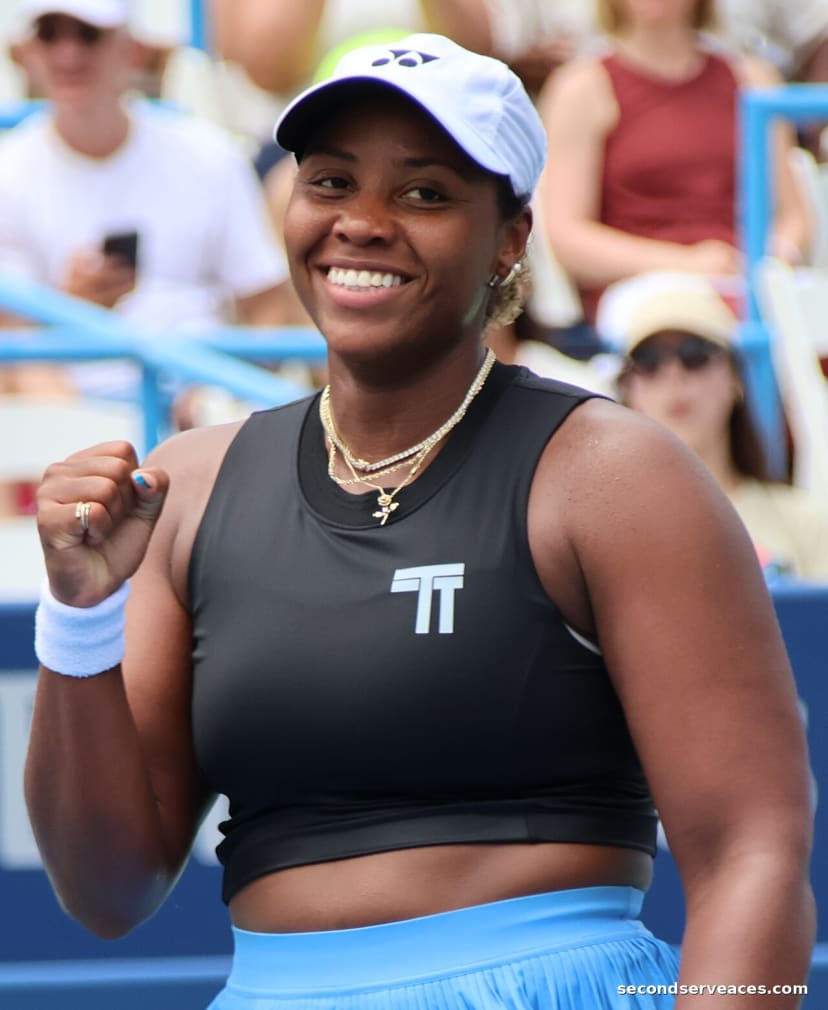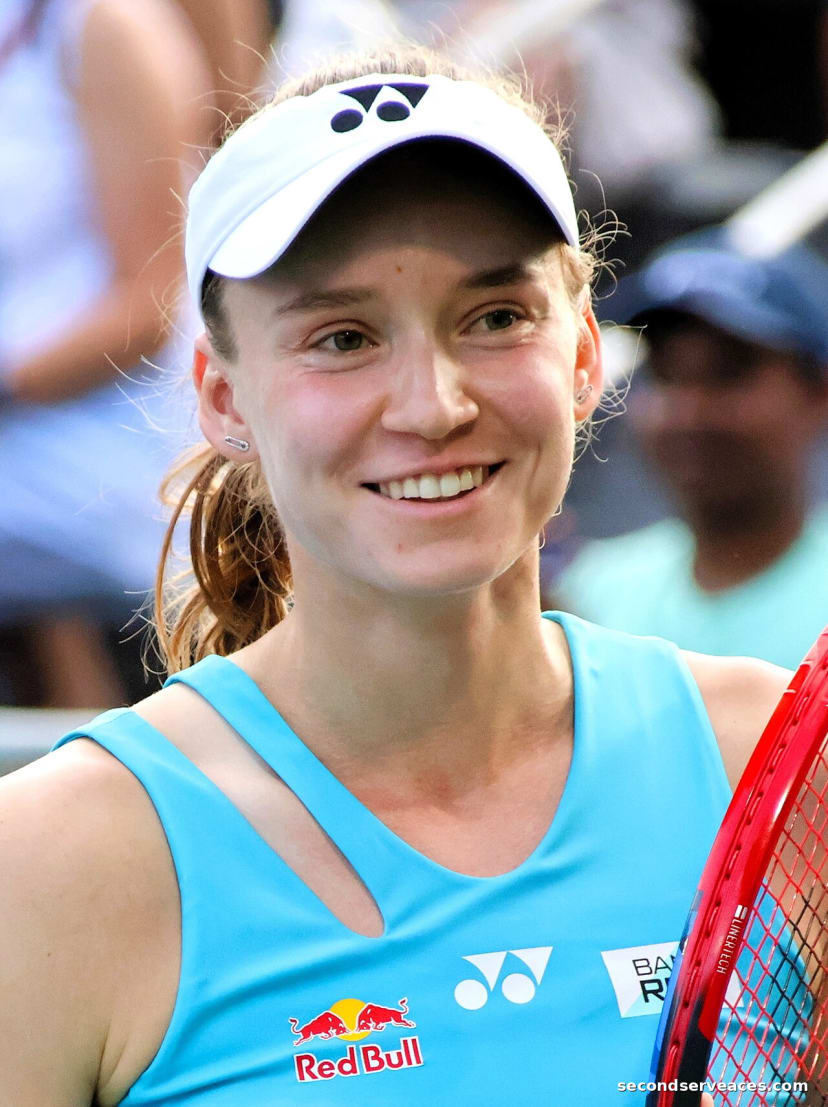
There is a particular genus of kinetic violence that occurs when a high-velocity spherical object, wrapped in optic-yellow felt, meets the high-friction acrylic of the Indian Wells Tennis Garden. The air in the Coachella Valley is arid and thin, which theoretically allows the ball to travel through the atmosphere with less drag. Yet, the court surface itself is notorious—gritty, slow, and uniquely designed to grip the ball upon the bounce, creating a biomechanical paradox for the professional tennis player. As we approach the quarterfinals of the 2026 WTA Indian Wells event, we are presented with a series of matchups that highlight the fascinating, brutal physics of the modern game.
Listen to the Second Serve Podcast
Get our daily AI-synthesized audio briefings and match reviews on the go.
The Ballistics of Rybakina vs. Pegula
To watch Elena Rybakina serve is to witness a masterclass in linear momentum. There is a serene, almost detached fluidity to her motion, resulting in a flat, devastating vector that ignores the inherent slowness of the Indian Wells court. As she steps into her quarterfinal clash against the remarkably consistent Jessica Pegula, we are confronted with a compelling statistical reality: Rybakina currently leads their head-to-head encounters 4-3, a margin that feels razor-thin until you consider the sheer inertial weight of the fact that Rybakina has claimed their last three consecutive meetings.
Pegula's game is constructed on a foundation of flat, unyielding baseline geometry. She absorbs pace better than almost anyone on the WTA tour, redirecting energy rather than generating it from a static position. But an opponent on a three-match winning streak possesses a distinct psychological high ground, a sort of invisible momentum that alters the way break points are played and second serves are attacked.
The Rotational Force of Swiatek vs. Svitolina
If Rybakina is linear momentum, Iga Swiatek is rotational force. Swiatek’s western grip and violent, upward swing path create RPMs that turn a standard rally ball into a heavy, shoulder-high nightmare on high-bouncing hard courts. She arrives in this quarterfinal holding a commanding 4-1 head-to-head advantage over the veteran tactical architect, Elina Svitolina.
It is crucial, however, to contextualize Svitolina's solitary victory against the Polish powerhouse. That win occurred in the quarterfinals of the 2023 Wimbledon Championships. Grass is the great equalizer of extreme topspin; the low friction of the lawn causes the ball to skid rather than bite, effectively neutralizing the most lethal aspects of Swiatek’s forehand. Here in the California desert, however, the gritty hard courts act as an amplifier for Swiatek’s heavy spin, meaning Svitolina will be forced to solve a completely different, infinitely more grueling spatial puzzle.
The Unknown and the Inevitable
Elsewhere in the draw, the bracket offers an exquisite juxtaposition of the unknown and the preordained. Linda Noskova and Talia Gibson will face each other for the very first time in their careers in an Indian Wells quarterfinal. There is a specific, existential dread in facing an opponent whose shot tolerance and passing-shot angles you have never physically felt across the net. It reduces the match to pure instinct and rapid-fire data processing.
Conversely, there is the raw, terrifying inevitability of Aryna Sabalenka. For those seeking precedent on her brutal efficiency, one only needs to look back to the round of 16 at the 2026 Australian Open, where she systematically dismantled Victoria Mboko in straight sets. Sabalenka’s power on a hard court forces opponents into a constant state of emergency, reacting to the sheer speed of the ball rather than executing their own tactical blueprints.
The Tactical Breakdown
When analyzing the mechanics of these quarterfinal matchups, the discourse must inevitably revolve around court position and rally tolerance. The surface in Indian Wells fundamentally alters how points are constructed.
- Serve Placement Patterns: For a player like Rybakina, the slow court demands that she relies less on the sheer speed of her first serve and more on the precise angles of her placement. Dragging Pegula out wide on the deuce court opens up the geometry for a first-strike forehand into the open space.
- Rally Tolerance and Attrition: Svitolina’s historical success against heavy hitters relies on her ability to absorb pace, but against Swiatek on a slow hard court, absorption is not enough. Svitolina must proactively step inside the baseline to take the ball on the rise, robbing Swiatek of the time required to set up her complex, spin-heavy swing architecture. If Svitolina drops two meters behind the baseline, the match momentum will shift irrevocably in Swiatek's favor.
- The Geometry of the Unknown: For Noskova and Gibson, the first four games will be a hyper-accelerated scouting mission. They will test each other’s forehand stability under duress, probing for structural weaknesses in the backhand wing when pushed into the outer thirds of the court.
The Bigger Picture
This 2026 iteration of the Indian Wells quarterfinals acts as a profound microcosm of the current state of women’s tennis. We are witnessing the maturation of players who have successfully merged the raw power of the baseline era with the nuanced, all-court geometry that modern equipment demands.
For Swiatek, a deep run here reaffirms her mastery over high-friction environments, cementing her status as the apex predator of slow hard courts and clay. For Pegula, snapping a three-match losing streak to a major rival like Rybakina would signal a critical evolutionary step in her psychological resilience. Ultimately, a tennis match is not merely a contest of physical stamina; it is an argument between two competing philosophies of physics, negotiated in real-time, within the stark white lines of a desert arena.
What Iga Swiatek Plays With
Tecnifibre Tempo 298 Iga
Tecnifibre Razor Code 1.25
Analyze Jessica Pegula vs. Elena Rybakina
Predict tactical adjustments, momentum swings, and serve strategy options for this match-up using our AI simulator.
The Aces Tactical Panel
This report was curated and edited by Bhaskar Goel. Tactical analysis and technical insights were provided by our specialized panel of expert correspondents.
Julian Price
Senior Tactical Correspondent
Stuffy, pedantic British academic and historian specializing in match momentum and historical context.
Elena Cruz
Director of Analytical Research
Data scientist specializing in court surface physics and movement patterns.
Bhaskar
The Editor & Fan
Passionate tennis player and site editor bringing everyday amateur insights and relatable fan commentary.
Arthur Vance
Senior Existential Analyst
Deep, eccentric, and DFW-inspired. Models court metaphysics, kinetic beauty, and player psychology.
Leo Sterling
High-Performance Consultant
Hard-nosed ex-trainer from Melbourne with a no-nonsense view on tour fitness.