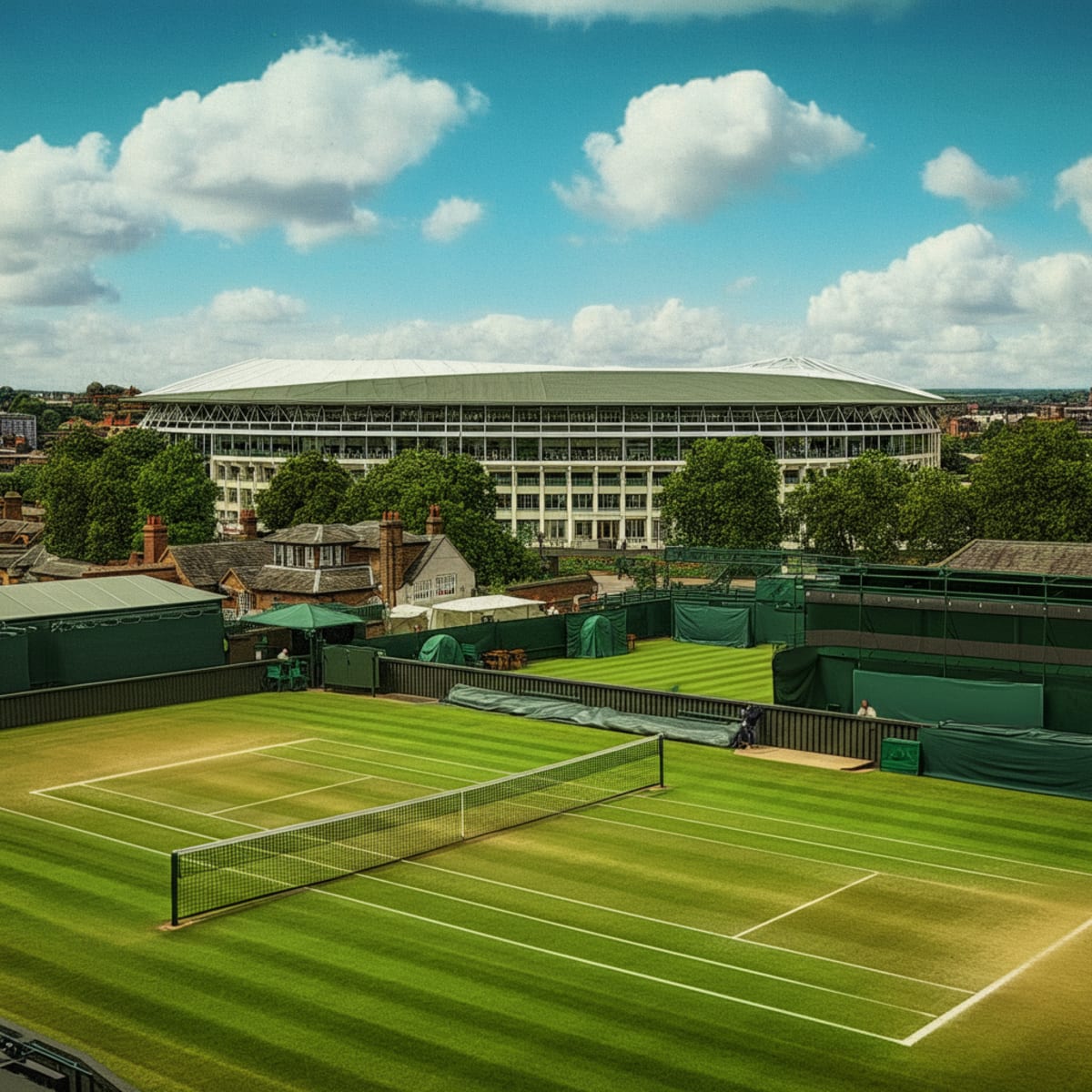
Wimbledon's Grand Expansion: High Court Clears the Grass for a Mega-Slam
Greetings, racquet aficionados! The neatly manicured lawns of SW19 are about to get significantly more sprawling. In a legal volley that fundamentally alters the future landscape of the sport's oldest major, a high court judge has officially ruled that the All England Club's ambitious expansion plans are not prohibited by existing land use restrictions. The ruling unlocks a transformative era for the world's most famous garden party, paving the way for a structural evolution unlike anything the storied venue has witnessed in the Open Era.
Listen to the Second Serve Podcast
Get our daily AI-synthesized audio briefings and match reviews on the go.
Delivering a decisive verdict from the bench, the court swept aside the primary legal hurdles obstructing the development, effectively granting the cathedral of tennis the runway it needs to modernize. Under the newly approved blueprint, the proposed development would almost triple the size of the current Wimbledon site, absorbing the adjacent greenery of the former Wimbledon Park Golf Club. It is a staggering infrastructural leap, ensuring the grass-court fortnight continues to rival its overseas cousins in sheer scale and spectator capacity.
According to the verified blueprints, the expansion features the construction of 38 brand-new tennis courts alongside a majestic 8,000-seat stadium. The crown jewel of this endeavor? Bringing the famously off-site qualifying tournament home. By constructing these new facilities directly across the road on the former golf club grounds, the All England Club will finally be able to host its qualifying matches on-site. However, not everyone is raising a glass of Pimm's to the news; the local campaign group SWP has emphatically stated it will 'fight on' against the expansion, signaling that the grassroots resistance has not yet packed away its racquets.
The Tactical Breakdown
While an infrastructure project might seem disconnected from the physics of topspin and the geometry of a passing shot, shifting the qualifying tournament from Roehampton to the pristine turf of SW19 is a monumental tactical shift for professional players. Transitioning from the Bank of England Sports Centre fields to the official Wimbledon ecosystem entirely rewrites a player's preparation playbook.
Tactically speaking, the grass-court game is highly dependent on microclimates and soil density. Historically, the turf at Roehampton—where qualifiers currently battle for their main-draw lives—plays slightly differently than the hallowed courts of the All England Club. The bounce can be marginally lower, and the wear patterns emerge at varying rates. By moving qualifying on-site onto 38 newly minted courts constructed under the exact agronomic standards of Centre Court, qualifiers will no longer have to recalibrate their footwork or timing upon entering the main draw.
Consider the serve-and-volley mechanics and slice approaches that dominate the early rounds. When players spend three grueling qualifying matches grooving their split-steps on the exact same proprietary grass blends they will face in the first round, their rally tolerance and confidence surge. We can expect to see significantly more dangerous qualifiers advancing deep into the second week.
Furthermore, the introduction of a new 8,000-seat stadium introduces fresh architectural variables into the tactical equation:
- Wind Funneling: A stadium of that magnitude alters the breeze. Players relying on high-trajectory topspin lobs or heavy kick serves will face different aerodynamic challenges compared to the open, wind-swept outer courts.
- Shadow Play: As the London sun dips in the late afternoon, an 8,000-seat structure will cast complex shadows across the baseline, challenging the visual acuity of returners trying to pick up a 130mph first serve.
- Court Pacing: Enclosed grass courts often retain moisture differently than open-field courts, occasionally playing slightly slicker in the first few days of the fortnight.
The Bigger Picture
Zooming out from the tactical baseline, this High Court victory ensures Wimbledon maintains its heavyweight status in the eternal arms race of the Grand Slams. For decades, the All England Club has operated as a brilliant, boutique jewel completely landlocked by affluent London suburbs. While the Australian Open relentlessly expanded the footprint of Melbourne Park, the US Open transformed the Billie Jean King National Tennis Center into a sprawling metropolis, and Roland Garros innovatively reclaimed the Serres d'Auteuil, Wimbledon remained geographically constrained.
Tripling the physical size of the grounds is a profound historical pivot. Major Walter Clopton Wingfield, the pioneering patriarch of lawn tennis, could scarcely have imagined an 8,000-seat coliseum dedicated merely to the qualifying rounds. This expansion bridges the gap between cherished Victorian tradition and modern commercial necessity.
The cultural ramifications for the sport are equally compelling. Qualifying week—often a hidden gem for hardcore tennis purists—will now become a marquee event seamlessly integrated into the Wimbledon fortnight. It elevates the prestige of the lower-ranked warriors scratching and clawing for a life-changing main-draw paycheck. While the SWP campaign group prepares for their next round of opposition, the broader tennis landscape recognizes this as a necessary evolution. The pristine white lines of SW19 are stretching outward, ensuring the heartbeat of the grass-court season remains as robust and resonant as ever.
Run Match-Point Simulations
Simulate high-pressure scenarios, score leverage points, and tactical responses for ATP and WTA players.
The Aces Tactical Panel
This report was curated and edited by Bhaskar Goel. Tactical analysis and technical insights were provided by our specialized panel of expert correspondents.
Julian Price
Senior Tactical Correspondent
Stuffy, pedantic British academic and historian specializing in match momentum and historical context.
Elena Cruz
Director of Analytical Research
Data scientist specializing in court surface physics and movement patterns.
Bhaskar
The Editor & Fan
Passionate tennis player and site editor bringing everyday amateur insights and relatable fan commentary.
Arthur Vance
Senior Existential Analyst
Deep, eccentric, and DFW-inspired. Models court metaphysics, kinetic beauty, and player psychology.
Leo Sterling
High-Performance Consultant
Hard-nosed ex-trainer from Melbourne with a no-nonsense view on tour fitness.