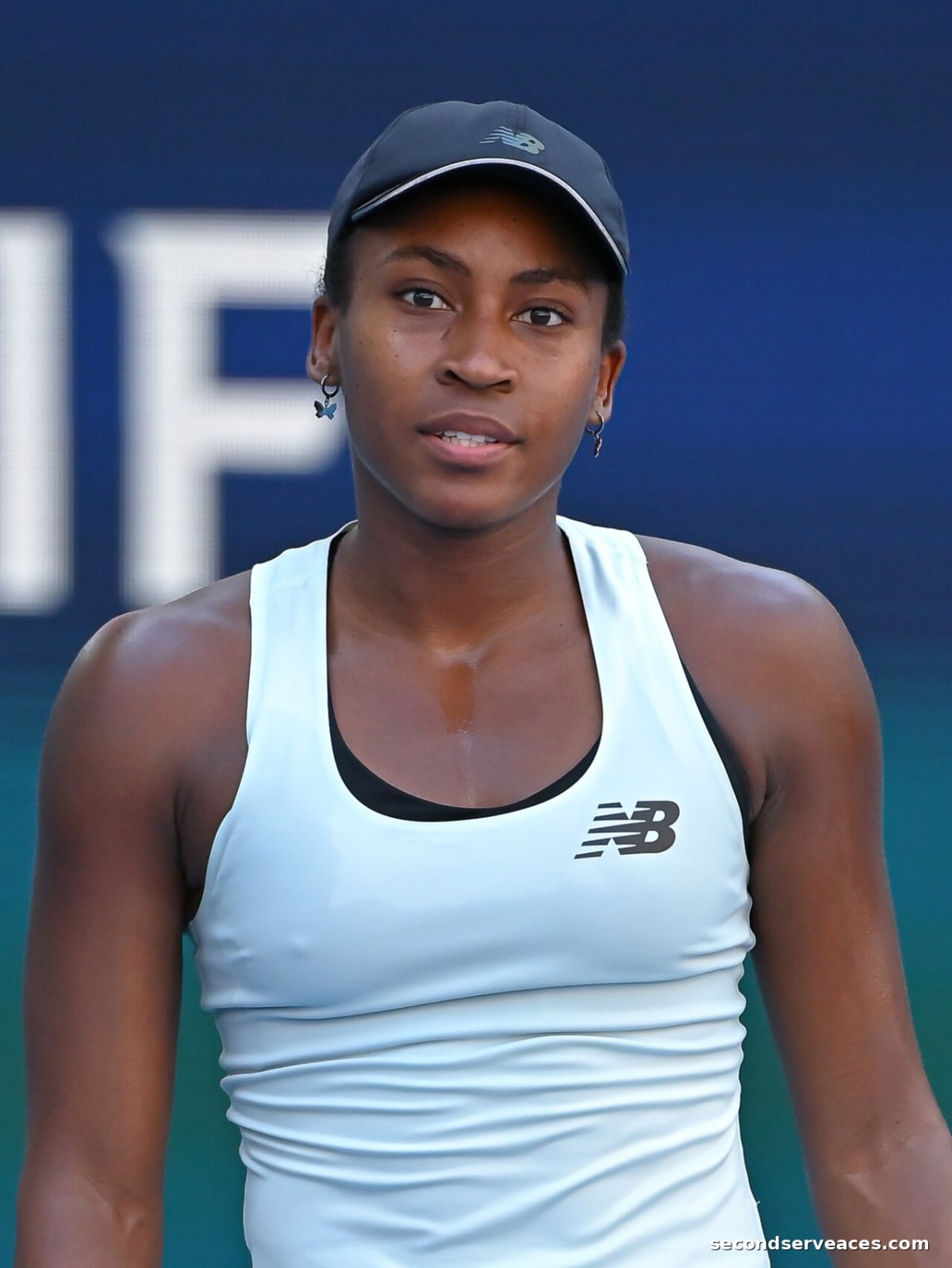
Tennis broadcasting has pushed technical boundaries to bring fans closer to the action, but player privacy has emerged as the ultimate line in the sand. The tipping point occurred during the Australian Open, when behind-the-scenes cameras captured raw, highly vulnerable footage of American star Coco Gauff smashing her racket in a private corridor following a painful defeat. This invasive footage was broadcast globally without her consent, sparking a fierce debate over where a player's workspace ends and their private sanctuary begins. Gauff, known for her composure, voiced strong objections to these intrusive practices, arguing that athletes deserve a secure space to process the intense emotional toll of competition.
Listen to the Second Serve Podcast
Get our daily AI-synthesized audio briefings and match reviews on the go.
In our previous coverage of Gauff's grass-court campaign, including her performance detailed in Paula Badosa's victory over Coco Gauff in Berlin, we have noted how emotional management is critical to her modern baseline strategy. Having cameras tracking her every movement off-court adds an unnecessary layer of psychological stress. Gauff's stance was quickly supported by other marquee names on both the WTA Tour and the ATP Tour, who felt that the relentless pursuit of content was compromising their mental well-being.
This collective pushback forced tournament directors to re-evaluate their media access. Top players like Carlos Alcaraz, Novak Djokovic, Madison Keys, and Iga Świątek joined Gauff in criticizing tournament organizers for invasive, close-up camera coverage that left them feeling constantly surveilled. The consensus among the elite field was clear: the locker rooms, gymnasiums, and dining halls must remain sacred sanctuaries, free from the prying eyes of high-definition lenses.
Inside the Millennium Building: The New Camera Blueprint
In a direct response to these growing concerns, Wimbledon organizers have proactively emailed players to outline a highly specific camera blueprint for the upcoming Championships. This detailed technical document is designed to restore trust by defining the exact boundaries of media operations. Rather than allowing broadcast crews to roam freely with shoulder-mounted rigs, the All England Club is enforcing rigid parameters to ensure that behind-the-scenes footage is managed with the utmost discretion and respect for player privacy.
The emailed directive includes a precise inventory of all operational cameras within player-only zones. Specifically, organizers have restricted the setup to exactly two cameras inside the Millennium Building gymnasium and a single camera situated in the Players' Restaurant. These cameras will operate under strict guidelines, focusing on wide-angle environmental shots rather than invasive close-ups of players during moments of physical preparation or post-match decompression.
By outlining the exact counts and locations of these lenses, Wimbledon aims to eliminate the element of surprise that has plagued players at other majors. Knowing exactly where the feed is live allows athletes to maintain control over their environment. This level of transparency is a significant step forward in balancing the commercial demands of modern sports broadcasting with the fundamental right to workplace privacy.
Disciplinary Disparities and the Financial Toll on Players
This sudden pivot toward player protection highlights a glaring double standard in how governing bodies police player behavior off-court versus how they penalize them on it. While Wimbledon is taking steps to shield players from invasive lenses, other regulatory bodies continue to hand down massive financial penalties for emotional outbursts. The Grand Slam Board's cooperative approach to player privacy stands in stark contrast to the ATP's rigid disciplinary framework, which often feels disconnected from the financial realities of the broader player pool.
For instance, the ATP recently levied a staggering $40,000 fine against Corentin Moutet for unsportsmanlike conduct. To put this arbitrary figure into perspective, a $40,000 penalty represents nearly 10% of the year-to-date prize money for players hovering around the top 100, and it vastly exceeds the average weekly earnings of players ranked outside the top 50. When a single fine can wipe out a player's entire net tournament earnings, the lack of a standardized, transparent disciplinary structure across the ATP, WTA, and Grand Slam boards becomes an urgent issue.
Critics argue that if governing bodies can coordinate highly technical, multi-million dollar camera installations to protect player privacy, they should also standardize their disciplinary measures. Currently, a player can be heavily fined by the ATP for a minor infraction, while a Grand Slam board might issue a simple warning for a similar offense. This lack of uniformity, combined with the financial disparity between elite multi-millionaires and those grinding to break even, underscores the need for a comprehensive overhaul of the sport's regulatory and financial frameworks.
The Grand Slam Privacy Precedent Set by Roland Garros
Wimbledon's decision to formalize its camera policy does not occur in a vacuum; it follows a precedent established across the English Channel. The organizers of Roland-Garros previously took the decisive step of banning cameras entirely from players' private areas. This ban was enacted after similar intense criticisms from the locker room regarding invasive coverage during moments of high stress.
By observing the success of the French Open's strict boundary lines, Wimbledon officials recognized that proactive regulation was necessary to avoid a full-scale player revolt. The implementation of restricted camera zones demonstrates that tournament organizers are beginning to understand that the "human element" of tennis must be preserved. Players cannot be treated merely as 24/7 content generators; they are elite athletes operating under immense psychological pressure.
As the tour transitions to the grass courts of SW19, this new privacy protocol will serve as a critical test case for the rest of the tennis calendar. If Wimbledon can successfully execute a broadcast that satisfies commercial partners while respecting the boundaries of stars like Gauff, Alcaraz, and Djokovic, it will set a gold standard for the industry. Protecting the locker room is not just about shielding players from embarrassment—it is about preserving the integrity of the sport itself.
What Coco Gauff Plays With
Head Boom MP 2024
Head Lynx Tour 1.25
Analyze Coco Gauff vs. Carlos Alcaraz
Predict tactical adjustments, momentum swings, and serve strategy options for this match-up using our AI simulator.
The Aces Tactical Panel
This report was curated and edited by Bhaskar Goel. Tactical analysis and technical insights were provided by our specialized panel of expert correspondents.
Julian Price
Senior Tactical Correspondent
Stuffy, pedantic British academic and historian specializing in match momentum and historical context.
Elena Cruz
Director of Analytical Research
Data scientist specializing in court surface physics and movement patterns.
Bhaskar
The Editor & Fan
Passionate tennis player and site editor bringing everyday amateur insights and relatable fan commentary.
Arthur Vance
Senior Existential Analyst
Deep, eccentric, and DFW-inspired. Models court metaphysics, kinetic beauty, and player psychology.
Leo Sterling
High-Performance Consultant
Hard-nosed ex-trainer from Melbourne with a no-nonsense view on tour fitness.
Related Reports


Quick Answers
Why did Wimbledon introduce new player privacy camera rules?+
Wimbledon introduced the rules after Coco Gauff and other top players criticized invasive behind-the-scenes camera coverage, such as footage of Gauff smashing a racket after a loss at the Australian Open.
What are the specific camera restrictions implemented at Wimbledon?+
The tournament has restricted behind-the-scenes cameras in player-only zones to exactly two cameras in the Millennium Building gym and one camera in the Players' Restaurant.
Have other Grand Slam tournaments banned cameras in player-only areas?+
Yes, the French Open previously banned cameras from private player areas to protect their privacy following similar criticisms from competitors.