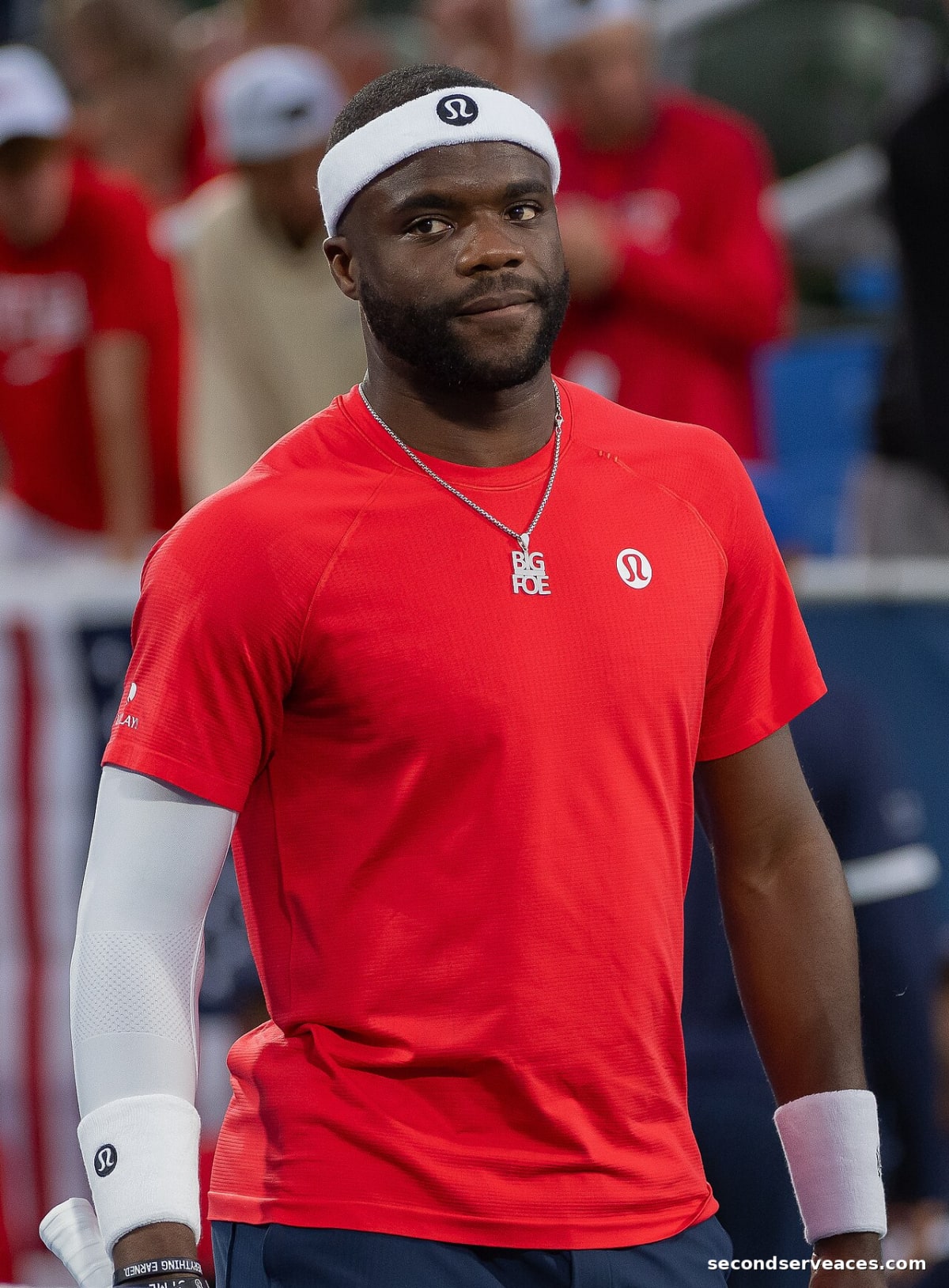
The grass courts of SW19 demand immediate technical adjustment, particularly in the transition from clay to low-skidding lawn surfaces. As we head into Day 6 of Wimbledon, the spotlight falls on a highly anticipated rematch of the 2022 championship clash between Frances Tiafoe and the unpredictable Alexander Bublik. This matchup is a pure study in contrasting baseline mechanics and return positioning.
Listen to the Second Serve Podcast
Get our daily AI-synthesized audio briefings and match reviews on the go.
Deciphering Bublik's Serve Variety Against Tiafoe's Return Position
Bublik relies heavily on disguised ball tosses to keep returners guessing, utilizing a highly elastic shoulder rotation to generate extreme angles on his slice serve. For Tiafoe, success hinges on his deep return positioning. By backing up behind the baseline, Tiafoe aims to buy crucial milliseconds to neutralize Bublik's explosive first delivery. However, this deep positioning leaves him vulnerable to Bublik's notorious underarm drop shots, which die quickly on the damp grass.
Tiafoe must maintain a short, compact backswing on his backhand wing to prevent the ball from getting behind his hips. If he can force Bublik into extended baseline rallies, the physical edge swings toward the American. To see how these tactical dynamics fit into the broader tournament picture, check out our analysis of Dimitrov vs Mensik: Wimbledon H2H and Grass Preview.
Serving Precision and Winner Volume Define the Supporting Draw
The statistical blueprint for grass-court success has been clearly drawn by the field this week. Karen Khachanov secured his passage to the third round by defeating Yannick Hanfmann, putting on a serving clinic with an impressive 78% first-serve accuracy. By consistently hitting his targets, Khachanov denied Hanfmann any look at second-serve return opportunities, a masterclass in defensive serving that Bublik and Tiafoe will both look to replicate.
Meanwhile, Italy's Flavio Cobolli showcased the value of aggressive court positioning in his four-set victory over James Duckworth. Cobolli blasted 59 winners, frequently stepping inside the baseline to take the ball on the rise. With Arthur Fery standing as the sole remaining British male player in the draw, the pressure on international contenders to maintain this level of high-octane tennis is immense. For more on the grass-court swing, you can track the live movement on the official ATP rankings.
Essential Matchday Add-Ons
Tournament-tested accessories and high-frequency consumables every competitive player keeps in their bag.
Tourna Grip Original Dry Feel Overgrip (10-Pack)
4.8 ★ (12,000+ reviews)
The gold standard for sweaty hands. Proprietary dry feel absorbs moisture better as play intensifies.
Luxilon ALU Power 125 Silver String Set
4.9 ★ (3,500+ reviews)
Unrivaled control and spin potential used by over 50% of the ATP Top 100 players.
Babolat Custom Damp Vibration Dampener (2-Pack)
4.7 ★ (4,200+ reviews)
Customizable dampening with removable central O-ring for fine-tuning court feedback and sound.
Penn Championship Extra Duty Tennis Balls (4-Can Pack)
4.7 ★ (8,900+ reviews)
Official ball of USTA League Tennis with extra-duty felt designed for abrasive hard courts.
Analyze Frances Tiafoe vs. Alexander Bublik
Predict tactical adjustments, momentum swings, and serve strategy options for this match-up using our AI simulator.
The Aces Tactical Panel
This report was curated and edited by Bhaskar Goel. Tactical analysis and technical insights were provided by our specialized panel of expert correspondents.
Julian Price
Senior Tactical Correspondent
Stuffy, pedantic British academic and historian specializing in match momentum and historical context.
Elena Cruz
Director of Analytical Research
Data scientist specializing in court surface physics and movement patterns.
Bhaskar
The Editor & Fan
Passionate tennis player and site editor bringing everyday amateur insights and relatable fan commentary.
Arthur Vance
Senior Existential Analyst
Deep, eccentric, and DFW-inspired. Models court metaphysics, kinetic beauty, and player psychology.
Leo Sterling
High-Performance Consultant
Hard-nosed ex-trainer from Melbourne with a no-nonsense view on tour fitness.
Related Reports
Quick Answers
What was Karen Khachanov's key statistic in his second-round win over Yannick Hanfmann?+
Karen Khachanov recorded an impressive 78% first-serve accuracy during his second-round victory over Yannick Hanfmann.
How many winners did Flavio Cobolli hit to defeat James Duckworth?+
Flavio Cobolli hit 59 winners to defeat James Duckworth in their four-set second-round match.
Who is the last remaining British male player left in the Wimbledon draw at this stage?+
Arthur Fery is the sole remaining British male player left in the tournament at this point.