SW19 Draws a Firm Line Against the Digital Flaneur
In my day, the only flashes of light at the All England Lawn Tennis Club came from the brass buttons on a linesman’s blazer or the midday sun glinting off a wooden Dunlop Maxply. Today, however, the hallowed lawns face a modern, digital pestilence. Richard Atkinson, the interim chief executive at the All England Lawn Tennis Club, recently addressed this contemporary dilemma with a dry, British wit, joking that the military personnel who steward the grounds would relish the opportunity to “sort out” disruptive social media influencers. It is a sentiment that any purist of the lawn game will receive with a quiet, dignified nod of approval.
Listen to the Second Serve Podcast
Get our daily AI-synthesized audio briefings and match reviews on the go.
While other sporting institutions have flung their gates wide to the modern attention economy, Wimbledon remains a bastion of classic decorum. Atkinson clarified that the tournament does not offer accreditation to a category of people called influencers. This is a deliberate and necessary boundary. The club’s hierarchy understands that the focus must remain squarely on the kinetic mastery of the players, not the self-indulgent curation of personal brands on the sidelines.
To ensure the peace of Church Road is maintained, the club has instituted a strict ban on portable ring lights, which fans are now expressly forbidden from bringing into the grounds. Atkinson emphasized that while the tournament carefully chaperones brand-affiliated content creators under highly controlled conditions, the wild-west approach to digital content creation has no place on the sacred grass. This decision preserves the visual integrity of the tournament, ensuring that the spectator experience is not compromised by the glare of artificial ring lights.
The Cautionary Tale of Flushing Meadows and the Ring-Light Intrusion
This firm stance from the AELTC did not emerge in a vacuum. It is a direct response to the circus that transpired across the Atlantic. The United States Tennis Association, in its quest for youthful relevance, accredited no fewer than 100 influencers and content creators for the US Open. The result was as predictable as it was lamentable, proving that when you invite the circus, you must expect the clowns.
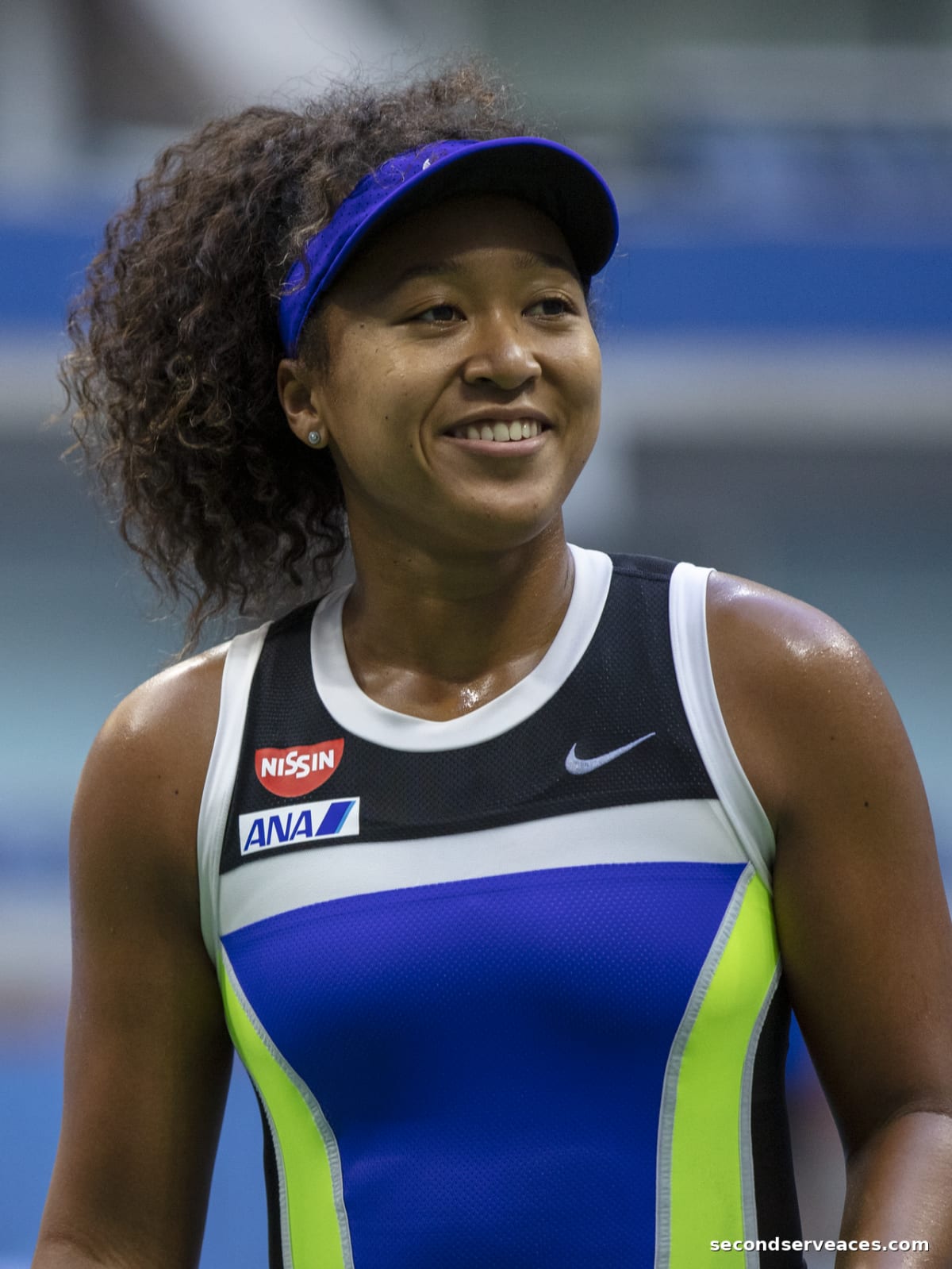
During a high-profile match involving former World No. 1 Naomi Osaka in New York, play was actively disrupted by a group of these accredited content creators who decided the mid-match action was merely a backdrop for an impromptu photo shoot. Such an intrusion is an affront to the concentration required at this level of sport. For an athlete of Osaka’s caliber, who relies on intense focus to execute her aggressive baseline game, such distractions are entirely unacceptable.
Tennis is a sport of micro-adjustments, where a fraction of a second determines the success of a topspin drive or a delicate drop volley. The intrusion of ring lights and unauthorized photography in the lower bowls of a stadium is a direct threat to the competitive environment. By banning these devices, Wimbledon protects the players from the disruptive vanity of the digital age, ensuring that the court remains a theater of athletic excellence rather than a content studio.
The Contrasting Paths of Osaka and Gauff in the Modern Arena
The modern professional must navigate a complex landscape where off-court commercial demands constantly threaten to overshadow on-court achievements. Naomi Osaka, currently ranked No. 17 in the WTA rankings, has frequently found herself at the very epicenter of this cultural intersection. Her return to the tour has been a narrative of immense public interest, yet it has also made her a prime target for digital creators seeking to capitalize on her global profile.
Conversely, her occasional rival Coco Gauff, the world No. 4, represents the vanguard of a generation that has grown up entirely within the social media ecosystem. Gauff has managed this transition with remarkable poise, yet even she is not immune to the exhausting demands of the modern tour. As we explored in our coverage of the Wuhan Open withdrawals, the physical and mental toll of maintaining peak performance under constant public scrutiny is a delicate balancing act.
Wimbledon’s refusal to compromise its standards serves as a shield for these athletes. By eliminating the distraction of unaccredited influencers, the tournament allows Osaka and Gauff to focus entirely on their craft. It is a return to the ethos of the 1970s, where the tennis court was treated with the reverence of a cathedral, and the players were judged solely on the quality of their groundstrokes.
Preservation of Etiquette Over the Algorithmic Circus
The AELTC’s policy is a refreshing reminder that some traditions are too valuable to be traded for temporary viral metrics. In an era where sports leagues are increasingly desperate for algorithmic engagement, Wimbledon’s stubborn adherence to etiquette is a badge of honor. Atkinson’s lighthearted jest regarding the military stewards highlights a very serious commitment to maintaining order and respect within the grounds.
By preventing the grandstands from being transformed into a backdrop for lifestyle branding, the tournament ensures that the paying public can enjoy the matches without obstruction. A ticket to SW19 should guarantee a view of the court’s pristine geometry, not the back of an influencer’s smartphone. It is a victory for the genuine tennis enthusiast who appreciates the sport for its tactical depth rather than its social media clout.
As the tour progresses, other tournaments will inevitably have to choose between the short-term publicity of influencer partnerships and the long-term preservation of the sport’s dignity. For now, the green lawns of Wimbledon remain a sanctuary of classic etiquette, proving that some standards are non-negotiable. This dedication to the sport’s core values is particularly vital as the players navigate a demanding calendar, a reality we noted when Coco Gauff exited the Wuhan draw earlier this season.
Rivalry Matchup & Player Profiles
| Metric | Naomi Osaka | Coco Gauff |
|---|---|---|
| Rank | No. 17 | No. 4 |
| Country | Japan | United States |
| Age | 28 | 22 |
| Height | 5' 11" (1.80 m) | 5' 9" (1.75 m) |
| Handedness | Right-handed | Right-handed |
| Play Style | Aggressive baseliner | Aggressive baseliner |
| Career Titles | 7 singles titles | 12 singles titles |
The rivalry between Naomi Osaka and Coco Gauff remains one of the most compelling narratives in modern women's tennis, currently locked in an even 3-3 head-to-head deadlock. Both champions employ an aggressive baseline philosophy, but their tactical execution varies. Osaka relies on raw, flat power and heavy serving, while Gauff utilizes elite court coverage, exceptional defensive transitions, and a formidable backhand to dictate terms from the back of the court.
Their most recent encounter at the 2024 China Open in Beijing illustrated the fine margins of this rivalry. Osaka started the match with supreme authority, hitting 4 aces and winning 78% of her first-serve points to claim the opening set 6-3. However, an abdominal injury began to severely hamper her serve speed and lateral movement in the second set, leading to 5 double faults and allowing Gauff to convert 3 of her 4 break point opportunities. Gauff claimed the second set 6-4, after which Osaka was unfortunately forced to retire, leaving their historic series perfectly poised for their next encounter.
What Coco Gauff Plays With
Head Boom MP 2024
Head Lynx Tour 1.25
Head Prime Tour (12-Pack)
Analyze Naomi Osaka vs. Coco Gauff
Predict tactical adjustments, momentum swings, and serve strategy options for this match-up using our AI simulator.
The Aces Tactical Panel
This report was curated and edited by Bhaskar Goel. Tactical analysis and technical insights were provided by our specialized panel of expert correspondents.
Julian Price
Senior Tactical Correspondent
Stuffy, pedantic British academic and historian specializing in match momentum and historical context.
Elena Cruz
Director of Analytical Research
Data scientist specializing in court surface physics and movement patterns.
Bhaskar
The Editor & Fan
Passionate tennis player and site editor bringing everyday amateur insights and relatable fan commentary.
Arthur Vance
Senior Existential Analyst
Deep, eccentric, and DFW-inspired. Models court metaphysics, kinetic beauty, and player psychology.
Leo Sterling
High-Performance Consultant
Hard-nosed ex-trainer from Melbourne with a no-nonsense view on tour fitness.
Related Reports

Quick Answers
Why is Wimbledon banning portable ring lights?+
Wimbledon has banned portable ring lights to prevent spectators from conducting disruptive social media photo shoots and to preserve the visual focus for the players on court.
Does Wimbledon offer accreditation to social media influencers?+
No, Wimbledon does not offer accreditation to a category of people called influencers, though they do carefully chaperone specific brand-affiliated content creators.
What incident prompted Wimbledon's strict stance on content creators?+
The policy follows an incident at the US Open where a match involving Naomi Osaka was disrupted by a group of accredited influencers conducting an unauthorized photo shoot.