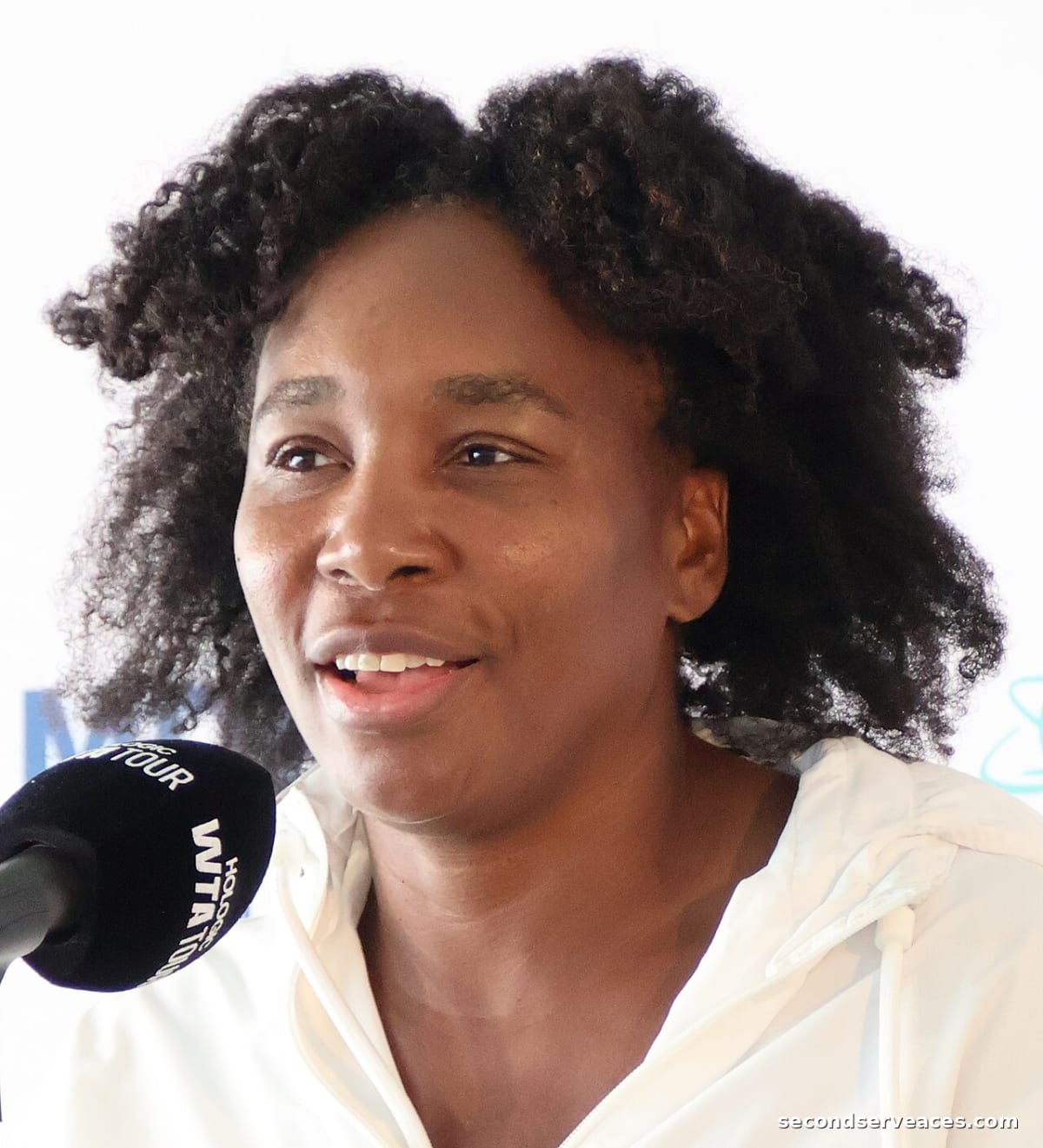
The Kinetic Collision of Two Tennis Extremes
The announcement that Venus Williams will partner with Alexander Bublik for the mixed doubles tournament at Flushing Meadows is the sort of stylistic collision that makes tennis the most compelling theater on earth. Venus, now 46 and ranked No. 479 in the latest WTA rankings, brings 49 career singles titles and a lifetime of baseline authority to the court. Bublik, the 29-year-old Kazakh shot-maker who sits at No. 11 in the ATP rankings, represents the sport's modern, eccentric counter-culture. Together, they form an alliance that is as fascinating as it is tactically volatile.
Listen to the Second Serve Podcast
Get our daily AI-synthesized audio briefings and match reviews on the go.
This partnership is not merely a ceremonial exhibition; it is a calculated attempt to navigate the physical realities of the modern game. Hard-court tennis demands a brutal toll on the lower joints, particularly for a veteran player of Williams's stature. The quick transition from softer surfaces to the high-friction acrylic of the US Open courts requires precise micro-adjustments in footwork. By partnering with Bublik, a natural net rusher who stands 6'5", Williams can rely on a partner capable of covering massive swaths of the court, thereby reducing her lateral recovery demands during rapid-fire baseline rallies.
For Bublik, sharing the court with a seven-time Grand Slam singles champion offers a stabilizing anchor. His unconventional, serve-and-volley style is notorious for its high-risk, high-reward nature, often featuring underarm serves and spontaneous drop shots. Williams's disciplined, deep-court groundstrokes should provide the perfect structural foil, allowing Bublik the freedom to disrupt their opponents' rhythm at the net. It is a partnership built on complementary physical dimensions and contrasting tactical philosophies.
Navigating the Brutal Hard Court Transition
The physical transition to the North American hard courts is notoriously unforgiving on mature athletes. Unlike clay, which allows for momentum-absorbing slides, or grass, which yields to the foot, the DecoTurf surface at Flushing Meadows forces abrupt, joint-jarring stops. For Williams, whose career has been defined by explosive movement and long-levered court coverage, this surface transition requires a hyper-efficient approach to physical conservation. We saw the stark reality of these physical demands in our previous coverage of how Potapova Defeats Venus Williams 6-3, 6-3 in Washington, where lateral recovery times proved to be the deciding factor.
To mitigate the physical toll of these sudden stops, the tactical blueprint for Williams and Bublik must center on ultra-short point construction. Bublik’s massive first serve—which regularly exceeds 130 mph—will be their primary weapon for securing quick, cheap points. If Bublik can maintain a high first-serve percentage, it will shield Williams from having to engage in grueling, multi-shot baseline exchanges that test her physical endurance on the abrasive hard court.
Furthermore, Williams's return of serve remains a formidable weapon. Her ability to take the ball early and drive it flat through the court will allow Bublik to feast on weak, floating replies at the net. By minimizing the physical distance covered per point, this duo can preserve their energy over the course of a demanding tournament, turning what could be a physical liability into a masterclass in tactical efficiency.
The Seven-Figure Stakes of the Mixed Draw
While mixed doubles is occasionally viewed as a secondary event, the financial reality of the US Open quickly dispels any notion of casual play. The winning mixed doubles team will walk away with a massive $1 million prize, a sum that has elevated the competitive intensity of the draw to unprecedented heights. This lucrative purse has attracted an incredibly dense field of elite singles stars and doubles specialists, all vying for one of the most prestigious titles in the sport.
The path to the main draw is exceptionally steep. A total of 29 teams have officially entered to compete for just 16 coveted spots in the main draw, which will be held on August 25 and August 26. With limited real estate available, the entry process is highly mathematical and fiercely competitive. Teams have until the August 17 deadline to finalize their partnerships, at which point the entry list will be locked.
Under the tournament's entry rules, the six duos with the best combined singles rankings are automatically entered into the draw. This ranking threshold places immense pressure on bubble teams to secure high-ranking partners. For Williams, Bublik's stellar singles ranking of No. 11 is a crucial asset, effectively guaranteeing their entry into the main draw and bypassing the anxiety of the alternate list.
Challenging the Italian Doubles Monopoly
Any team harboring ambitions of lifting the trophy in New York must eventually confront the gold standard of contemporary mixed doubles. Sara Errani and Andrea Vavassori enter the tournament as the formidable, two-time defending U.S. Open mixed doubles champions. The Italian duo possesses a level of telepathic chemistry and tactical synergy that only comes from years of shared court time, making them the ultimate measuring stick for newly formed partnerships.
The contrast in styles between the defending champions and the newly formed Williams-Bublik pairing could not be more pronounced. Errani and Vavassori rely on methodical, high-percentage patterns, utilizing heavy topspin and meticulous court positioning to wear down their opponents. They excel at exposing movement limitations and forcing errors through relentless consistency.
To upset the Italians, Williams and Bublik must embrace chaos. Bublik’s unpredictable shot-making and Williams’s raw power must be used to disrupt the rhythmic, structured patterns that Errani and Vavassori prefer. If Bublik can successfully inject his trademark unpredictability into the match while Williams holds firm from the baseline, they have the raw tools to shatter the Italian monopoly and claim the historic seven-figure prize.
Rivalry Matchup & Player Profiles
| Metric | Venus Williams | Alexander Bublik |
|---|---|---|
| Rank | No. 479 (April 20, 2026) | No. 11 (June 8, 2026) |
| Age | 46 | 29 |
| Country | United States | Kazakhstan |
| Height | 6 ft 1 in (185 cm) | 6 ft 5 in (196 cm) |
| Handedness | Right-handed (two-handed backhand) | Right-handed (two-handed backhand) |
| Play Style | Aggressive baseliner | Unconventional, serve-and-volley |
| Career Titles | 49 | 9 |
According to historical records, Venus Williams and Alexander Bublik have no previous head-to-head record as opponents in either singles or doubles competition. This upcoming campaign at the 2026 US Open marks their very first time sharing a tennis court, uniting two vastly different eras of tennis history on the same side of the net.
This partnership brings together Williams's legendary flat, aggressive groundstrokes and Bublik's modern, high-variance serve-and-volley toolkit. While Williams's physical movement is naturally limited at age 46, Bublik's 6'5" frame and defensive range will be critical in covering the open court, creating a highly intriguing tactical dynamic that could catch the rest of the mixed doubles field completely off guard.
What Novak Djokovic Plays With
Head Speed Pro
Luxilon ALU Power 125
Asics Court FF 3 Novak
Analyze Venus Williams vs. Alexander Bublik
Predict tactical adjustments, momentum swings, and serve strategy options for this match-up using our AI simulator.
The Aces Tactical Panel
This report was curated and edited by Bhaskar Goel. Tactical analysis and technical insights were provided by our specialized panel of expert correspondents.
Julian Price
Senior Tactical Correspondent
Stuffy, pedantic British academic and historian specializing in match momentum and historical context.
Elena Cruz
Director of Analytical Research
Data scientist specializing in court surface physics and movement patterns.
Bhaskar
The Editor & Fan
Passionate tennis player and site editor bringing everyday amateur insights and relatable fan commentary.
Arthur Vance
Senior Existential Analyst
Deep, eccentric, and DFW-inspired. Models court metaphysics, kinetic beauty, and player psychology.
Leo Sterling
High-Performance Consultant
Hard-nosed ex-trainer from Melbourne with a no-nonsense view on tour fitness.
Related Reports
Quick Answers
Who is Venus Williams partnering with for the US Open mixed doubles?+
Venus Williams is partnering with Alexander Bublik for the US Open mixed doubles tournament.
What is the prize money for the winning mixed doubles team at the US Open?+
The winning mixed doubles team will receive a $1 million prize.
Who are the defending mixed doubles champions at the US Open?+
Sara Errani and Andrea Vavassori are the two-time defending US Open mixed doubles champions.