A Statistical Freefall on Parisian Clay
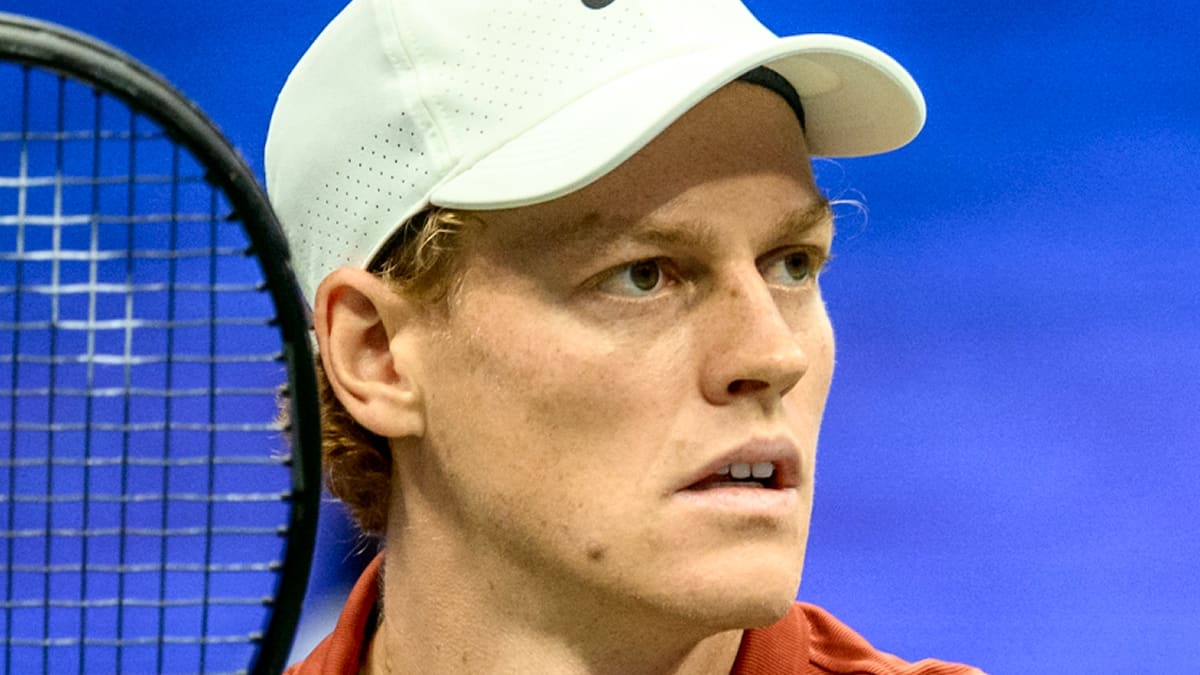
The numbers from Jannik Sinner’s third-round exit at the 2026 French Open are as jarring as the visual of his disintegration on court. After appearing to be in a commanding position, Sinner surrendered 16 of the final 18 games against Juan Manuel Cerúndolo. This is not just a statistical anomaly; it is a profound tactical breakdown that demands scrutiny of his movement patterns and court coverage as the match wore on.
Listen to the Second Serve Podcast
Get our daily AI-synthesized audio briefings and match reviews on the go.
While Sinner has previously demonstrated immense physical capacity—most notably during his five-hour marathon against Carlos Alcaraz at Roland-Garros last year—this performance suggested a departure from that standard. The ability to sustain intensity over the grueling surface of European clay is the primary separator for the current ATP rankings leaders, and here, the momentum shifted irrevocably against the Italian.
Observers noted that the transition from baseline aggression to defensive scrambling became stagnant. When a player loses such a massive share of points in the closing stages, it typically points toward a failure in structural endurance or a lapse in the tactical discipline required to dictate play, rather than just a momentary loss of form.
Venus Williams on Resilience Versus Statistical Flukes
Venus Williams has stepped into the fray to offer a defense of the World No. 1, framing the collapse as a singular, uncharacteristic event rather than a systemic issue. Williams argues that the endurance statistics—often cited to critique modern players—can be misleading when applied to a single afternoon of competition.
For those interested in how these endurance benchmarks compare to past eras, our previous analysis of comeback fitness highlights the volatility inherent in high-level clay court play. Williams posits that even the most elite athletes encounter days where the body fails to synchronize with the mental game, suggesting that the pressure of the tournament environment remains a significant variable for every competitor.
Her perspective serves as a counterweight to the immediate scrutiny Sinner has faced. By characterizing the match as a fluke, Williams emphasizes that the physical demands of the tour are often misunderstood by those looking for long-term trends in isolated, high-intensity matches.
The Agassi Critique: Hydration and Professional Discipline
Andre Agassi, a master of court craft and physical management, has taken a more clinical approach to the post-mortem. Agassi’s analysis focuses squarely on the preparation protocols—specifically hydration and nutrition—that are non-negotiable in the humid, oppressive conditions often found at Roland-Garros.
Agassi suggests that the failure to maintain specific metabolic baselines can lead to the type of late-match collapse Sinner experienced. This critique echoes the importance of ATP Tour standards regarding professional conditioning. When a player’s preparation is optimized, the late-set drop-off is mitigated by a rigorous adherence to the physiological demands of the surface.
It is worth noting that Sinner’s team has historically been meticulous with their data, yet this exit raises questions about whether those protocols were adjusted sufficiently for the specific heat index of this year's tournament. Agassi’s commentary serves as a reminder that at the elite level, the margin between victory and defeat is frequently found in the off-court discipline.
Historical Context and the Future of Elite Performance
Looking back at the trajectory of the game, players like Holger Rune and Carlos Alcaraz have frequently pushed the boundaries of what is expected in terms of physical exertion. Sinner’s exit, juxtaposed with the expectations placed upon him, highlights the difficulty of maintaining a consistent level of excellence across every surface.
As we examine the broader implications, it is clear that the physical toll of a five-set match on clay is vastly different from that of hard courts. Much like the transition discussed in our coverage of the French Open landscape, the ability to reset and recalibrate after a long tournament run is a skill that only a few possess.
The debate between the perspectives of Williams and Agassi captures the current tension in tennis: the balance between innate resilience and the scientific management of the human body. Whether Sinner’s loss is a minor stumble or a sign of needed change in his preparation will be determined in the coming months.
What Jannik Sinner Plays With
Head Speed MP 2024
Head Hawk Touch 1.25
Head Prime Tour (12-Pack)
Nike GP Challenge 1
Analyze Jannik Sinner vs. Venus Williams
Predict tactical adjustments, momentum swings, and serve strategy options for this match-up using our AI simulator.
The Aces Tactical Panel
This report was curated and edited by Bhaskar Goel. Tactical analysis and technical insights were provided by our specialized panel of expert correspondents.
Julian Price
Senior Tactical Correspondent
Stuffy, pedantic British academic and historian specializing in match momentum and historical context.
Elena Cruz
Director of Analytical Research
Data scientist specializing in court surface physics and movement patterns.
Bhaskar
The Editor & Fan
Passionate tennis player and site editor bringing everyday amateur insights and relatable fan commentary.
Arthur Vance
Senior Existential Analyst
Deep, eccentric, and DFW-inspired. Models court metaphysics, kinetic beauty, and player psychology.
Leo Sterling
High-Performance Consultant
Hard-nosed ex-trainer from Melbourne with a no-nonsense view on tour fitness.
Related Reports


Quick Answers
What was the result of Jannik Sinner’s third-round match at the 2026 French Open?+
Jannik Sinner lost to Juan Manuel Cerúndolo after leading, losing 16 of the final 18 games.
What is Venus Williams' perspective on Sinner's performance?+
Venus Williams defended Sinner, characterizing his endurance issues as a fluke rather than a systemic problem.
What did Andre Agassi criticize regarding Sinner's play?+
Agassi pointed to potential flaws in Sinner's preparation, specifically citing hydration and nutrition protocols during the hot, humid conditions.