Rain, Rust, and Tommy Paul’s Tactical Rebound Against Alexander Zverev
The heavy, moisture-laden air of Ohio has a way of turning tennis balls into leaden spheres and tennis courts into psychological pressure cookers. Alexander Zverev, the formidable third seed according to the latest ATP rankings, attempted to impose his massive six-foot-six frame on the proceedings early on. He secured the opening set 6-4 with his trademark clinical efficiency, dictating play with deep, penetrating groundstrokes. Tommy Paul, however, refused to play the role of the submissive baseline target, maintaining a twitchy, hyper-reactive stance just behind the baseline.
Listen to the Second Serve Podcast
Get our daily AI-synthesized audio briefings and match reviews on the go.
Then came the mid-match intervention of the Midwestern elements. A persistent downpour forced a 90-minute suspension of play in the seventh game of the second set, sending both competitors back to the locker rooms to stew in their own strategic anxieties. This pause acted as a chemical catalyst, completely disrupting Zverev’s rhythm. Upon resumption, Paul began stepping inside the baseline, taking the ball on the rise to deny the German the time required to wind up his long-swinging backhand. Paul began exploiting the damp, slower conditions to drag Zverev into awkward transitional areas of the court.
The tactical shift bore fruit in a high-stakes second-set tiebreak. Paul navigated the razor-thin margins with immense composure, saving crucial points to snatch the set 7-6 (8/6) before carrying that hard-earned momentum into the decider. As we highlighted in our previous tactical breakdown of Paul's hard-court progress, his ability to transition from defense to offense under pressure remains elite. He broke Zverev early in the third set and held firm to seal a 4-6, 7-6 (8/6), 6-4 triumph, leaving the German to lament his sudden drop in first-serve percentage during the match's final hour.
The Systemic Collapse of Aryna Sabalenka Against Sara Bejlek’s Left-Handed Angles
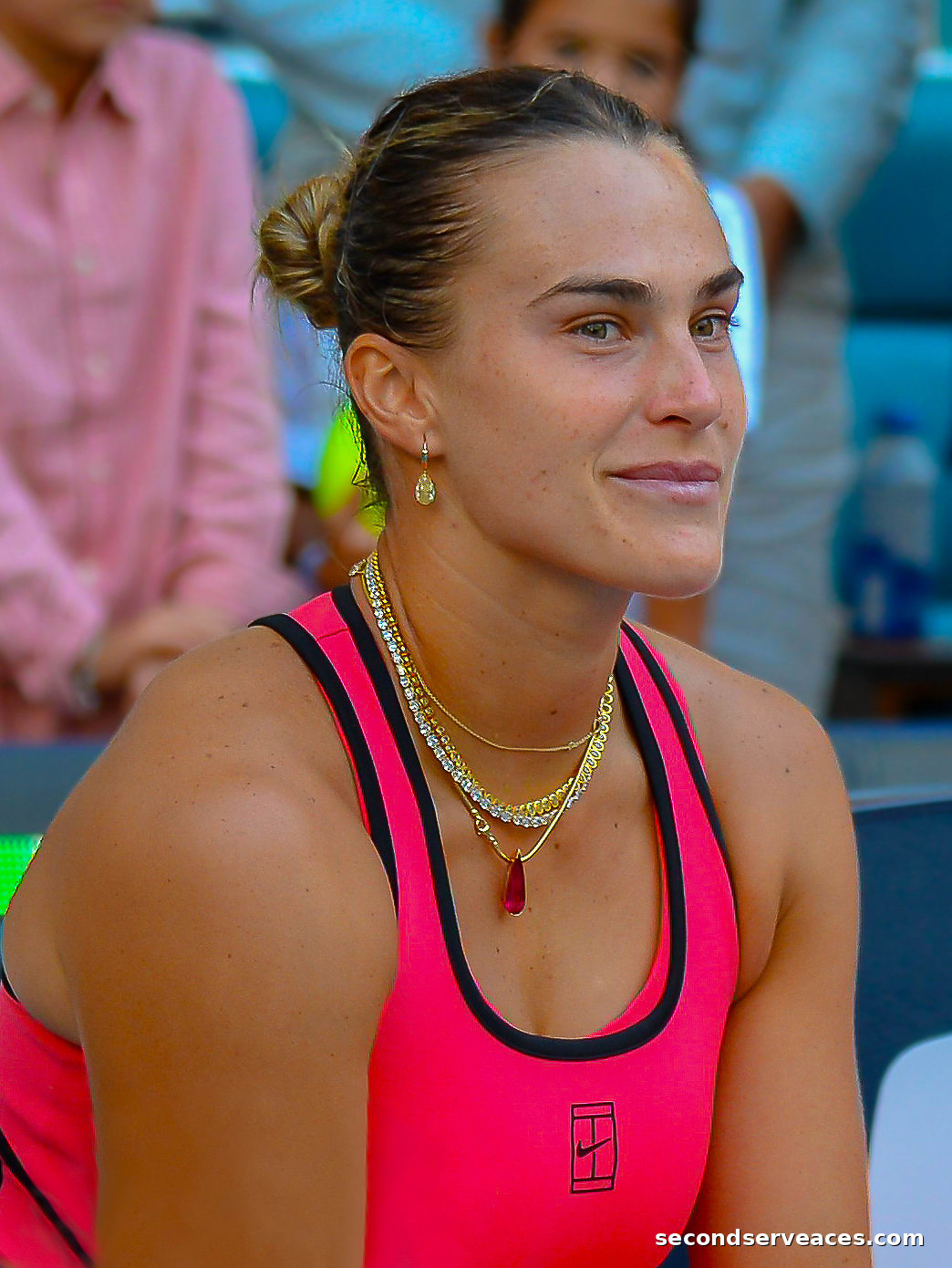
On the women's side of the draw, world number one Aryna Sabalenka encountered a structural puzzle that she simply could not solve. The Belarusian, standing at six feet tall with 24 career singles titles to her name on the official WTA Tour Home, looked visibly out of sorts from the opening exchange. Her aggressive, high-risk baseline game requires precise footwork and timing, both of which were conspicuously absent on the humid Ohio courts.
Her opponent, the Czech teenager Sara Bejlek, played with a low-slung, flat-hitting style that neutralized Sabalenka's heavy topspin. Bejlek, a crafty left-hander, consistently targeted Sabalenka’s forehand wing with sharp, dipping cross-court angles. Sabalenka’s unforced errors began to mount rapidly, culminating in a tense first-set tiebreak where the top seed's serve faltered at the critical juncture, allowing Bejlek to claim the set 7-6 (9/7).
The second set offered no reprieve for the world number one. Bejlek maintained her relentless depth, breaking Sabalenka's serve twice and successfully defending her own service games with remarkable poise. The match concluded 7-6 (9/7), 6-4 in Bejlek’s favor, a result that throws the top half of the women's draw into complete disarray and highlights the vulnerability of raw power when confronted with precise, left-handed counter-punching.
Frances Tiafoe’s Efficient Dispatch of Felix Auger-Aliassime’s Baseline Defenses
The men's draw saw further seismic shifts as Frances Tiafoe dismantled the second-seeded Felix Auger-Aliassime in straight sets. Tiafoe, playing with an infectious, crowd-pleasing energy, refused to let the Canadian establish any sort of rhythm from the back of the court. He broke Auger-Aliassime’s serve early in both sets, establishing a psychological cushion that he never looked like relinquishing.
Tiafoe's return of serve was the defining feature of the 6-3, 6-4 contest. He consistently targeted Auger-Aliassime’s backhand, forcing the Canadian into awkward, defensive positions. Auger-Aliassime, who recently made headlines for his upcoming doubles ventures as noted in our coverage of the Auger-Aliassime & Eala US Open partnership, struggled with his first-serve percentage, landing only 51% of his first deliveries.
Tiafoe converted three of his five break-point opportunities while maintaining a pristine record on his own serve, facing only a single break point throughout the match. This efficient display propels Tiafoe into the quarterfinals, signaling a massive return to form on North American hard courts. The victory underscores the American's ability to peak during the summer hard-court swing, where the fast conditions perfectly suit his flat, penetrating groundstrokes.
Coco Gauff’s Break-Point Alchemy and the Broader Midwest Draw Re-Alignment
Amidst the carnage of falling seeds, Coco Gauff stood as a beacon of defensive resilience. Facing the highly capable Marie Bouzkova, Gauff secured a 6-3, 6-2 scoreline that belies the sheer kinetic intensity of the actual points played on court. Bouzkova pushed Gauff to the limit in almost every service game, but the young American found her best tennis when backed into a corner.
The defining metric of Gauff's performance was her absolute refusal to break under pressure. She faced eight break points over the course of the match and saved every single one of them. Her ability to slide into deep defensive corners and transition into offensive forehands left Bouzkova visibly frustrated, unable to find a way through Gauff's court coverage.
This victory, combined with Sabalenka's exit, positions Gauff as a heavy favorite to make a deep run. The quick hard courts of Ohio have historically rewarded players who can defend the corners while maintaining high first-serve win percentages, a combination Gauff executed to perfection. As the tournament heads into its final stages, the draw is wide open for a new champion to emerge from the wreckage of the early rounds.
Rivalry Matchup & Player Profiles
While Aryna Sabalenka and Alexander Zverev both suffered parallel fates on this rainy Wednesday, their paths on the professional tour remain entirely separate. Below is a structural comparison of these two powerhouse athletes, highlighting their respective career metrics and physical profiles.
| Metric | Aryna Sabalenka | Alexander Zverev |
|---|---|---|
| Rank | No. 1 | No. 3 |
| Country | Belarus | Germany |
| Age | 28 | 29 |
| Handedness | Right-handed | Right-handed |
| Height | 6'0" (1.82 m) | 6'6" (1.98 m) |
| Play Style | Aggressive baseliner | Aggressive baseliner |
| Career Titles | 24 Singles, 6 Doubles | 25 Singles, 3 Doubles |
Because Sabalenka competes on the WTA Tour and Zverev on the ATP Tour, they have never faced each other in an official professional capacity. However, their parallel struggles on the fast hard courts of Ohio reveal a shared tactical vulnerability: both players rely heavily on dictating play from the baseline and can find their rhythm severely disrupted by prolonged rain delays and opponents who use variety and depth to neutralize their raw power.
What Aryna Sabalenka Plays With
Wilson Blade 98 v9 (16x19)
Luxilon ALU Power 125
Wilson Pro Overgrip (12-Pack)
Analyze Aryna Sabalenka vs. Alexander Zverev
Predict tactical adjustments, momentum swings, and serve strategy options for this match-up using our AI simulator.
The Aces Tactical Panel
This report was curated and edited by Bhaskar Goel. Tactical analysis and technical insights were provided by our specialized panel of expert correspondents.
Julian Price
Senior Tactical Correspondent
Stuffy, pedantic British academic and historian specializing in match momentum and historical context.
Elena Cruz
Director of Analytical Research
Data scientist specializing in court surface physics and movement patterns.
Bhaskar
The Editor & Fan
Passionate tennis player and site editor bringing everyday amateur insights and relatable fan commentary.
Arthur Vance
Senior Existential Analyst
Deep, eccentric, and DFW-inspired. Models court metaphysics, kinetic beauty, and player psychology.
Leo Sterling
High-Performance Consultant
Hard-nosed ex-trainer from Melbourne with a no-nonsense view on tour fitness.
Related Reports

Quick Answers
How long was the rain delay during the match between Tommy Paul and Alexander Zverev?+
The match was delayed by rain for 90 minutes during the seventh game of the second set.
What was the final score of Sara Bejlek's upset win over world number one Aryna Sabalenka?+
Sara Bejlek defeated Aryna Sabalenka 7-6 (9/7), 6-4 in the fourth round.
How many break points did Coco Gauff save during her match against Marie Bouzkova?+
Coco Gauff saved all eight break points she faced to secure a 6-3, 6-2 victory.