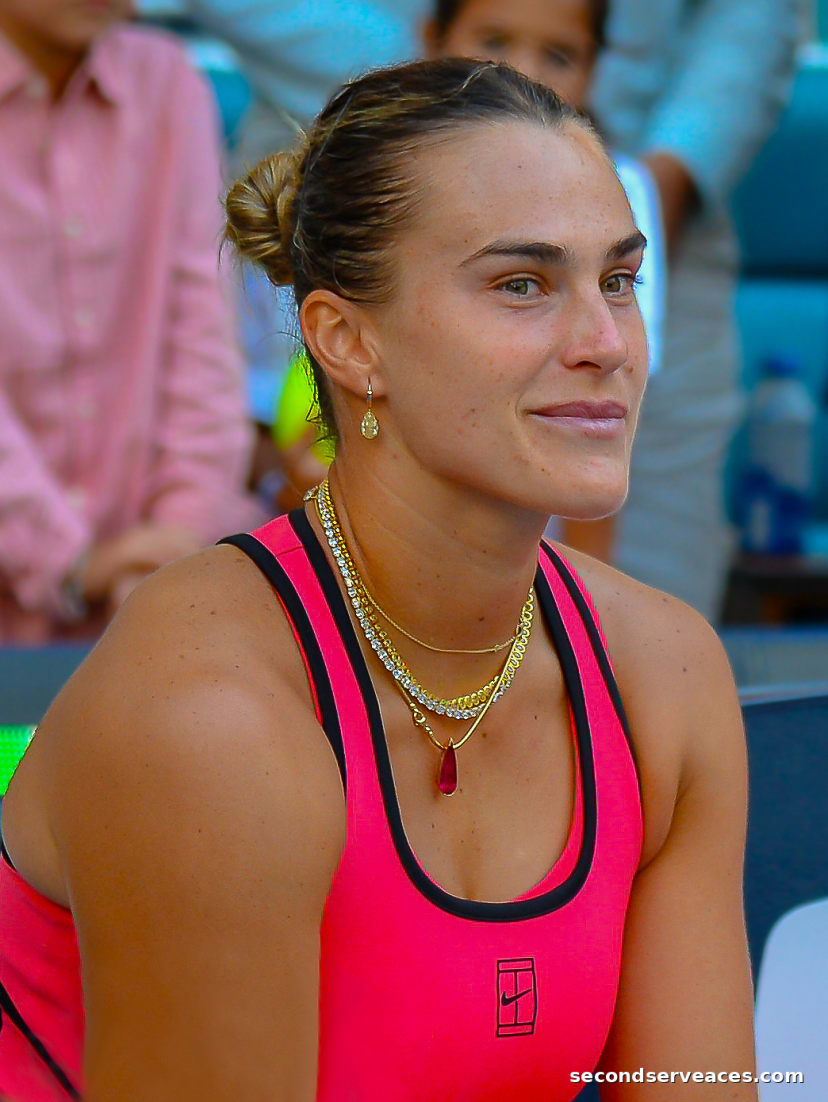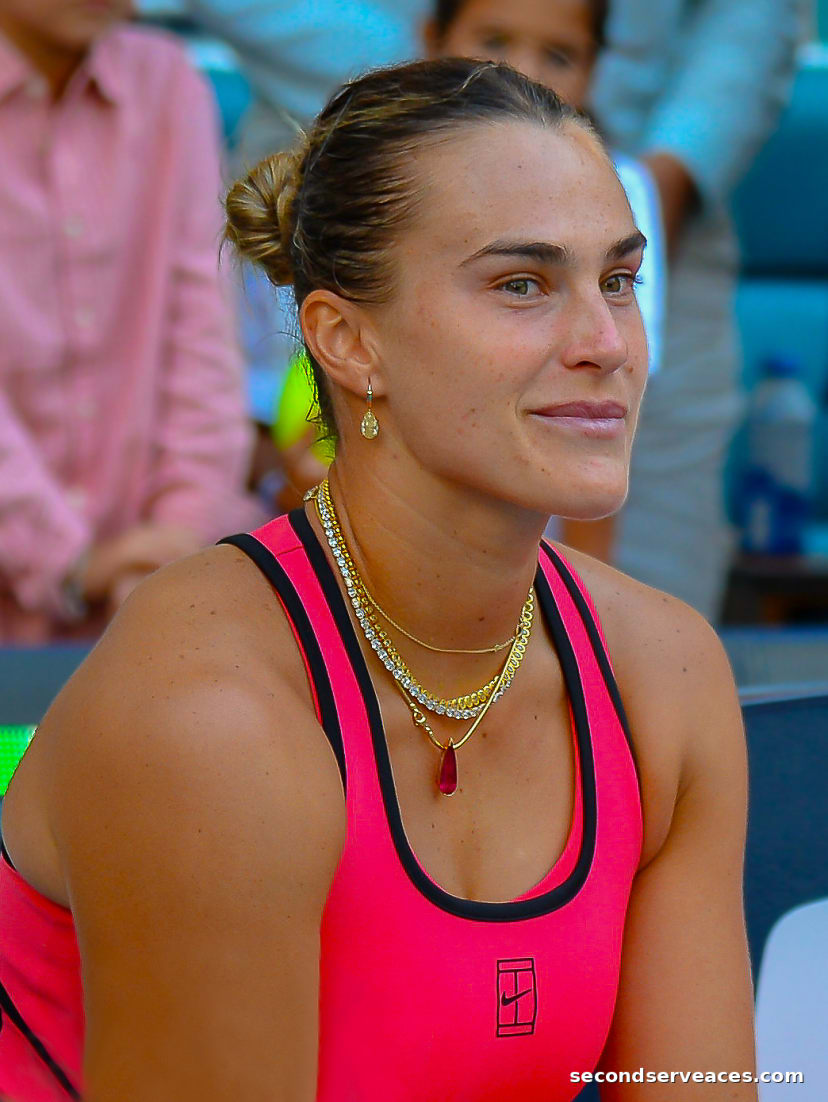
The hard courts of Miami possess a peculiar, abrasive friction—a granular surface that demands heavy topspin and mercilessly taxes the kinetic chain. This year, the humid air of South Florida has acted as a solvent, dissolving the established hierarchy with sudden, violent efficiency. ATP world number one Carlos Alcaraz and six-time Grand Slam champion Iga Swiatek both found themselves ejected from the tournament's geometry startlingly early, leaving a structural void in the draw.
Listen to the Second Serve Podcast
Get our daily AI-synthesized audio briefings and match reviews on the go.
Nature, as we know, abhors a vacuum. Into this spatial and hierarchical emptiness stepped two distinct practitioners of the modern game, both forged in the humid summers of Washington D.C. Frances Tiafoe and Hailey Baptiste have now etched their names into the sport's strange, beautiful ledger, becoming the first two D.C. players to reach the quarterfinals of a 1000-level event simultaneously.
To grasp the sheer improbability of this synchronized run, we must look at the specific wreckage they navigated to get here:
- Tiafoe’s Milestone: The kinetic American secured his 250th career win by defeating 2025 defending Miami Open champion Jakub Mensik in a brutal third-round physical chess match.
- Baptiste’s Flawless Progression: Baptiste has advanced to the final eight without dropping a single set, leaving a trail of elite ball-strikers in her wake.
The Tactical Breakdown
To navigate a WTA 1000 draw without surrendering a set is not merely an athletic feat; it is a profound exercise in problem-solving. Hailey Baptiste's path required a hyper-adaptable racquet face. Consider the distinct, opposing forces she dismantled: Elina Svitolina (a kinetic absorber who thrives on redirecting pace), Jelena Ostapenko (a chaotic, ultra-aggressive baseline hitter), Tatjana Maria (a master of the skidding, low-bouncing underspin slice), and Liudmila Samsonova (a flat-hitting powerhouse).
Defeating Maria, in particular, requires deep knee-bend and violent upward torque to pull a dead, spinning ball over the net cord. Against Ostapenko, the imperative shifts completely to court positioning—taking the ball on the rise to steal time. Baptiste executed these radically different tactical imperatives with the quiet efficiency of an algorithm.
On the men's side, Tiafoe's victory over the defending champion Mensik was a study in spatial manipulation. Mensik hits a massive, heavy ball, but Tiafoe excels at absorbing baseline trauma and utilizing short, slicing angles to pull his opponent into the uncomfortable mid-court. By neutralizing Mensik's first-strike capability, Tiafoe effectively severed the younger player's offensive circuitry.
The Bigger Picture
Reaching 250 career wins is a fascinating threshold in professional men's tennis. It separates the ephemeral talents from the foundational pillars of the ATP ecosystem. For Tiafoe, this milestone at the Miami Open is a testament to longevity and a continuous refinement of his offensive transitions. Yet, the reward for this historical D.C. resurgence is a sudden, steep incline in difficulty.
The quarterfinals offer no respite. Tiafoe is drawn to play second seed Jannik Sinner—a player whose baseline strikes possess the rhythmic, terrifying consistency of a metronome. Meanwhile, Baptiste will face top seed Aryna Sabalenka, requiring yet another tactical mutation to handle Sabalenka's overwhelming, heavy-artillery serving patterns.
Whether this D.C. duo advances further or succumbs to the sheer physical pressure of the top seeds, the geometry of this tournament has already been permanently altered by their presence. They have navigated the friction, solved the variables, and elevated their local tennis ecosystem onto the global stage.
What Carlos Alcaraz Plays With
Babolat Pure Aero 98
Babolat RPM Blast 1.30
Babolat VS Original (12-Pack)
Nike Vapor Pro 2
Analyze Frances Tiafoe vs. Hailey Baptiste
Predict tactical adjustments, momentum swings, and serve strategy options for this match-up using our AI simulator.
The Aces Tactical Panel
This report was curated and edited by Bhaskar Goel. Tactical analysis and technical insights were provided by our specialized panel of expert correspondents.
Julian Price
Senior Tactical Correspondent
Stuffy, pedantic British academic and historian specializing in match momentum and historical context.
Elena Cruz
Director of Analytical Research
Data scientist specializing in court surface physics and movement patterns.
Bhaskar
The Editor & Fan
Passionate tennis player and site editor bringing everyday amateur insights and relatable fan commentary.
Arthur Vance
Senior Existential Analyst
Deep, eccentric, and DFW-inspired. Models court metaphysics, kinetic beauty, and player psychology.
Leo Sterling
High-Performance Consultant
Hard-nosed ex-trainer from Melbourne with a no-nonsense view on tour fitness.