The Contaminated Colombian Dinner of 2022
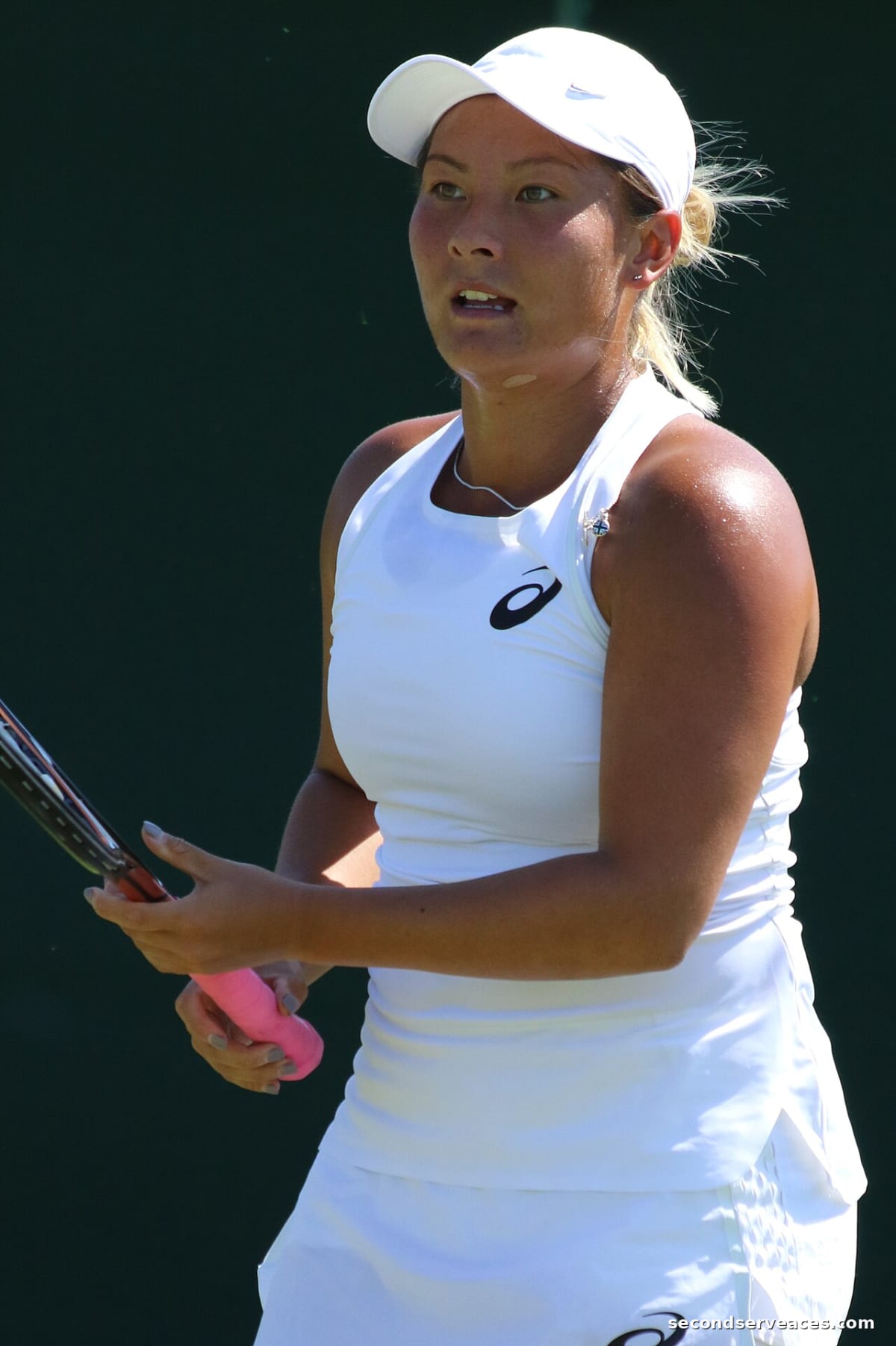
In the hyper-regulated ecosystem of professional tennis, a player's body is not merely an instrument of athletic expression but a biological ledger subject to constant, unannounced audits. For British aggressive baseliner Tara Moore, the ledger was suddenly and catastrophically flagged during a 2022 trip to Colombia. The routine collection of a urine sample revealed the presence of boldenone and nandrolone, two anabolic steroids that instantly transformed her status from an active competitor to a persona non grata.
Listen to the Second Serve Podcast
Get our daily AI-synthesized audio briefings and match reviews on the go.
Moore’s immediate defense did not center on a clandestine doping regimen but rather on the mundane act of eating dinner. She argued that the positive test was the direct result of consuming meat contaminated with steroids, a systemic issue well-documented in certain South American nations. The defense of accidental ingestion through local agriculture is a familiar refrain in modern sports, yet it remains one of the most difficult to prove to the satisfaction of tennis's governing bodies.
This sudden halt came at a time when the British veteran, known for her aggressive baseline play and a career built on the hard court trenches of the ITF circuit, was navigating the delicate twilight of her playing years. With 9 ITF singles titles and 18 doubles titles to her name, as detailed on her Wikipedia profile, Moore was suddenly forced to trade the physical reality of baseline rallies for the dry, paper-strewn desks of sports law.
The ITIA Intervention and the Four-Year CAS Ban
The machinery of tennis justice is notoriously uncompromising, operating under a doctrine of strict liability that places the ultimate burden of what enters a player's body squarely on their own shoulders. Following the initial positive test, the International Tennis Integrity Agency (ITIA) pursued the matter with characteristic bureaucratic rigor. The case eventually wound its way to the highest court in sports arbitration, setting up a high-stakes legal volley.
The Court of Arbitration for Sport (CAS) ultimately delivered a devastating blow, imposing a four-year ban on Moore following an appeal by the ITIA. For a player who has spent over a decade laboring through the lower tiers of the professional circuit, a four-year suspension is not merely a temporary pause; it is a career-ending sentence delivered via legal PDF. The decision highlighted the vast, often terrifying gap between a player's subjective intent and the objective reality of a laboratory report.
This ruling sent shockwaves through the lower echelons of the tour, where players lack the sprawling entourages and personal chefs of the elite top ten. The CAS decision solidified a precedent that even the most plausible claims of environmental contamination face an uphill battle against the sport's anti-doping apparatus. It underscored the sheer isolation of the individual athlete when caught in the gears of global sports governance.
The Dismissed Twenty-Million-Dollar WTA Lawsuit
Refusing to accept the quiet termination of her career, Moore launched a counter-offensive in the American legal system, filing a massive $20 million lawsuit against the WTA Tour in a New York federal court. The core of her argument was simple: the tour had failed in its duty of care by neglecting to warn players about the specific, elevated risks of steroid-contaminated meat in Colombia. It was an attempt to shift the burden of vigilance from the solitary player to the multi-million-dollar organization that sanctions these global events.
However, the federal judiciary proved to be just as unyielding as the sports arbitrators. U.S. District Judge Andrew Carter dismantled Moore's claims, throwing out the lawsuit entirely. Judge Carter ruled that there was no viable legal basis for Moore’s assertions that the arbitration process had deprived her of a fair hearing or that the arbitrators had exceeded their designated powers.
The dismissal of the lawsuit represents a definitive legal dead-end for Moore’s attempts to seek financial restitution from the tour. In the eyes of the law, the WTA’s role as a sanctioning body does not extend to policing the local food supply of host nations, leaving players to navigate the culinary hazards of international travel at their own peril. The ruling reinforces the legal immunity of sports federations regarding the enforcement of their drug-testing protocols.
The Long Road to December 2027
With her legal avenues in the United States exhausted, Moore faces a bleak timeline that extends far past the horizon of her prime athletic years. Her four-year ban is officially set to expire in December 2027. By the time she is legally permitted to step back onto a professional court, Moore will be 35 years old—an age where even the most blessed careers are usually winding down.
The physical cost of a five-year competitive absence is almost impossible to overstate. Tennis is a kinetic art form that demands a continuous, daily calibration of reflex and muscle memory; to be locked out of this ecosystem for half a decade is to undergo a form of existential exile. The aggressive baseline style that defined her career requires a level of match fitness that cannot be replicated in private practice sessions or gym workouts.
Ultimately, Moore's legal saga serves as a sobering reminder of the fragile nature of a professional tennis career. Behind the glamorous facade of the grand slams lies a highly precarious existence where a single meal can unravel decades of hard work. As the tour moves on, Moore remains a cautionary figure, waiting out the clock in a quiet exile that will not end until the closing days of 2027.
Rivalry Matchup & Player Profiles
| Metric | Tara Moore |
|---|---|
| Rank | Unranked (Inactive) |
| Age | 34 |
| Country | United Kingdom |
| Height | 5' 4" (1.63 m) |
| Handedness | Right-handed |
| Play Style | Aggressive baseliner |
| Career Titles | 9 ITF Singles, 18 ITF Doubles |
Tara Moore's career profile paint a picture of a dedicated competitor who built her reputation on the grueling ITF circuit rather than the flashy main stages of the WTA Tour. Her aggressive baseline play style allowed her to capture 9 ITF Singles titles and 18 ITF Doubles titles over a career spanning more than a decade. At 5' 4", she relied on relentless court coverage and explosive, flat groundstrokes to dictate play from the back of the court.
With her current inactive status and the dismissal of her legal appeal, these career statistics are frozen in time. The transition from active competitor to legal appellant has effectively closed the competitive chapter for the British veteran, leaving her record as a testament to her years of baseline labor before the sudden intervention of the 2022 doping ban.
Essential Matchday Add-Ons
Tournament-tested accessories and high-frequency consumables every competitive player keeps in their bag.
Tourna Grip Original Dry Feel Overgrip (10-Pack)
4.8 ★ (12,000+ reviews)
The gold standard for sweaty hands. Proprietary dry feel absorbs moisture better as play intensifies.
Luxilon ALU Power 125 Silver String Set
4.9 ★ (3,500+ reviews)
Unrivaled control and spin potential used by over 50% of the ATP Top 100 players.
Babolat Custom Damp Vibration Dampener (2-Pack)
4.7 ★ (4,200+ reviews)
Customizable dampening with removable central O-ring for fine-tuning court feedback and sound.
Penn Championship Extra Duty Tennis Balls (4-Can Pack)
4.7 ★ (8,900+ reviews)
Official ball of USTA League Tennis with extra-duty felt designed for abrasive hard courts.
Simulate Tara Moore Match Scenarios
Simulate high-pressure scenarios, score leverage points, and tactical responses for ATP and WTA players.
The Aces Tactical Panel
This report was curated and edited by Bhaskar Goel. Tactical analysis and technical insights were provided by our specialized panel of expert correspondents.
Julian Price
Senior Tactical Correspondent
Stuffy, pedantic British academic and historian specializing in match momentum and historical context.
Elena Cruz
Director of Analytical Research
Data scientist specializing in court surface physics and movement patterns.
Bhaskar
The Editor & Fan
Passionate tennis player and site editor bringing everyday amateur insights and relatable fan commentary.
Arthur Vance
Senior Existential Analyst
Deep, eccentric, and DFW-inspired. Models court metaphysics, kinetic beauty, and player psychology.
Leo Sterling
High-Performance Consultant
Hard-nosed ex-trainer from Melbourne with a no-nonsense view on tour fitness.
Related Reports

Quick Answers
Why did Tara Moore sue the WTA Tour for $20 million?+
Moore claimed the WTA failed to warn players about the risks of steroid-contaminated meat in Colombia, where she tested positive for boldenone and nandrolone in 2022.
Why did the federal judge dismiss Tara Moore's lawsuit?+
U.S. District Judge Andrew Carter found no legal basis for Moore's claims, ruling that the arbitration process did not deprive her of a fair hearing or exceed its powers.
When will Tara Moore's doping ban end?+
Tara Moore's four-year doping ban is scheduled to end in December 2027.