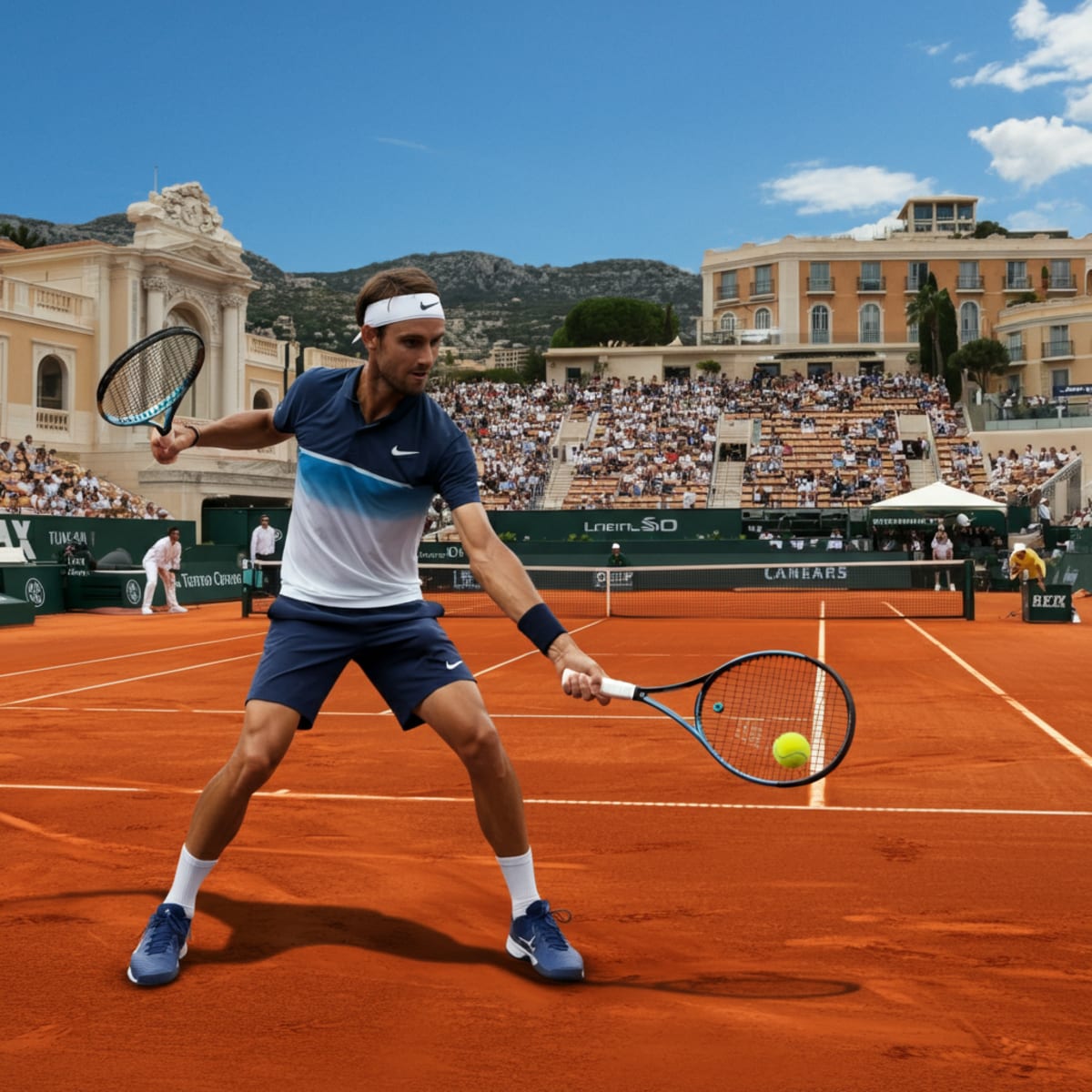
Rankings are just a number on the red dirt of Monte Carlo.
Everyone thought Stefanos Tsitsipas was toast. Slipping out of the ATP top 50 during a brutal, soul-crushing 2025 campaign will do that to a player's reputation. The whispers around the locker room were growing louder, but the Greek star just fed the doubters a massive slice of humble pie on the Principality's red dirt. Tsitsipas dismantled world number six Alex de Minaur 6-3, 7-6 in the third round of the Monte Carlo Masters, reminding the tennis establishment exactly what happens when he steps onto his absolute favorite surface.
Match momentum shifted definitively early in the opening frame. Tsitsipas didn't just win; he dictated the terms of engagement against one of the most tenacious counter-punchers on the tour. Following the straight-sets victory, Tsitsipas spoke with Ziggo Sport and flat-out dismissed the ranking panic that seems to obsess everyone in the media but him. He stated plainly that his current status outside the top 50 does not bother him in the slightest. Looking at the way he just struck the ball against a top-10 stalwart, why on earth should it?
The Tactical Breakdown
How do you hit through one of the fastest movers on the ATP Tour? You don't try to outrun him; you out-spin him. On a slick hard court, De Minaur's flat, penetrating groundstrokes rob opponents of recovery time. But the Monte Carlo clay fundamentally alters the physics of the sport, and Tsitsipas exploited those conditions brilliantly.
Tsitsipas utilized his trademark heavy topspin forehand to push the Australian deep behind the baseline, executing a game plan that felt aggressively claustrophobic for De Minaur. Here is how the Greek star tilted the court in his favor:
- Heavy Topspin vs. Flat Strikes: De Minaur thrives on redirecting pace. By injecting massive RPMs into his cross-court forehand, Tsitsipas forced the ball up around De Minaur's shoulders, completely neutralizing the Aussie's preferred waist-high strike zone.
- Exploiting Court Geometry: Tsitsipas continually opened up the court, pulling De Minaur wide into the doubles alleys before stepping inside the baseline to shorten the rallies and dictate play.
- Clutch Break Point Execution: In the high-pressure cauldron of that tight second-set tiebreak, Tsitsipas backed his offensive instincts. He didn't wait for De Minaur to miss; he actively took the racquet out of the Australian's hands.
The Bigger Picture
Tsitsipas has a legendary affinity for Monte Carlo. He practically owns a timeshare on Court Rainier III, having hoisted the trophy multiple times in the past. When he finds his footing on this specific European clay, his confidence swells, and his one-handed backhand suddenly becomes a lethal weapon rather than a defensive liability.
But the road to the trophy does not get any easier. Next up in the fourth round is the explosive French talent Arthur Fils. Here is the spicy subplot that has my attention: Fils is now working with none other than Goran Ivanisevic. Bringing in a tactical mastermind who previously engineered Novak Djokovic's dominance adds an entirely new layer of danger to this upcoming clash.
Ivanisevic knows exactly how to construct a champion's mindset and, more importantly, how to pick apart a one-handed backhand under pressure. The strategic chess match between Ivanisevic's scouting report and Tsitsipas' current wave of baseline confidence will be electric. Stefanos might not carry a top-50 number next to his name right now, but ranking mathematics mean absolutely nothing when a former champion rediscovers his rhythm on the dirt. The rest of the draw has been put on notice.