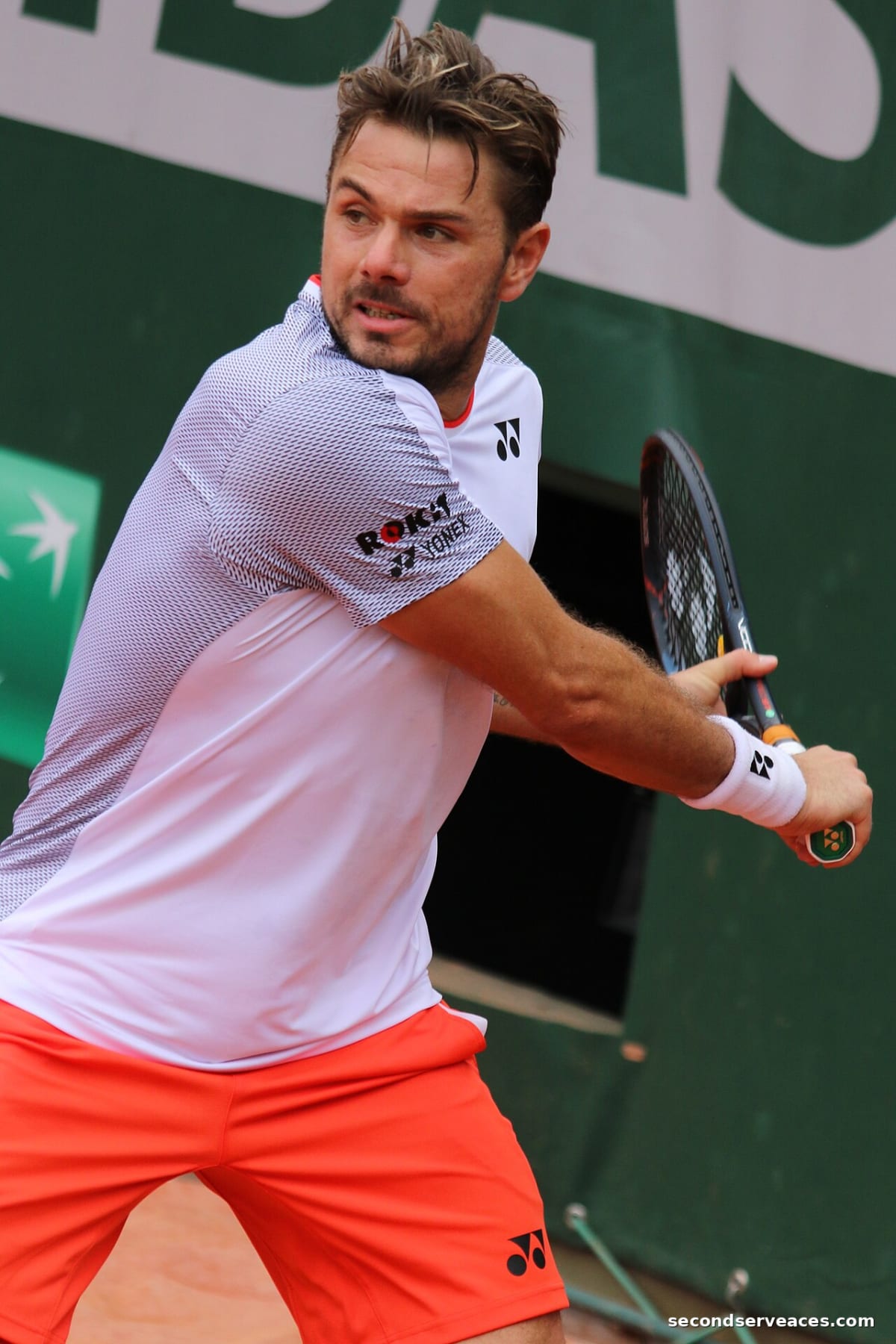
The decision of the United States Tennis Association (USTA) to deny Stan Wawrinka a wild card for the upcoming tournament in New York strikes a discordant chord for those who appreciate the heavy, physical poetry of the Swiss veteran's game. Wawrinka, now sitting at No. 125 in the ATP rankings, is navigating what is widely expected to be his final season on the professional circuit. Instead of granting the 2016 champion a final bow on the blue asphalt of Flushing Meadows, the USTA opted to award its final wild card to American Patrick Kypson, ranked No. 115.
Listen to the Second Serve Podcast
Get our daily AI-synthesized audio briefings and match reviews on the go.
It is a cold, pragmatic calculus that prioritizes domestic development over historical romance. Yet Wawrinka responded not with rancor, but with a characteristically class-bound message of gratitude to New York and the tournament that hosted his greatest triumph. This grace stands in stark contrast to the modern tour’s relentless churn. Even as contemporaries face the bittersweet twilight of their careers—with Gaël Monfils recently reflecting that "seeing the guard change so abruptly is a heavy reminder of our own tennis mortality," as we explored in our coverage of the mixed doubles field at the Svitolina & Monfils Reach US Open Mixed Semis—Wawrinka chooses to exit the American stage with quiet dignity.
Heavy Topspin and the Anatomy of a Classic Tiebreak
To understand what New York will miss is to recall the sheer kinetic violence of Wawrinka’s peak years. Unlike the modern baseline sliders, Wawrinka’s game was built on heavy, pulverizing topspin from both wings, most notably that single-handed backhand that seemed to defy the laws of physics. In his prime, he didn't just play tennis; he bludgeoned his opponents into submission through sheer physical exertion, a style that propelled him to three Grand Slam titles and the world No. 3 ranking.
Consider his tactical execution in high-leverage tiebreaks, such as his legendary 2016 final run at the US Open. In those high-pressure tiebreaks, Wawrinka's strategy relied on deep, central depth to neutralize the opponent's angles before unleashing a high-risk, down-the-line backhand on the seventh or eighth shot of the rally. He would deliberately sacrifice court position early in the point, absorbing pace on his forehand side, only to pivot and strike a devastating blow that shifted the match momentum entirely. It was a high-wire act of controlled aggression that defined his competitive peak.
Rivalry Matchup & Player Profiles
| Metric | Stanislas Wawrinka | Roger Federer |
|---|---|---|
| Rank | No. 125 | Retired |
| Age | 41 | 45 |
| Country | Switzerland | Switzerland |
| Height | 1.83 m (6 ft 0 in) | 1.85 m (6 ft 1 in) |
| Play Style | Aggressive baseliner | All-court player |
| Career Titles | 16 Singles, 3 Doubles | 103 Singles, 8 Doubles |
While Roger Federer dominated their professional head-to-head record with a commanding 23-3 lead—concluding with their final encounter at the 2019 French Open quarterfinals—the relationship between the two Swiss icons transcended mere rivalry. Together, they formed a legendary partnership, capturing the 2008 Olympic gold medal in men's doubles and securing the 2014 Davis Cup for Switzerland, cementing a golden era for Swiss tennis as detailed in our look at Roger Federer and Andy Roddick Set for Arthur Ashe Return.
Wawrinka, often playing in the shadow of Federer's ethereal elegance, carved out his own legendary niche on tour. His three Grand Slam titles were won by physically imposing his will on the big three, proving that on his day, Wawrinka's heavy baseline artillery could break through any defensive wall in tennis history. His absence from the main draw in New York marks the closing of a monumental chapter.
What Novak Djokovic Plays With
Head Speed Pro
Luxilon ALU Power 125
Head Prime Tour (12-Pack)
Asics Court FF 3 Novak
Analyze Stan Wawrinka vs. Roger Federer
Predict tactical adjustments, momentum swings, and serve strategy options for this match-up using our AI simulator.
The Aces Tactical Panel
This report was curated and edited by Bhaskar Goel. Tactical analysis and technical insights were provided by our specialized panel of expert correspondents.
Julian Price
Senior Tactical Correspondent
Stuffy, pedantic British academic and historian specializing in match momentum and historical context.
Elena Cruz
Director of Analytical Research
Data scientist specializing in court surface physics and movement patterns.
Bhaskar
The Editor & Fan
Passionate tennis player and site editor bringing everyday amateur insights and relatable fan commentary.
Arthur Vance
Senior Existential Analyst
Deep, eccentric, and DFW-inspired. Models court metaphysics, kinetic beauty, and player psychology.
Leo Sterling
High-Performance Consultant
Hard-nosed ex-trainer from Melbourne with a no-nonsense view on tour fitness.
Related Reports
Quick Answers
Why did Stan Wawrinka miss out on the US Open main draw?+
The USTA decided not to award Wawrinka a wild card for his expected final season, giving the final slot to American Patrick Kypson instead.
What is Stan Wawrinka's career-high ATP ranking?+
Wawrinka reached a career-high ranking of world No. 3 and won three Grand Slam singles titles, including the 2016 US Open.
What is the head-to-head record between Stan Wawrinka and Roger Federer?+
Roger Federer led their professional head-to-head rivalry 23-3, though the pair famously won Olympic doubles gold together in 2008.