Tennis is solitary confinement with a scoreboard. The court is a mirror, and when your body is broken, there is absolutely nowhere to hide. The hard courts of Indian Wells are notoriously unforgiving—a gritty, high-friction surface that grabs your shoes and sends shockwaves up your shins, through your knees, and straight into your spine. For Britain’s Sonay Kartal, the desert became the site of a painful, yet inevitable, surrender.
Listen to the Second Serve Podcast
Get our daily AI-synthesized audio briefings and match reviews on the go.
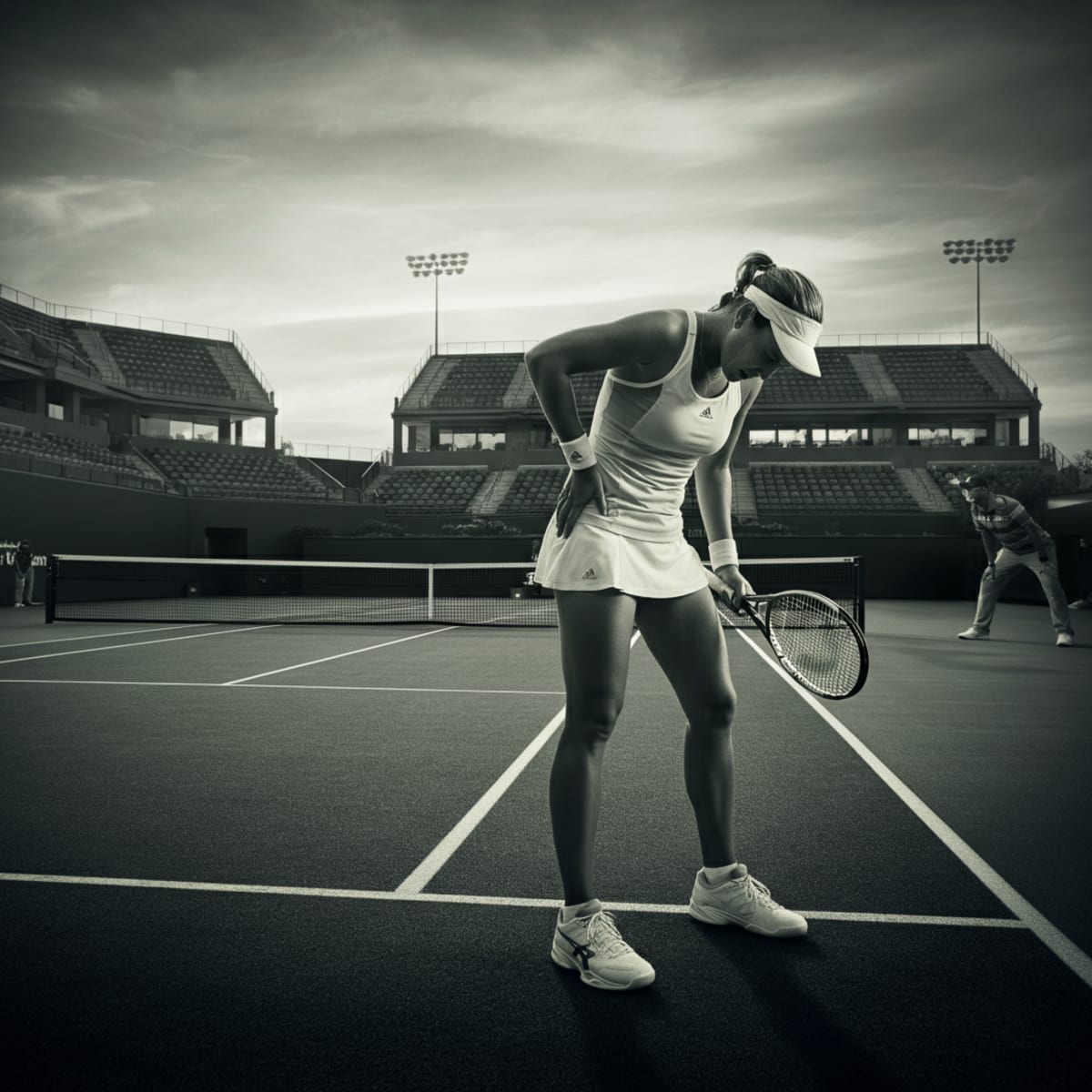
In a devastating conclusion to an otherwise stellar run, Kartal was forced to retire from her fourth-round match at Indian Wells due to a debilitating back injury. She was standing across the net from world number three Elena Rybakina—arguably the last player on the planet you want to face when you are operating at anything less than absolute maximum capacity.
Kartal summarized the situation with a profound clarity that only a battered athlete can muster, describing the sequence of events leading to her withdrawal as simply “one match too many.”
That phrase is the quiet terror every professional player lives with. We push, we tape, we grind, and we pretend the redline is just a suggestion. You convince yourself that the pain is just weakness leaving the body, until the body abruptly decides to turn the lights off. A back injury in tennis isn’t just a localized pain; it is the complete dismantling of your athletic foundation. When your back goes, your kinetic chain shatters, and against the elite, you are left defenseless in the desert.
The Tactical Breakdown
When you step onto the court against an opponent of Rybakina’s pedigree, you need absolute physical harmony. Rybakina does not play tennis; she dictates it. Her game is built on a foundation of effortless power, taking the ball early and driving it flat through the court geometry. To survive against her, let alone win, requires explosive movement and a highly resilient defensive posture.
When we examine the mechanics of this matchup through the lens of a compromised back, the tactical impossibility for Kartal becomes glaringly obvious:
- The Collapse of the Kinetic Chain: The tennis serve and groundstrokes are not arm movements; they are full-body rotational mechanics. Power is generated from the ground, transferred through the legs, torqued through the core and lower back, and delivered through the shoulder. A back injury severs this chain completely. Without it, Kartal would be forced into “arm-ing” the ball, resulting in a catastrophic loss of pace and depth.
- Surviving the First-Strike Onslaught: Rybakina is arguably the premier first-strike player on the WTA Tour. Her serve is a heavy, penetrating weapon designed to elicit weak replies. To return it, a player must split-step with a low center of gravity and explode out of the corners. A bad back makes that deep knee bend agonizing, leaving the returner standing tall and reacting a fraction of a second too late.
- Rally Tolerance and Attrition: Defending against Rybakina's flat, driving groundstrokes requires absorbing immense pace and redirecting it. You are constantly on the stretch, lunging into the corners. When the lower back muscles spasm or fail, the ability to decelerate and recover for the next shot vanishes. You aren't just losing points; you are actively risking long-term structural damage.
The Vulnerability of the Second Serve
Historically, players who attempt to play through spinal or lumbar injuries see their serve speeds plummet. The toss becomes erratic because the back cannot arch properly to track the ball. Against a returner like Rybakina, floating a compromised second serve into the middle of the box is tantamount to throwing raw meat to a lion. The pressure mounts exponentially, and the tactical well dries up instantly.
The Bigger Picture
While the retirement stings, Kartal’s ability to reach the fourth round at a WTA 1000 event is a monumental testament to her grit and her evolving game. But it also highlights the stark, Darwinian reality of the tour's upper echelon. The physical tax of reaching the second week of a Masters-level event is exorbitant.
There is a massive chasm between playing well and possessing the physical equity required to survive a two-week hard-court grind. The transition from the lower tiers of professional tennis to the main stages of events like Indian Wells exposes every single physical vulnerability. The balls are heavier, the rallies are more punishing, and the opponents give you zero free points. Kartal proved she possesses the racket skills and the mental fortitude to stand among the world’s best. Now, the challenge becomes building the armor necessary to survive the battlefield.
The Silent Assassin Marches On
For Elena Rybakina, the draw opens up, and her energy reserves remain largely untouched. The world number three is a master of emotional containment; she rarely expends unnecessary mental energy, and a shortened match only amplifies her physical advantage heading into the quarterfinals.
In the brutal calculus of professional tennis, one player’s tragedy is another’s strategic advantage. Rybakina will take the extra rest and prepare her heavy artillery for the next round. Kartal, meanwhile, will return to the physio table, forced to listen to her body after demanding the impossible from it. "One match too many" is a tough pill to swallow, but it is also the ultimate learning experience. In this sport, you only discover your true limits by crashing headfirst into them.
Analyze Sonay Kartal vs. Elena Rybakina
Predict tactical adjustments, momentum swings, and serve strategy options for this match-up using our AI simulator.
The Aces Tactical Panel
This report was curated and edited by Bhaskar Goel. Tactical analysis and technical insights were provided by our specialized panel of expert correspondents.
Julian Price
Senior Tactical Correspondent
Stuffy, pedantic British academic and historian specializing in match momentum and historical context.
Elena Cruz
Director of Analytical Research
Data scientist specializing in court surface physics and movement patterns.
Bhaskar
The Editor & Fan
Passionate tennis player and site editor bringing everyday amateur insights and relatable fan commentary.
Arthur Vance
Senior Existential Analyst
Deep, eccentric, and DFW-inspired. Models court metaphysics, kinetic beauty, and player psychology.
Leo Sterling
High-Performance Consultant
Hard-nosed ex-trainer from Melbourne with a no-nonsense view on tour fitness.