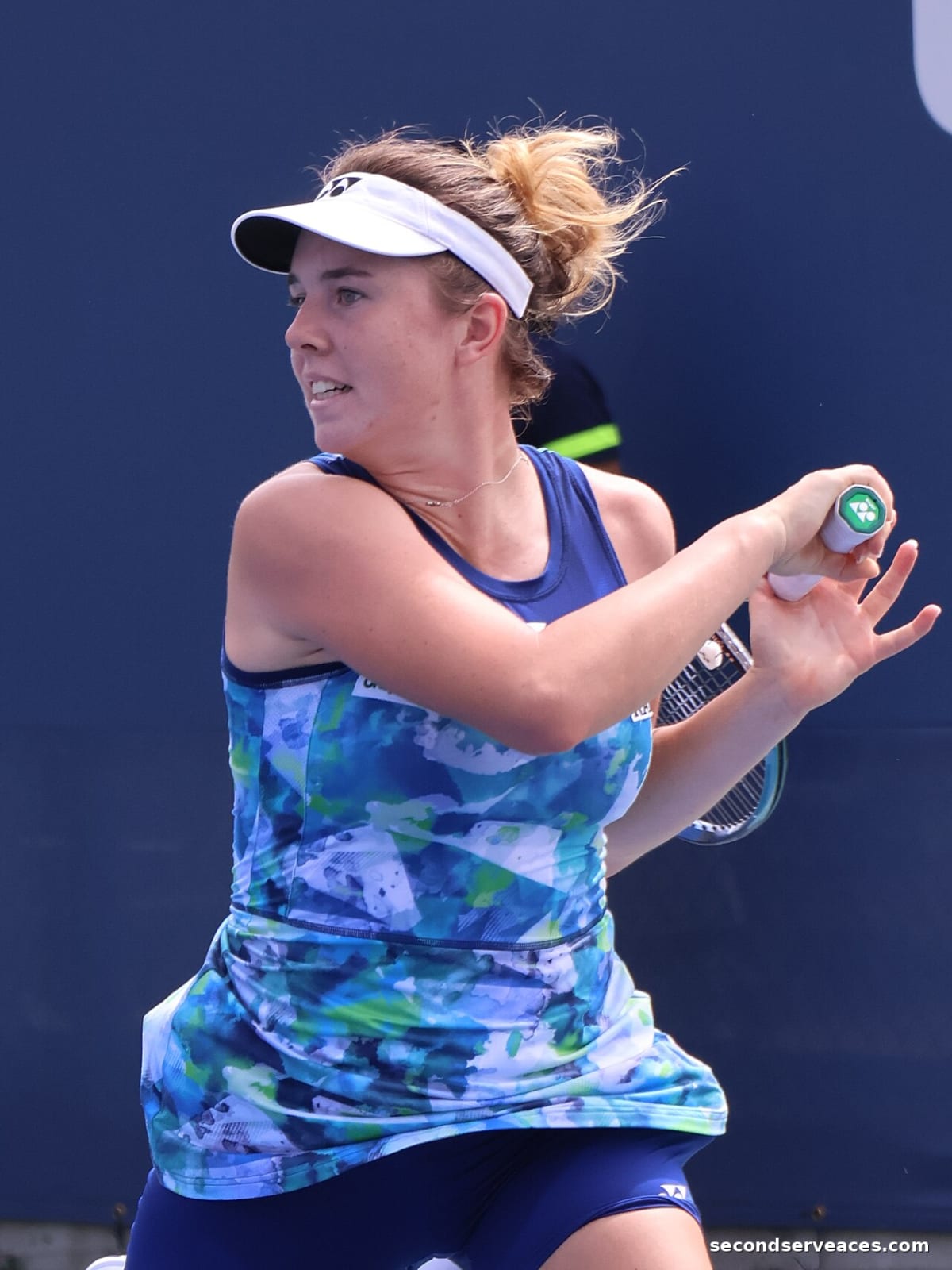
Noskova Prioritizes Recovery Following Cincinnati Doubles Triumph
Linda Noskova's decision to withdraw from the Monterrey Open stems directly from a grueling, successful run at the Cincinnati Open. Partnering to secure the doubles title, the 21-year-old Czech chose to reset her schedule rather than risk immediate physical depletion on the Mexican hard courts. This decision reflects the modern professional's calculated approach to load management, especially with major hard-court commitments looming on the horizon.
Listen to the Second Serve Podcast
Get our daily AI-synthesized audio briefings and match reviews on the go.
According to the official WTA Tour Home, scheduling adjustments have become a critical survival mechanism. Noskova's aggressive baseline style, characterized by heavy, flat groundstrokes hit from inside the baseline, demands pristine physical conditioning. Forcing a quick transition to Monterrey's high-altitude conditions immediately after a deep tournament run would have compromised her court positioning and timing.
This withdrawal disrupts what was highly anticipated as a deep run in Mexico. Fans looking for early tournament action can read our preview of other competitors, such as the Parks vs Marcinko Monterrey Preview, to see how the remaining field shapes up. Noskova's absence shifts the tournament's competitive balance, leaving a vacuum at the top of the draw.
Abdominal Strain Halts Cirstea's Hard-Court Momentum
Sorana Cirstea's withdrawal is a direct consequence of physical breakdown during her impressive run to the Cincinnati fourth round. The Romanian veteran sustained an abdominal injury, a notoriously difficult setback for players who rely on explosive serving mechanics. An abdominal strain limits a player's ability to fully extend on the serve, stripping power and spin from the ball and leaving them vulnerable on the return.
In professional tennis, the serving motion requires a violent upward acceleration that puts immense pressure on the core muscles. Cirstea's game relies on setting up quick points behind a heavy first serve, a tactic that became impossible to execute without pain. Rather than risking a long-term tear that could sideline her for months, Cirstea chose to step away from the Abierto GNP Seguros to undergo targeted rehabilitation.
This injury illustrates the unforgiving nature of the North American summer hard-court swing. The friction of the hard courts forces sudden deceleration, which transmits shock waves up through the legs and into the core. Cirstea's departure removes one of the most experienced hard-court competitors from the Monterrey field, forcing tournament organizers to adjust their seeding allocations.
Wrist Issues Sidelined Sonmez as Alexandrova Assumes Top Seed
Zeynep Sonmez added to the growing list of casualties, pulling out of the tournament due to a right wrist problem. For a modern professional, wrist integrity is paramount; any instability prevents the rapid racquet-head acceleration needed to generate topspin. Without the ability to brush up on the ball, players lose the necessary margin over the net, making deep, aggressive baseline rallies highly risky.
The cascade of withdrawals has dramatically altered the tournament's hierarchy, elevating Ekaterina Alexandrova to the top seed. Alexandrova, known for her flat, penetrating groundstrokes and aggressive return positioning, now faces a modified path through the draw. This sudden shift in seeding places intense pressure on the remaining top-ranked players, including Elise Mertens and Anastasia Potapova, who must now navigate a highly unpredictable bracket.
As the tournament gets underway, the physical toll of the WTA calendar remains a central talking point among analysts. The quick transition between varying court speeds and ball types across different continents continues to test the physical limits of the world's elite. With six players out before the second round, the Monterrey Open will serve as a test of endurance for the lower-ranked competitors looking to capitalize on an open draw.
Rivalry Matchup & Player Profiles
While Linda Noskova's withdrawal prevents her from competing this week, her trajectory remains one of the most compelling stories on the WTA tour. The young Czech has rapidly climbed the WTA Rankings, establishing herself as a formidable force with her flat, aggressive groundstrokes. To understand her competitive standing, we look at her ongoing domestic rivalry with fellow Czech Marie Bouzkova, a classic contrast of styles between an aggressive baseliner and a tactical counterpuncher.
| Metric | Linda Noskova | Marie Bouzkova |
|---|---|---|
| Rank | No. 6 | No. 26 |
| Country | Czech Republic | Czech Republic |
| Age | 21 | 28 |
| Height | 5'10" (1.79 m) | 5'11" (1.80 m) |
| Handedness | Right-handed | Right-handed |
| Play Style | Aggressive baseliner | Tactical counterpuncher |
| Career Titles | 3 | 4 |
Bouzkova currently leads their head-to-head series 3-1. Their most recent encounter occurred in the final of the 2025 Prague Open, where Bouzkova overcame an early deficit to defeat Noskova 2-6, 6-1, 6-3. Bouzkova’s ability to absorb Noskova's heavy pace and redirect the ball into awkward court positions proved decisive in that match, highlighting the tactical chess match that defines their encounters.
Noskova's development will depend on her ability to add variety to her heavy baseline game, especially when facing defensive masters like Bouzkova. For detailed player biographies, fans can check the Linda Noskova Wikipedia page. As both Czech stars continue their campaigns, their contrasting approaches to baseline rallies and pace redirection will remain a key storyline on the tour.
What Aryna Sabalenka Plays With
Wilson Blade 98 v9 (16x19)
Luxilon ALU Power 125
Wilson Pro Overgrip (12-Pack)
Analyze Linda Noskova vs. Marie Bouzkova
Predict tactical adjustments, momentum swings, and serve strategy options for this match-up using our AI simulator.
The Aces Tactical Panel
This report was curated and edited by Bhaskar Goel. Tactical analysis and technical insights were provided by our specialized panel of expert correspondents.
Julian Price
Senior Tactical Correspondent
Stuffy, pedantic British academic and historian specializing in match momentum and historical context.
Elena Cruz
Director of Analytical Research
Data scientist specializing in court surface physics and movement patterns.
Bhaskar
The Editor & Fan
Passionate tennis player and site editor bringing everyday amateur insights and relatable fan commentary.
Arthur Vance
Senior Existential Analyst
Deep, eccentric, and DFW-inspired. Models court metaphysics, kinetic beauty, and player psychology.
Leo Sterling
High-Performance Consultant
Hard-nosed ex-trainer from Melbourne with a no-nonsense view on tour fitness.
Related Reports

Quick Answers
Why did Linda Noskova withdraw from the Monterrey Open?+
Linda Noskova withdrew due to a schedule change following her successful run to the Cincinnati doubles title.
What injury forced Sorana Cirstea to pull out of the tournament?+
Sorana Cirstea withdrew from the Abierto GNP Seguros due to an abdominal injury sustained during her run to the Cincinnati fourth round.
Who became the top seed at the Monterrey Open after the late withdrawals?+
Ekaterina Alexandrova moved up to become the tournament's top seed following the late withdrawals.