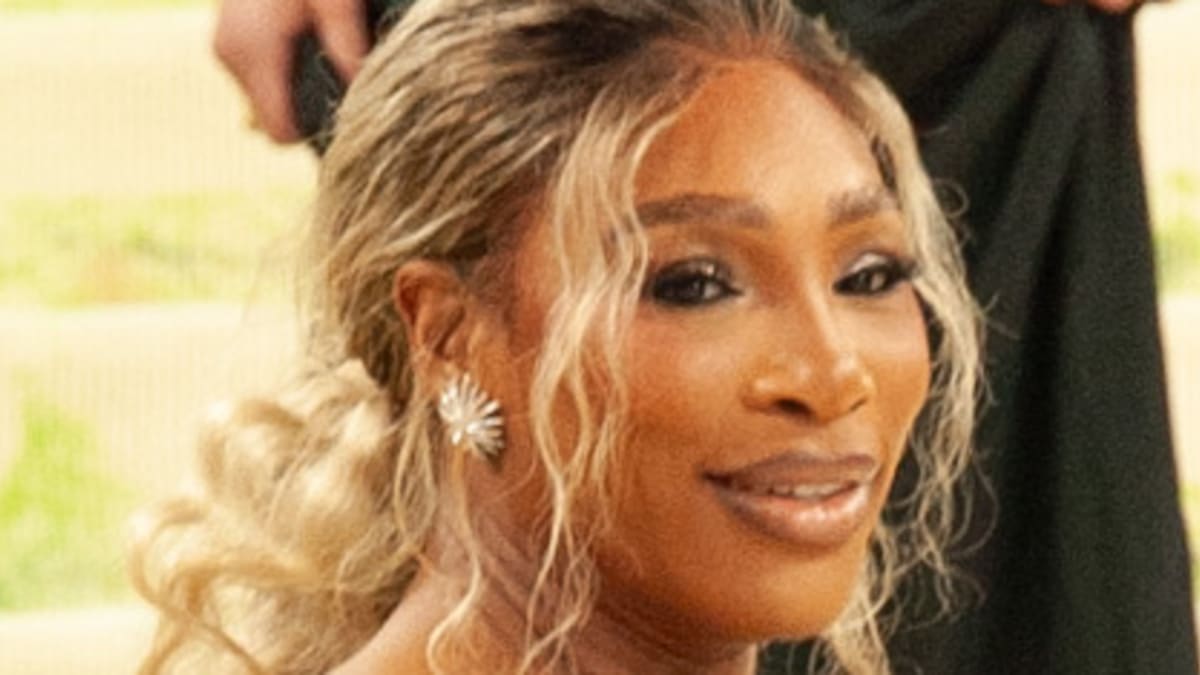
Elite sport thrives on discretion, and Serena Williams’ latest return to the lawn was forged in absolute secrecy. British hitting partner David Quayle was quietly summoned to Florida, tasked with preparing the 44-year-old icon for the specific, unforgiving physics of grass-court tennis. The primary objective of these private sessions was to rebuild the explosive first-step reaction time required to handle low-skidding balls on slick turf.
Listen to the Second Serve Podcast
Get our daily AI-synthesized audio briefings and match reviews on the go.
Quayle’s role went far beyond merely trading baseline rallies. He was instructed to mimic the varied spins and flat, aggressive pace that Williams will face in London. On grass, the kinetic chain must be shorter; there is no time for the looping, heavy topspin preparation that characterizes slower surfaces. Instead, Quayle pushed Williams to shorten her backswing on the return of serve, forcing her to block the ball early and use the opponent's pace to redirect the ball deep into the corners.
This meticulous preparation was essential for managing the physical transition. At 44, joint loading and lateral deceleration are the greatest hurdles when shifting to grass. Quayle's training regimen focused heavily on low-intensity split-steps and rapid recovery drills, ensuring that Williams could defend the middle of the court without overextending her knees. The secrecy surrounding these sessions allowed Williams to work free from media scrutiny, focusing entirely on the technical adjustments needed to make her game viable on the fast lawns of Queen's Club.
The Secret Florida Drills with David Quayle
To translate these physical gains into competitive success, Williams has assembled a formidable brain trust. Longtime coach Jarmere Jenkins is working in tandem with former Grand Slam doubles champion Rennae Stubbs. This partnership brings a sophisticated tactical layer to Williams' comeback. Stubbs, renowned for her sharp doubles mind, is focusing heavily on net positioning, serving targets, and the subtle art of poaching in modern doubles.
In doubles, court coverage is a game of angles rather than raw distance. Stubbs is positioning Williams to dominate the 'T' at the net, using her wing-span to cut off crosscourt passing shots. By keeping her close to the net strap, the coaching staff aims to maximize her reflex volleys, minimizing the need for extensive baseline running. Jenkins, meanwhile, ensures her groundstrokes retain their depth, giving her partner, teenager Victoria Mboko, ample opportunity to clean up at the net.
This coaching dynamic is designed to protect Williams' physical reserves while maximizing her unmatched power. We previously explored this strategic partnership in our feature on Serena Williams Returns: A New Chapter at 44. The division of labor on court is clear: Mboko will handle the bulk of the lateral baseline running, while Williams will act as the primary closer, utilizing her serve and overheads to dictate the rhythm of each point.
Tactical Integration Under Jarmere Jenkins and Rennae Stubbs
The draw at Queen's Club offers no soft landings. Williams and Mboko face a brutal opening test against the third-seeded tandem of Nicole Melichar-Martinez and Erin Routliffe. This matchup will immediately test Williams' tactical discipline and court positioning. Melichar-Martinez and Routliffe are highly experienced doubles specialists who excel at playing low, dipping returns that force opponents to volley up, leaving them vulnerable to aggressive drives.
For Williams, the key to neutralizing this threat lies in her serve placement. To prevent Routliffe from slicing returns low to her feet, Williams must target the body and the T with high-velocity first serves. A flat, accurate serve on grass naturally slides away from the receiver, limiting their ability to generate extreme angles. If Williams can maintain a high first-serve percentage, she can keep the opponents on their heels and protect Mboko from aggressive baseline exchanges.
Furthermore, the team must master the transition zone. On grass, the area between the baseline and the service line is a tactical minefield. As we analyzed in our preview of the event, Serena Williams Teams Up With Victoria Mboko at Queen's, Williams cannot afford to get caught in "no man's land." She must commit fully to either a deep baseline position or a decisive forward charge, using her drive-volley to seize control of the net before Melichar-Martinez can establish her defensive wall.
Navigating the Low-Bounce Grass Demands Against Melichar-Martinez and Routliffe
Queen's Club is merely the opening salvo in a calculated summer campaign. Quayle has already been asked to travel with Williams to Berlin next week, signaling that this comeback is a structured, multi-tournament progression rather than a one-off exhibition. Playing consecutive weeks on grass is a grueling physical challenge, but it is the only way to build the match-play rhythm that practice sessions simply cannot replicate.
The transition to Berlin will require a rapid adaptation to different court speeds and atmospheric conditions. German grass courts often play slightly slower and bounce higher than those in London, which will alter the timing of Williams' groundstrokes. Having Quayle on hand to adjust the training intensity between tournaments will be vital. The coaching team will need to monitor her recovery protocols closely, prioritizing flexibility and explosive power over long, exhausting on-court sessions.
While her partner for Berlin remains unannounced, the strategic intent is clear. Williams is using these doubles appearances to test her physical limits and sharpen her competitive instincts. According to the official WTA Tour Home, elite doubles requires a level of sharp anticipation that can only be forged under pressure. By exposing herself to high-caliber opponents in consecutive weeks, Williams is systematically rebuilding the tactical muscle memory that made her the most dominant force in tennis history.
What Novak Djokovic Plays With
Head Speed Pro
Luxilon ALU Power 125
Head Prime Tour (12-Pack)
Asics Court FF 3 Novak
Analyze Serena Williams vs. Victoria Mboko
Predict tactical adjustments, momentum swings, and serve strategy options for this match-up using our AI simulator.
The Aces Tactical Panel
This report was curated and edited by Bhaskar Goel. Tactical analysis and technical insights were provided by our specialized panel of expert correspondents.
Julian Price
Senior Tactical Correspondent
Stuffy, pedantic British academic and historian specializing in match momentum and historical context.
Elena Cruz
Director of Analytical Research
Data scientist specializing in court surface physics and movement patterns.
Bhaskar
The Editor & Fan
Passionate tennis player and site editor bringing everyday amateur insights and relatable fan commentary.
Arthur Vance
Senior Existential Analyst
Deep, eccentric, and DFW-inspired. Models court metaphysics, kinetic beauty, and player psychology.
Leo Sterling
High-Performance Consultant
Hard-nosed ex-trainer from Melbourne with a no-nonsense view on tour fitness.
Related Reports


Quick Answers
Who is Serena Williams partnering with for her doubles comeback at Queen's Club?+
Serena Williams is partnering with teenage prospect Victoria Mboko for her doubles return at Queen's Club.
Who are Serena Williams and Victoria Mboko playing in their opening match?+
They are scheduled to face the third-seeded duo of Nicole Melichar-Martinez and Erin Routliffe.
Who is coaching Serena Williams during this grass-court comeback?+
Williams is being coached by Jarmere Jenkins in conjunction with former Grand Slam doubles champion Rennae Stubbs.