By Elena Cruz
Listen to the Second Serve Podcast
Get our daily AI-synthesized audio briefings and match reviews on the go.
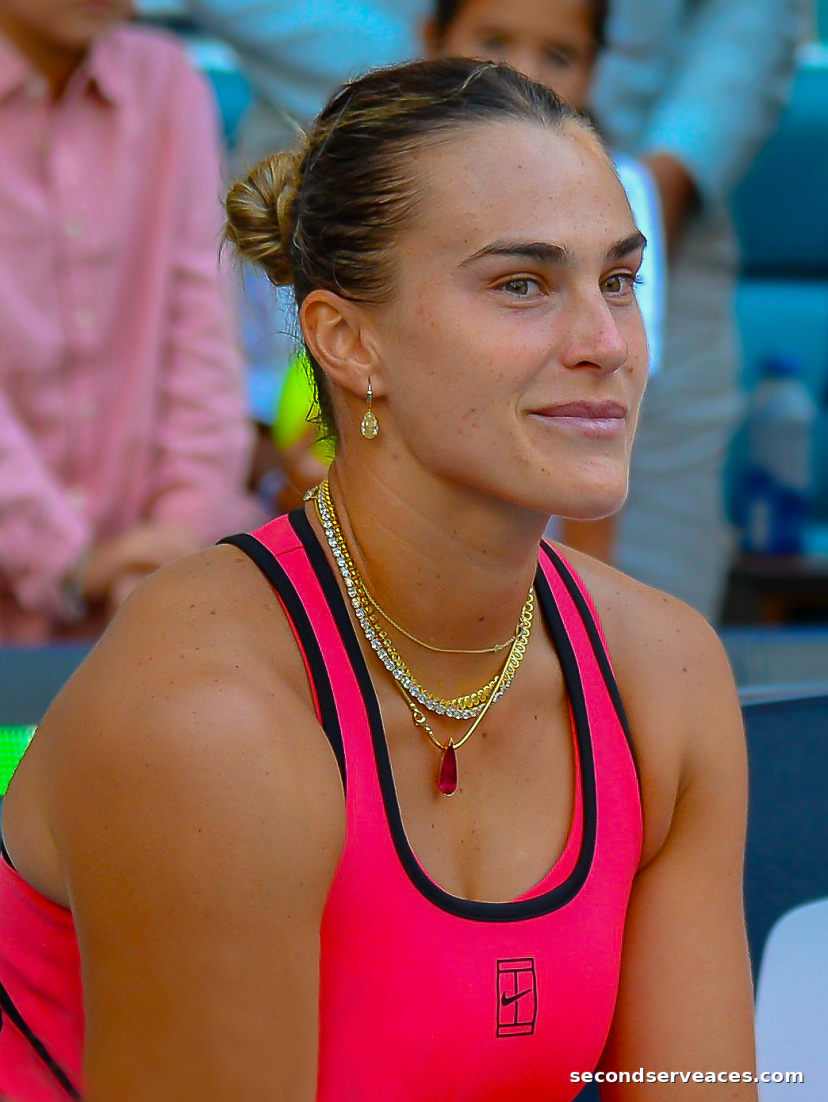
Welcome to the desert, where the air is thin, the hard courts are gritty, and the heavy hitters come to feast. In a blockbuster clash that had the tennis world buzzing the moment the draw was released, Aryna Sabalenka delivered a resounding message to the rest of the locker room. The world number one dispatched Naomi Osaka with a clinical 6-2, 6-4 victory, booking her ticket straight into the Indian Wells quarter-finals.
Look, when you get two absolute titans of the sport on the same piece of real estate, something has to give. But on this particular evening, Sabalenka refused to yield an inch. The Belarusian stripped away time and space from her opponent, dictating the terms of engagement from the first ball to the last. She will now set her sights on Mboko in her upcoming quarter-final matchup as her campaign for the desert crown marches forward.
Tale of the Tape: The Hard Facts
- The Scoreline: Aryna Sabalenka defeated Naomi Osaka 6-2, 6-4.
- The Stakes: The victory firmly secures Sabalenka's spot in the Indian Wells quarter-finals.
- The Next Step: Sabalenka will face Mboko in her upcoming quarter-final match.
- The Rarity: Astoundingly, this match marked only the second career meeting between Sabalenka and Osaka.
- The Pedigree: Both Aryna Sabalenka and Naomi Osaka share an elite tier in tennis history as four-time Grand Slam champions.
The Tactical Breakdown
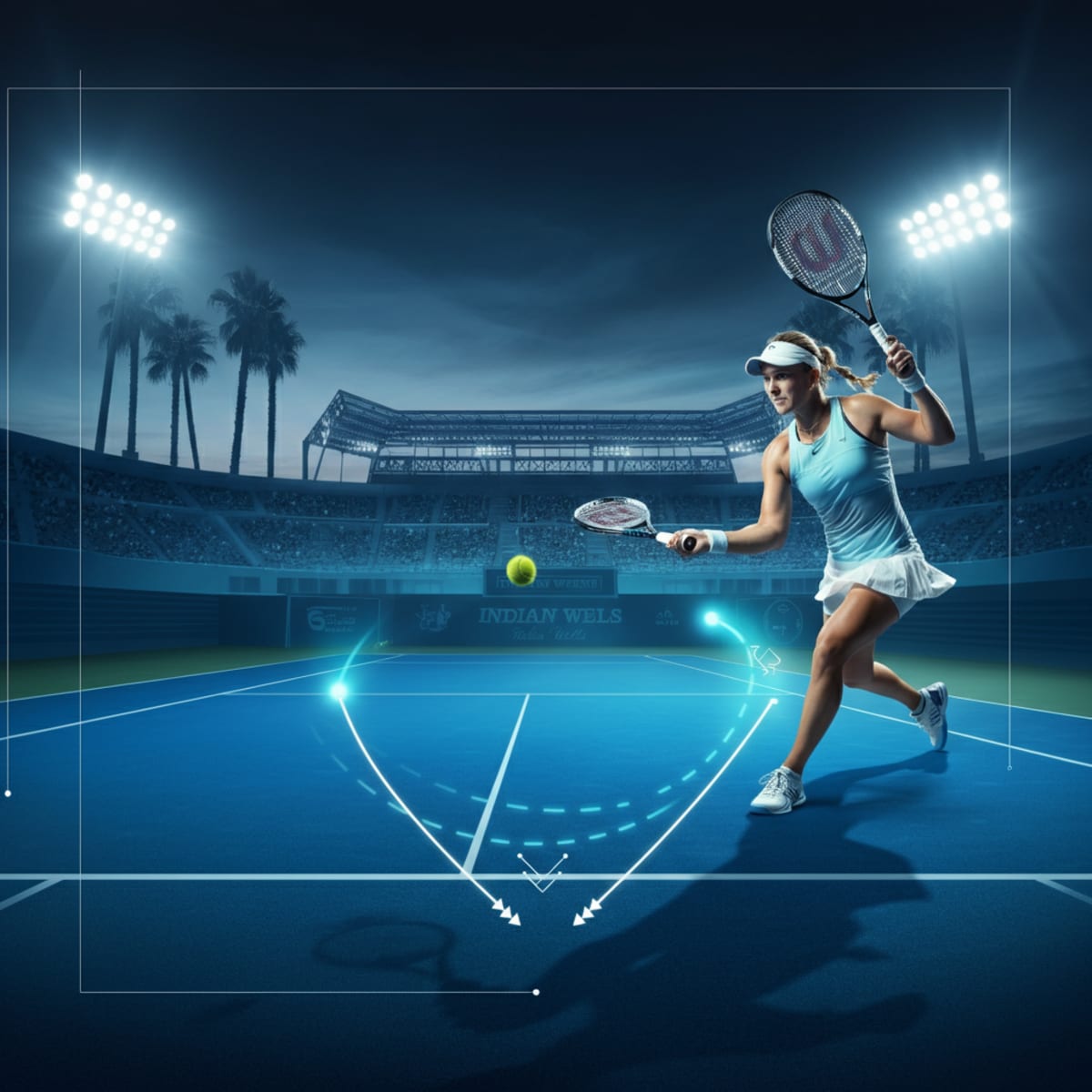
To understand how Sabalenka dismantled an opponent as dangerous as Osaka, you have to look past the raw power and examine the court geometry. Both of these women possess game-changing velocity, but power without placement is just a loud way to lose a tennis match. Sabalenka won this battle by mastering the center of the court and executing a high-risk, high-reward tactical gameplan with startling consistency.
Against a player like Osaka, who feeds on pace and thrives when she has time to set her feet, you cannot afford to play passive tennis. Sabalenka understood the assignment. She utilized devastating depth to pin Osaka behind the baseline, effectively cutting off the angles and forcing the Japanese star to hit from defensive postures. When Sabalenka found a short ball, she stepped inside the baseline, flattening out her groundstrokes to take time away. It is a textbook application of first-strike tennis.
But the real separator here was rally tolerance. Historically, Sabalenka's game is built around early aggression—the serve-plus-one combination that instantly ends points. Yet, in this matchup, we saw her construct points with heavy topspin, allowing her to clear the net with margin while the desert air and gritty surface made the ball kick viciously off the deck. This strategic topspin deployment kept Osaka constantly adjusting her strike zone.
When the inevitable break point opportunities arose, Sabalenka didn't flinch. She leaned into her aggressive return positioning, effectively crowding the baseline to challenge Osaka's second serve. By taking the ball on the rise, Sabalenka hijacked the match momentum and never let it go. It was a masterclass in suffocating your opponent's strengths by imposing your own.
The Bigger Picture
This result carries weight far beyond the confines of the Coachella Valley. It is borderline criminal that this was only the second time Sabalenka and Osaka have crossed paths on the professional circuit. You are talking about two four-time Grand Slam champions—two women who have defined the power-baseline era of the modern WTA Tour. Whenever they clash, it is a barometer for the state of women's tennis.
For Sabalenka, this 6-2, 6-4 victory is a massive injection of confidence. Indian Wells plays unlike any other hard court in the world; the high bounce acts almost like a clay court, demanding both power and immense physical endurance. By navigating this highly-anticipated hurdle in straight sets, Sabalenka preserves crucial physical and mental reserves.
She will need those reserves. Looming in the quarter-finals is Mboko, a matchup that will present an entirely different set of tactical puzzles. But if Sabalenka continues to strike the ball with this level of clarity—marrying her trademark velocity with disciplined court positioning—she is going to be incredibly difficult to derail.
As for Osaka, a defeat against the world number one is a tough pill to swallow, but it is also an elite measuring stick. Returning to the upper echelons of the sport requires reps against the very best. Osaka now has a clear picture of the baseline intensity required to disrupt players of Sabalenka's current caliber.
Ultimately, this was Aryna Sabalenka's night. She didn't just win a tennis match; she owned the baseline, dictated the tempo, and proved exactly why she is sitting at the summit of the women's game. The desert heat is rising, and Sabalenka is right at home.
What Aryna Sabalenka Plays With
Wilson Blade 98 v9 (16x19)
Luxilon ALU Power 125
Analyze Aryna Sabalenka vs. Naomi Osaka
Predict tactical adjustments, momentum swings, and serve strategy options for this match-up using our AI simulator.
The Aces Tactical Panel
This report was curated and edited by Bhaskar Goel. Tactical analysis and technical insights were provided by our specialized panel of expert correspondents.
Julian Price
Senior Tactical Correspondent
Stuffy, pedantic British academic and historian specializing in match momentum and historical context.
Elena Cruz
Director of Analytical Research
Data scientist specializing in court surface physics and movement patterns.
Bhaskar
The Editor & Fan
Passionate tennis player and site editor bringing everyday amateur insights and relatable fan commentary.
Arthur Vance
Senior Existential Analyst
Deep, eccentric, and DFW-inspired. Models court metaphysics, kinetic beauty, and player psychology.
Leo Sterling
High-Performance Consultant
Hard-nosed ex-trainer from Melbourne with a no-nonsense view on tour fitness.