By Simon Croft for Second Serve Aces
Listen to the Second Serve Podcast
Get our daily AI-synthesized audio briefings and match reviews on the go.
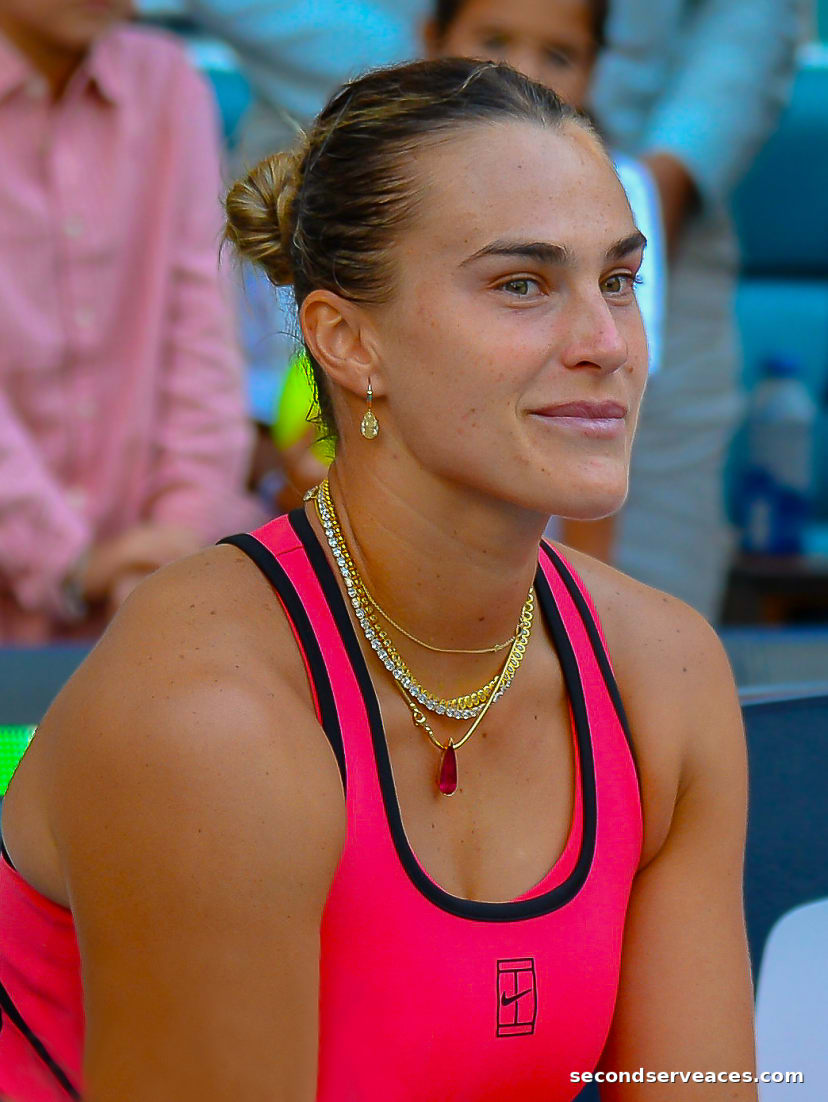
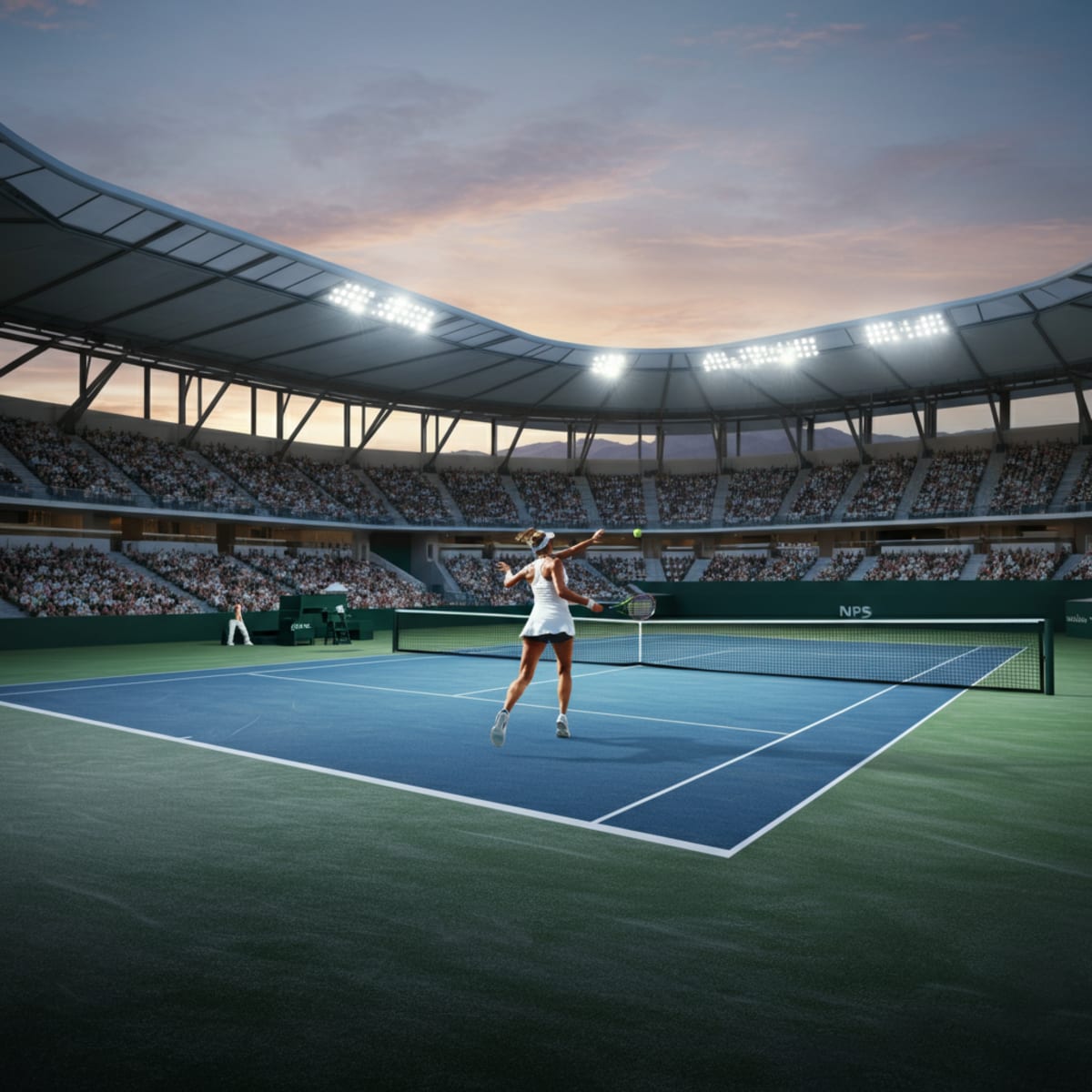
The desert air at Indian Wells often feels heavy with history, but rarely does it crackle with quite the same electricity as it did when Aryna Sabalenka stepped onto the stadium court to face Naomi Osaka. This was not merely a tennis match; it was a collision of tennis royalty, a fascinating intersection of the sport’s recent past and its dominant present. In a ruthless display of baseline authority, World No. 1 Aryna Sabalenka defeated Naomi Osaka 6-2, 6-4, securing her place in the quarter-finals of the tournament affectionately known as Tennis Paradise.
To fully appreciate the gravity of this encounter, one must look at the names on the marquee. Both Aryna Sabalenka and Naomi Osaka are four-time Grand Slam title winners. They are the undisputed apex predators of modern hard-court tennis, players who have built their legacies on the foundation of raw, unadulterated power. Yet, astonishingly, this was their first meeting since the 2018 US Open—a tournament that would ultimately serve as Osaka's coronation on the global stage. Six years later, the landscape of the WTA has experienced a profound structural evolution, and Sabalenka has firmly positioned herself at its summit.
While the Sabalenka-Osaka blockbuster rightfully dominated the headlines, the brutal, unforgiving nature of the tour was on full display elsewhere on the grounds. In a sport where the margins between the elite and the journeyman are razor-thin, Australian qualifier Gibson recorded the biggest win of her career by stunning Paolini. It was a stark reminder of the depth that currently defines the women's game. Meanwhile, the men's draw saw order maintained as fourth seed Alexander Zverev methodically navigated his way into the last eight.
The Tactical Breakdown
When two powerhouses like Sabalenka and Osaka meet on a high-bouncing, gritty hard court like Indian Wells, the match inevitably becomes a referendum on court geometry and baseline territorial control. The tactical mechanics of Sabalenka’s 6-2, 6-4 victory were rooted not in chaotic aggression, but in a highly disciplined execution of her core playstyle.
Sabalenka’s game is built around overwhelming weight of shot. Historically, her topspin forehand has been a weapon of mass destruction, but what separates her current World No. 1 iteration from her younger self is her remarkable rally tolerance. Against Osaka, Sabalenka likely utilized specific serve placement patterns to force the Japanese star out of her comfort zone. By dragging Osaka wide on the deuce court and jamming her on the ad side, Sabalenka was able to dictate the crucial first strike of the rally.
Consider the strategic imperatives of this matchup:
- Neutralizing the First Strike: Osaka’s game relies heavily on first-serve supremacy and flat, penetrating groundstrokes. Sabalenka’s ability to absorb that pace, apply heavy topspin, and reset the point neutralizes Osaka's preferred match momentum.
- Court Positioning: The slow, high-bouncing surface of Indian Wells rewards players who can step inside the baseline and take the ball on the rise. Sabalenka’s willingness to hold her ground, denying Osaka the time to set up her devastating backhand down the line, was pivotal.
- Break Point Execution: In matches between two massive servers, break point opportunities are sparse. Sabalenka’s capacity to elevate her focus during these critical junctures—swinging freely rather than tightening up—remains the hallmark of her recent dominance.
Osaka, still finding the ultimate rhythm that carried her to four major titles, naturally attempts to dictate from the center of the court. However, when faced with an opponent who can match and even exceed her pace, the margin for error shrinks drastically. Sabalenka simply forced Osaka to play one extra ball in every crucial exchange, a classic hallmark of modern high-performance tennis.
The Bigger Picture
The significance of this result extends far beyond a quarter-final berth at a WTA 1000 event. It serves as a fascinating mirror to the structural evolution of the women's tour over the last half-decade. When these two last met at the 2018 US Open, Osaka was on the precipice of becoming a transcendent global superstar, while Sabalenka was a raw, volatile talent capable of hitting anyone off the court—including herself.
Today, the paradigm has shifted. Sabalenka has painstakingly constructed a mental fortitude that matches her physical prowess. She has ironed out the institutional flaws in her serve—once a glaring vulnerability—and transformed it into the bedrock of her game. This victory over a fellow four-time Grand Slam champion solidifies Sabalenka's status as the definitive hard-court force of this current era.
For Osaka, the path back to the absolute pinnacle of the sport is a process. Tennis is an unforgiving ecosystem, and while she possesses the institutional muscle memory of a champion, translating that against a fully optimized World No. 1 is a monumental task. The 6-2, 6-4 scoreline is less an indictment of Osaka's progress and more a testament to the staggering level required to penetrate the very top tier of the WTA today.
The Ecosystem at Large
As we pan out to view the rest of the tournament, the institutional fabric of professional tennis continues to weave compelling narratives. Gibson's monumental upset over Paolini is exactly the kind of disruptive force the tour needs. It proves that the qualifying rounds are not merely a prelude, but a breeding ground for genuine threats who carry the momentum of match play directly into the main draw.
On the ATP side, Alexander Zverev’s quiet progression into the quarter-finals highlights a different kind of structural success. The fourth seed has built his career on consistency at the Masters 1000 level, utilizing his massive serve and elite two-handed backhand to grind down opposition. As the tournament deepens, the pressure mounts, and the tactical blueprints become even more vital.
Indian Wells has once again provided the perfect theater for these dramas to unfold. Sabalenka marches on, a titan at the peak of her powers, leaving the rest of the tour to figure out how to solve the impossible puzzle she currently presents.
What Aryna Sabalenka Plays With
Wilson Blade 98 v9 (16x19)
Luxilon ALU Power 125
Analyze Aryna Sabalenka vs. Naomi Osaka
Predict tactical adjustments, momentum swings, and serve strategy options for this match-up using our AI simulator.
The Aces Tactical Panel
This report was curated and edited by Bhaskar Goel. Tactical analysis and technical insights were provided by our specialized panel of expert correspondents.
Julian Price
Senior Tactical Correspondent
Stuffy, pedantic British academic and historian specializing in match momentum and historical context.
Elena Cruz
Director of Analytical Research
Data scientist specializing in court surface physics and movement patterns.
Bhaskar
The Editor & Fan
Passionate tennis player and site editor bringing everyday amateur insights and relatable fan commentary.
Arthur Vance
Senior Existential Analyst
Deep, eccentric, and DFW-inspired. Models court metaphysics, kinetic beauty, and player psychology.
Leo Sterling
High-Performance Consultant
Hard-nosed ex-trainer from Melbourne with a no-nonsense view on tour fitness.