Welcome back to Second Serve Aces. I’m Simon Croft, and if you’ve been tracking the structural evolution of the WTA Tour as closely as I have, you knew the collision course in the California desert was bound to produce fireworks.
Listen to the Second Serve Podcast
Get our daily AI-synthesized audio briefings and match reviews on the go.
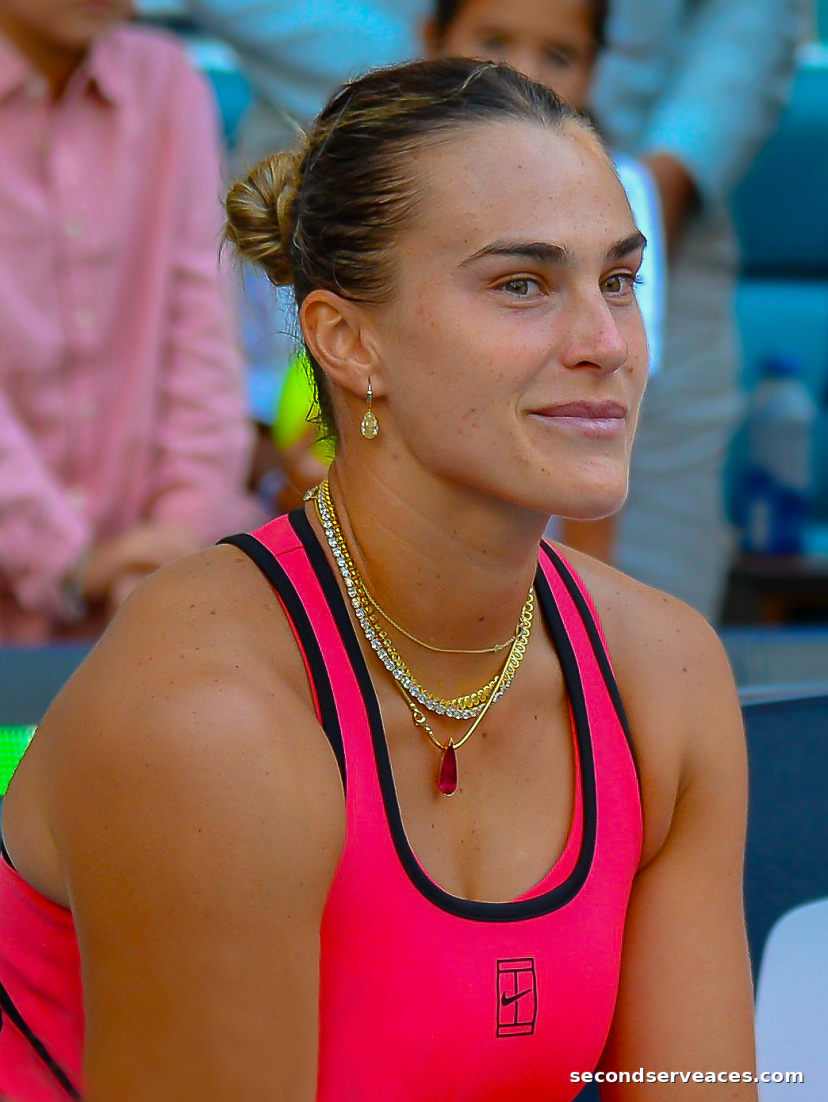
In a match that pushed both women to their absolute physical and psychological limits, Aryna Sabalenka captured her first Indian Wells title in truly dramatic fashion, defeating Elena Rybakina 3-6, 6-3, 7-6 (8/6). This wasn’t just a clash of raw power; it was a high-stakes chess match played out under the blistering desert sun, ending in a razor-thin margin that will be analyzed for years to come.
Sabalenka’s path to the trophy was anything but straightforward. The Belarusian had to dig deep into her emotional reserves, trailing by a break in the second set before finally discovering her rhythm and rallying back into the contest. The tension ultimately peaked in a gripping third-set tiebreaker, where Sabalenka stared down the barrel of defeat, saving a match point while down 5-6 to snatch victory from the jaws of defeat.
The Tactical Breakdown
To fully appreciate the gravity of this 3-6, 6-3, 7-6 (8/6) scoreline, we have to look past the sheer velocity of the groundstrokes and examine the underlying geometry of the matchup. Both Sabalenka and Rybakina operate with a fundamental philosophy of first-strike tennis, but their mechanical execution could not be more different.
Historically, Rybakina builds her game around a smooth, technically flawless serve that penetrates the court with deceptive ease. In the opening set, Rybakina’s flat, linear baseline drives clearly rushed Sabalenka, robbing her of the time needed to set her feet. But when Sabalenka fell behind by a break in the second set, we witnessed a profound shift in match momentum.
- Rally Tolerance on Slow Hard Courts: The Plexipave surface at Indian Wells is notoriously gritty. It grabs the ball, neutering flat hitters while rewarding those who can generate massive topspin. Sabalenka recognized that she could not merely hit through Rybakina; she had to hit heavy to push her off the baseline. By increasing her net clearance and injecting more spin, Sabalenka forced Rybakina into longer, more physically demanding exchanges.
- Break Point Management: Trailing in the second set, Sabalenka had to execute perfectly on key break opportunities. In modern tennis, the player who manages their heart rate and point construction during a crucial break point almost always dictates the outcome. Sabalenka’s ability to transition from defense to offense in a single, explosive stroke neutralized Rybakina’s serve-plus-one patterns.
- The 5-6 Match Point: Down match point in a decisive tiebreaker is the ultimate test of a player's nerve. Sabalenka of three years ago might have succumbed to a double fault or a panicked, low-percentage winner attempt. Today's Sabalenka relies on structural discipline, trusting her baseline patterns rather than panicking. Surviving that 5-6 deficit in the breaker is a testament to a complete psychological overhaul.
The Bigger Picture
Securing her first ever title at Indian Wells is far more than just adding another trophy to the cabinet for Aryna Sabalenka; it is a profound statement about her all-surface viability and her place in the upper echelon of the sport's history.
For years, the narrative surrounding Sabalenka was that her high-octane game was best suited for the lightning-fast courts of Australia or indoor arenas, where the surface rewarded her raw pace. Indian Wells, often dubbed the "Fifth Grand Slam," requires a distinctly different toolkit. Winning here demands the defensive grit of a clay-courter combined with the offensive instincts of a hard-court specialist. By conquering these unique conditions, Sabalenka proves she is no longer a one-dimensional powerhouse, but a tactical chameleon capable of problem-solving her way out of any deficit.
Furthermore, this result solidifies the structural hierarchy of the modern WTA. The rivalry brewing between Sabalenka, Rybakina, and Iga Swiatek is institutionalizing a "Big Three" era for the women's game. Every time Sabalenka and Rybakina cross swords, they elevate the standard for what is required to win at the highest level—pushing the tour toward a future where a blistering first serve must be paired with elite cardiovascular endurance and unshakeable mental fortitude.
As the tour packs up its bags and leaves the California desert, the locker room is officially on notice. Aryna Sabalenka isn't just winning matches with her racquet anymore; she's winning them with her mind.
What Aryna Sabalenka Plays With
Wilson Blade 98 v9 (16x19)
Luxilon ALU Power 125
Analyze Aryna Sabalenka vs. Elena Rybakina
Predict tactical adjustments, momentum swings, and serve strategy options for this match-up using our AI simulator.
The Aces Tactical Panel
This report was curated and edited by Bhaskar Goel. Tactical analysis and technical insights were provided by our specialized panel of expert correspondents.
Julian Price
Senior Tactical Correspondent
Stuffy, pedantic British academic and historian specializing in match momentum and historical context.
Elena Cruz
Director of Analytical Research
Data scientist specializing in court surface physics and movement patterns.
Bhaskar
The Editor & Fan
Passionate tennis player and site editor bringing everyday amateur insights and relatable fan commentary.
Arthur Vance
Senior Existential Analyst
Deep, eccentric, and DFW-inspired. Models court metaphysics, kinetic beauty, and player psychology.
Leo Sterling
High-Performance Consultant
Hard-nosed ex-trainer from Melbourne with a no-nonsense view on tour fitness.