By Simon Croft
Listen to the Second Serve Podcast
Get our daily AI-synthesized audio briefings and match reviews on the go.
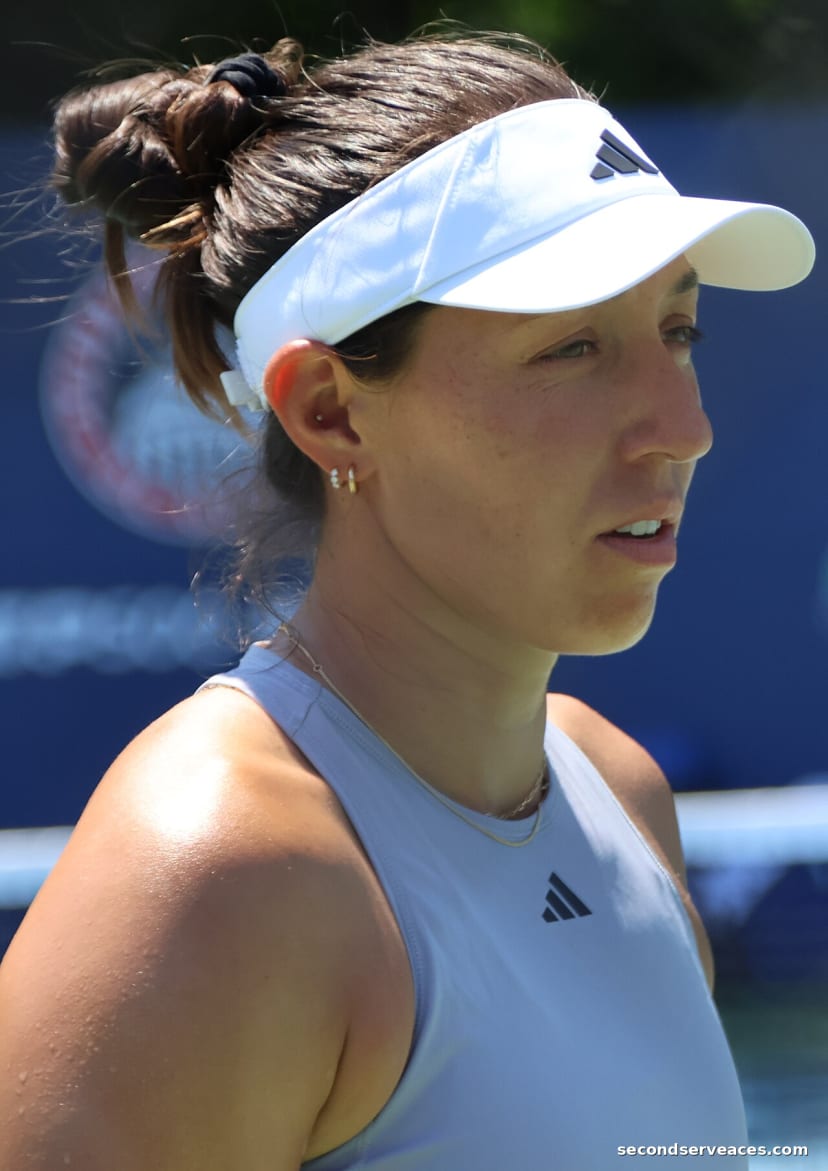
First-strike tennis is a fragile ecosystem. When the timing is calibrated, it yields effortless holds and overwhelming baseline pressure. When the calibration is even a fraction of a second off, the margins evaporate rapidly. Elena Rybakina experienced both extremes on the vivid blue hard courts of the Miami Open, ultimately rallying from a set down to defeat Jessica Pegula 2-6, 6-3, 6-4 and secure her spot in the semi-finals.
The match’s opening stanza was a clinic in return aggression from the American. Rather than simply rolling the ball back into play, Pegula immediately targeted Rybakina’s footwork. By taking the ball exceptionally early, Pegula broke Rybakina twice in rapid succession to mount a commanding 4-0 lead. The world number two looked visibly rushed, unable to uncoil into her groundstrokes, allowing Pegula to wrap up the first set in a brisk 35 minutes.
The Tactical Breakdown
To understand the mechanics of this turnaround, we have to look past the baseline rallies and focus entirely on the service box. Historically, Rybakina’s entire tactical identity hinges on first-serve supremacy. Her game is built around court geometry dictated by the serve; she rarely looks to extend rallies beyond five shots unless forced.
Adjusting the Launch Angle
After a sluggish opening, Rybakina completely recalibrated her delivery. Pegula’s early success was predicated on neutralizing flat serves into her strike zone. In response, the Kazakhstani player began mixing her toss placement, finding sharper angles out wide on the ad court and driving heavier, skidding serves down the T. This subtle adjustment disrupted Pegula’s timing on the return, removing the American's ability to consistently play the ball on the rise.
The statistical output of this shift was undeniable. The primary match metrics highlight exactly where the contest was decided:
- Final Scoreline: Rybakina def. Pegula 2-6, 6-3, 6-4
- Aces Produced: Rybakina fired 12 aces during the match, bailing herself out of crucial pressure moments in the deciding set.
- First Set Duration: Just 35 minutes, characterized by two immediate breaks of serve by Pegula.
Once Rybakina established the threat of the unreturnable serve, the baseline dynamic flipped. Pegula, who thrives on redirecting pace, suddenly found herself on the defensive, forced into hitting low-percentage passing shots from deep behind the baseline.
The Bigger Picture
This quarterfinal result is more than an isolated hard-court victory; it reinforces a distinct structural hierarchy developing at the upper echelons of the WTA Tour. With this win, Rybakina improved her head-to-head record against Pegula to a commanding 6-3. When matching a pure ball-striker against a counter-puncher, the player with the heavier weaponry usually dictates the outcome over a large enough sample size, provided they can sustain their execution.
Furthermore, Rybakina's trajectory highlights her status as the premier architect of offensive hard-court tennis. Consider the broader tour context and the sheer weight of her current form: Aryna Sabalenka's only loss in 2026 so far came against Rybakina in the Australian Open final. Being the sole player capable of structurally dismantling a serving powerhouse like Sabalenka speaks volumes about Rybakina's ceiling.
As the Miami Open progresses, the rest of the field—including notable competitors navigating the draw like Hailey Baptiste, Marketa Vondrousova, and the ATP’s parallel hard-court specialists like Tommy Paul and Arthur Fils—will be taking notes. The blueprint for beating Rybakina was visible for exactly 35 minutes today. Sustaining it for an entire match, however, remains one of the most complex tactical puzzles in modern tennis.
What Aryna Sabalenka Plays With
Wilson Blade 98 v9 (16x19)
Luxilon ALU Power 125
Wilson Pro Overgrip (12-Pack)
Analyze Elena Rybakina vs. Jessica Pegula
Predict tactical adjustments, momentum swings, and serve strategy options for this match-up using our AI simulator.
The Aces Tactical Panel
This report was curated and edited by Bhaskar Goel. Tactical analysis and technical insights were provided by our specialized panel of expert correspondents.
Julian Price
Senior Tactical Correspondent
Stuffy, pedantic British academic and historian specializing in match momentum and historical context.
Elena Cruz
Director of Analytical Research
Data scientist specializing in court surface physics and movement patterns.
Bhaskar
The Editor & Fan
Passionate tennis player and site editor bringing everyday amateur insights and relatable fan commentary.
Arthur Vance
Senior Existential Analyst
Deep, eccentric, and DFW-inspired. Models court metaphysics, kinetic beauty, and player psychology.
Leo Sterling
High-Performance Consultant
Hard-nosed ex-trainer from Melbourne with a no-nonsense view on tour fitness.