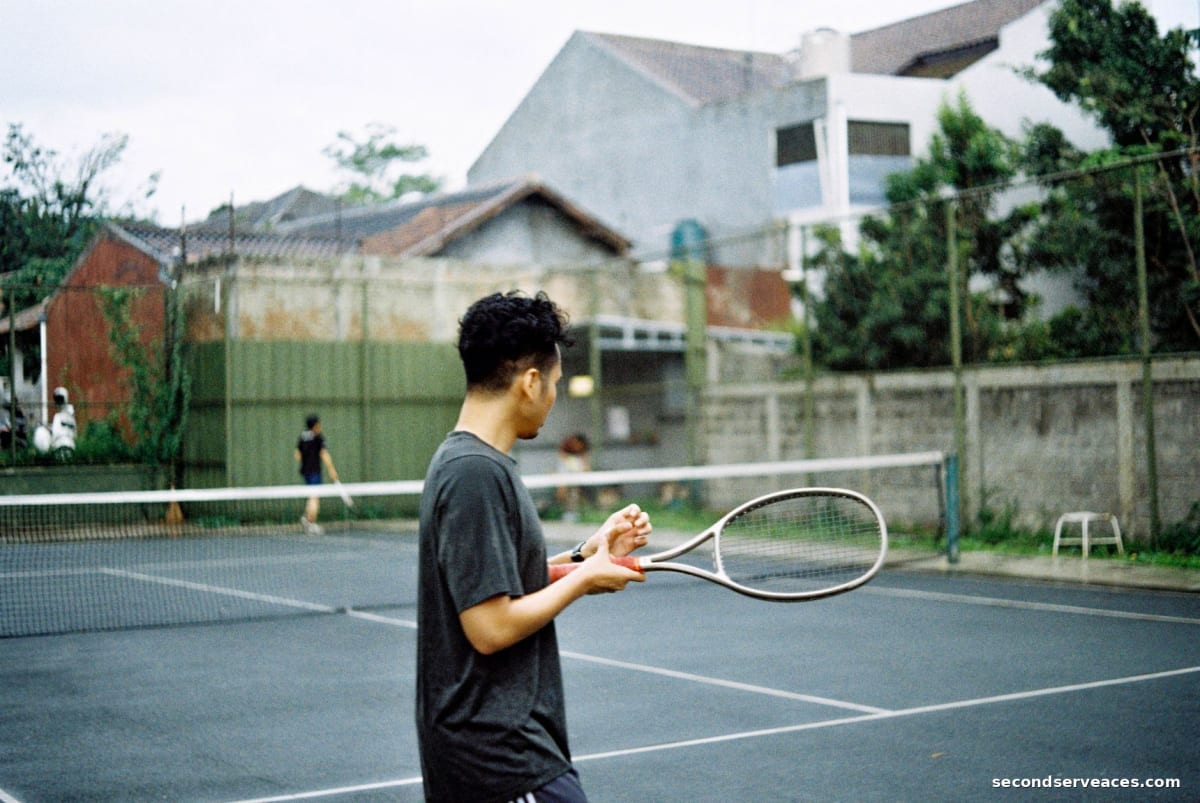
In tennis, your flag is more than just a piece of fabric beside your name on a scoreboard. It represents your home, your backing, and the ground you stand on when the pressure mounts. But since early 2022, that ground has shifted beneath the feet of many. A total of 17 Russian-born tennis players have made the monumental decision to change their flags and represent other nations, navigating a complex web of personal truths, geopolitical realities, and the sheer desire to keep playing the game they love.
Listen to the Second Serve Podcast
Get our daily AI-synthesized audio briefings and match reviews on the go.
The Great Migration of Russian Talent Since 2022
The decision to change one's national representation is never made lightly. It requires a complete administrative and emotional overhaul. Since early 2022, this trend has accelerated rapidly as the Russian Tennis Federation remains suspended from ITF membership. This suspension has locked Russian players out of iconic international team competitions like the Davis Cup and the Billie Jean King Cup, stripping them of the unique pride that comes with playing for a collective national cause.
Without a flag to unite under in team play, many athletes have found themselves isolated in an individual sport that is already notoriously lonely. The psychological toll of playing as a neutral athlete, without a national anthem or a federation to shield you from the political noise, is an immense burden to carry onto the court. For these 17 players, changing allegiances was not just a bureaucratic shortcut, but a necessary step to secure their professional sanity and competitive future.
This migration has reshaped the entry lists across both tours. When the institutional support of your home federation vanishes, the hustle of the tour becomes doubly difficult. By aligning with new nations, these players have sought stable ground, ensuring they can travel, train, and compete without the constant shadow of visa denials and systemic bans disrupting their seasons.
Personal Truths and New Horizons for Kasatkina and Gracheva
Every single player who has switched flags carries a deeply personal story. Daria Kasatkina’s transition is perhaps the most profound. Now representing Australia after securing permanent residency, Kasatkina has been incredibly open about the factors driving her choice. She cited the freedom of living openly as gay as central to her decision, choosing a life of authenticity over the constraints of her homeland. It is a powerful reminder that the choices made off the court dictate the freedom with which a player can swing on it.
Then there is Varvara Gracheva, who officially became a French citizen in June 2023. While some might assume her transition was a hasty reaction to recent global events, Gracheva’s application actually pre-dated the 2022 invasion. Her move to represent France was the culmination of years of living, training, and integrating into the French tennis ecosystem, making her transition a natural evolution of her career rather than a sudden flight of convenience.
When you watch Gracheva compete on the WTA Tour today, you see a player who has found a true home. That peace of mind is a massive asset. When the mind is quiet off the court, a player can dedicate all their focus to the physical grind of saving break points and dictating rallies from the baseline, free from the administrative anxiety that plagues so many of her former compatriots.
The Strategic Shift of Shevchenko to Kazakhstan
The movement has not been limited to the women's game. In January 2024, Alexander Shevchenko officially began representing Kazakhstan. Unlike players who sought refuge in Western Europe or Australia, Shevchenko’s transition was deeply rooted in family and cultural connections. Kazakhstan has actively positioned itself as a welcoming harbor for elite tennis talent, offering world-class infrastructure and robust federation backing to players willing to make the leap.
For Shevchenko, the move provides a level of structural security that is hard to overstate. According to the latest ATP rankings, the competition at the top of the men's game is fierce, and any distraction can derail a promising career. With the Kazakh federation supporting his journey, Shevchenko can focus entirely on refining his baseline game and climbing the rankings without the background noise of geopolitical instability.
This structural security is something we have analyzed extensively in our other coverage, including how sudden disruptions and withdrawals can derail tournament draws, as seen in our report on the WTA Seoul tournament. Having a dedicated federation ensures that players like Shevchenko have the logistical support necessary to navigate these turbulent waters successfully.
Rivalry Matchup & Player Profiles
To understand the sheer diversity of the players undergoing these transitions, we can look at two contrasting figures who have taken different paths to find their footing: the young, rising Yaroslava Bartashevich and the experienced doubles specialist Natela Dzalamidze.
| Metric | Yaroslava Bartashevich | Natela Dzalamidze |
|---|---|---|
| Current Country | France | Georgia |
| Age | 21 | 33 |
| Singles Rank | 564 | Inactive (Career High: 245) |
| Doubles Rank | 294 | Career High: 43 |
| Handedness | Right-handed | Right-handed |
| Play Style | Two-handed backhand | Two-handed backhand, Doubles specialist |
| Career Titles | 3 ITF Singles, 3 ITF Doubles | 3 WTA Doubles, 3 WTA Challenger Doubles, 10 ITF Singles, 29 ITF Doubles |
Yaroslava Bartashevich and Natela Dzalamidze have never faced each other in a professional singles or doubles match on the ITF or WTA tours, representing two entirely different eras of tennis development. Bartashevich, representing France at just 21 years old, is in the nascent stages of her career, relying on her three ITF singles titles to climb the rankings. Dzalamidze, now representing Georgia at 33, has established herself as a formidable doubles specialist with three WTA doubles titles to her name, though she is currently inactive on the singles circuit.
The contrast between these two athletes underscores the universal nature of this migration. Whether you are a young prospect like Bartashevich looking to build a career under the French flag, or a seasoned veteran like Dzalamidze seeking to maximize her remaining years on tour by representing Georgia, the motivation remains the same. Changing your flag is a survival mechanism, a way to keep your dreams alive when the world tries to shut the door.
Analyze Yaroslava Bartashevich vs. Natela Dzalamidze
Predict tactical adjustments, momentum swings, and serve strategy options for this match-up using our AI simulator.
The Aces Tactical Panel
This report was curated and edited by Bhaskar Goel. Tactical analysis and technical insights were provided by our specialized panel of expert correspondents.
Julian Price
Senior Tactical Correspondent
Stuffy, pedantic British academic and historian specializing in match momentum and historical context.
Elena Cruz
Director of Analytical Research
Data scientist specializing in court surface physics and movement patterns.
Bhaskar
The Editor & Fan
Passionate tennis player and site editor bringing everyday amateur insights and relatable fan commentary.
Arthur Vance
Senior Existential Analyst
Deep, eccentric, and DFW-inspired. Models court metaphysics, kinetic beauty, and player psychology.
Leo Sterling
High-Performance Consultant
Hard-nosed ex-trainer from Melbourne with a no-nonsense view on tour fitness.
Related Reports

Quick Answers
How many Russian-born tennis players have changed their flags since early 2022?+
A total of 17 Russian-born tennis players have changed their national allegiances to represent other countries since early 2022.
Why did Daria Kasatkina decide to represent Australia?+
Daria Kasatkina began representing Australia after receiving permanent residency, citing the ability to live openly as gay as central to her decision.
When did Varvara Gracheva become a French citizen?+
Varvara Gracheva became a French citizen in June 2023, following an application process that pre-dated the 2022 invasion.