Alexander Zverev's early exit at the ATP Tour stop in Montreal on August 6 exposed a familiar tactical vulnerability. Facing Tallon Griekspoor, the German consistently retreated five to six meters behind the baseline, giving up real estate and allowing Griekspoor to dictate the terms of the rally. By refusing to step up and take the ball on the rise, Zverev surrendered the center of the court, leaving himself exposed to sharp-angled cross-court forehands that pulled his 6'6" frame completely out of position.
Listen to the Second Serve Podcast
Get our daily AI-synthesized audio briefings and match reviews on the go.
Griekspoor, recognizing the passive positioning, utilized his kick serve to the ad-court to stretch Zverev even further wide. Instead of neutralizing the point with a deep, loopy return, Zverev opted for a conservative slice that floated short into the service box. This gave Griekspoor ample time to run around his backhand and unleash heavy inside-out forehands, capitalizing on the slow bounce of the Canadian Open hard court.
The mechanical breakdown on Zverev's forehand wing became glaringly obvious as the match progressed. Under pressure, his preparation became rushed, leading to late contact points and a high error rate. Without forward momentum to drive through the ball, his shots lacked the penetration required to push Griekspoor back, transforming what should have been an offensive baseline game into a defensive scramble.
Griekspoor Exploits Zverev’s Deep Court Positioning in Montreal
Following his disappointing first-round defeat, Zverev was quick to point fingers at external factors rather than his own technical shortcomings. In his post-match press conference, the German complained bitterly about the heavy playing conditions in Montreal, specifically targeting the Wilson tennis balls used during the tournament. He argued that the balls fluffed up too quickly, losing their liveliness and making it nearly impossible to generate clean winners.
While it is true that high humidity can cause the felt on extra-duty tennis balls to expand, altering their aerodynamic properties, every player on the draw faced the exact same conditions. A technical examination of ball wear shows that players who strike the ball with a cleaner, flatter trajectory suffer less from the fluffing effect than those who rely on heavy topspin. By hitting with excessive loop from deep positions, Zverev actively played into the hands of the damp conditions.
To understand Zverev's history with these conditions, one can look at his past performances on North American hard courts. His tendency to complain about equipment and environmental factors often correlates with matches where his footwork is static and his swing path becomes tentative. Rather than adjusting his racket-face angle or shortening his backswing, Zverev often externalizes the struggle, a habit that has drawn sharp criticism from tennis purists. More details on his career trajectory can be found on his official Wikipedia page.
Blaming the Wilson Felt: Zverev’s Post-Match Explanations
The excuses did not sit well with former doubles World No. 1 and elite coach Rennae Stubbs. Speaking on her podcast on August 10, Stubbs pulled no punches, calling out Zverev for his lack of accountability. Stubbs emphasized that elite competitors must adapt to the tools and environments provided, rather than lamenting them after a loss. She noted that champion-level tennis requires a mental fortitude that transcends minor variations in ball pressure or court speed.
Stubbs drew sharp comparisons between Zverev and the legendary figures of the sport, pointing out how icons like Serena Williams, Rafael Nadal, Novak Djokovic, and Roger Federer approached similar obstacles. According to Stubbs, these legends rarely, if ever, blamed the balls for an early exit. Instead, they adjusted their tactical framework mid-match, finding ways to win when their primary weapons failed to fire. This mentality is what separates multi-Slam champions from the rest of the field, a theme we explored in our analysis of the passing of the golden era.
The critique highlights a broader psychological divide in modern tennis. When a top-three player publicly blames the equipment, it sends a message of vulnerability to the rest of the locker room. For Stubbs, the willingness to deflect responsibility is a key indicator of why Zverev has struggled to cross the finish line at the Grand Slams, where environmental adaptation over a fortnight is mandatory for success.
Rennae Stubbs Delivers a Blunt Reality Check on the Microphone
The conversation around athlete accountability and public messaging extends far beyond the tennis court. In July, WNBA player Sophie Cunningham spoke during an ESPN interview about the critical need to protect young girls in sports, highlighting the responsibilities that professional athletes carry as role models. Cunningham's comments underscored the idea that elite competitors must use their platforms to address structural issues rather than personal grievances.
Similarly, media personality Sage Steele recently voiced her frustrations on The Sage Steele Show, criticizing NFL players for remaining silent during complex cultural debates, such as those surrounding transgender athletes in sports. Steele argued that high-profile male athletes often avoid taking stands on difficult issues to protect their corporate sponsorships, choosing instead to focus their public statements on minor athletic inconveniences.
When placed alongside these broader sporting dialogues, Zverev's complaints about tennis balls highlight a frustrating trend of elite athletes focusing on trivial, self-serving complaints. In an era where sports figures are increasingly expected to display leadership both on and off the court, public deflections over match conditions do little to elevate the game or inspire the next generation of competitors.
Rivalry Matchup & Player Profiles
| Metric | Serena Williams | Alexander Zverev |
|---|---|---|
| Rank | Retired (Former World No. 1) | No. 3 |
| Age | 44 | 29 |
| Country | United States | Germany |
| Height | 5'9" (1.75 m) | 6'6" (1.98 m) |
| Handedness | Right-handed | Right-handed |
| Play Style | Aggressive baseliner | Aggressive baseliner |
| Career Titles | 73 WTA singles titles | 25 ATP singles titles |
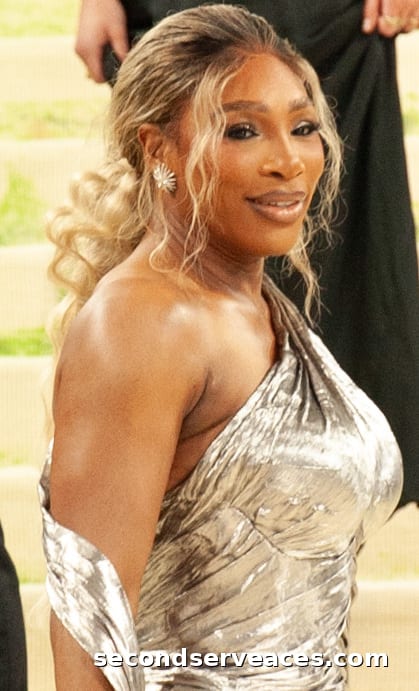
As they competed on different professional circuits, Serena Williams and Alexander Zverev never played an official head-to-head singles match on the WTA or ATP tours. However, their contrasting approaches to competitive adversity highlight the mental gap that Rennae Stubbs referenced. Williams built her legacy on an uncompromising refusal to lose, frequently overcoming physical and environmental challenges through sheer force of will on the court.
In contrast, Zverev's career has often been defined by tactical rigidity when conditions deviate from his comfort zone. While his 25 ATP singles titles prove his elite status, his inability to capture a Grand Slam title remains tied to his tendency to struggle under shifting conditions, a stark contrast to the adaptability that defined Williams' legendary 73-title career.
What Alexander Zverev Plays With
Head Gravity Pro
Head Hawk Touch 1.25
Head Prime Tour (12-Pack)
Analyze Serena Williams vs. Alexander Zverev
Predict tactical adjustments, momentum swings, and serve strategy options for this match-up using our AI simulator.
The Aces Tactical Panel
This report was curated and edited by Bhaskar Goel. Tactical analysis and technical insights were provided by our specialized panel of expert correspondents.
Julian Price
Senior Tactical Correspondent
Stuffy, pedantic British academic and historian specializing in match momentum and historical context.
Elena Cruz
Director of Analytical Research
Data scientist specializing in court surface physics and movement patterns.
Bhaskar
The Editor & Fan
Passionate tennis player and site editor bringing everyday amateur insights and relatable fan commentary.
Arthur Vance
Senior Existential Analyst
Deep, eccentric, and DFW-inspired. Models court metaphysics, kinetic beauty, and player psychology.
Leo Sterling
High-Performance Consultant
Hard-nosed ex-trainer from Melbourne with a no-nonsense view on tour fitness.
Related Reports
Quick Answers
Why did Alexander Zverev lose in the first round of the Canadian Open?+
Alexander Zverev suffered a first-round defeat to Tallon Griekspoor on August 6 due to passive court positioning and unforced errors under pressure.
What excuses did Alexander Zverev make after his defeat?+
Zverev blamed the heavy playing conditions in Montreal and complained that the Wilson tennis balls lost their liveliness too quickly.
How did Rennae Stubbs respond to Alexander Zverev's post-match comments?+
Rennae Stubbs criticized Zverev on her August 10 podcast, stating that champions like Serena Williams and Novak Djokovic adapt to conditions instead of making excuses.