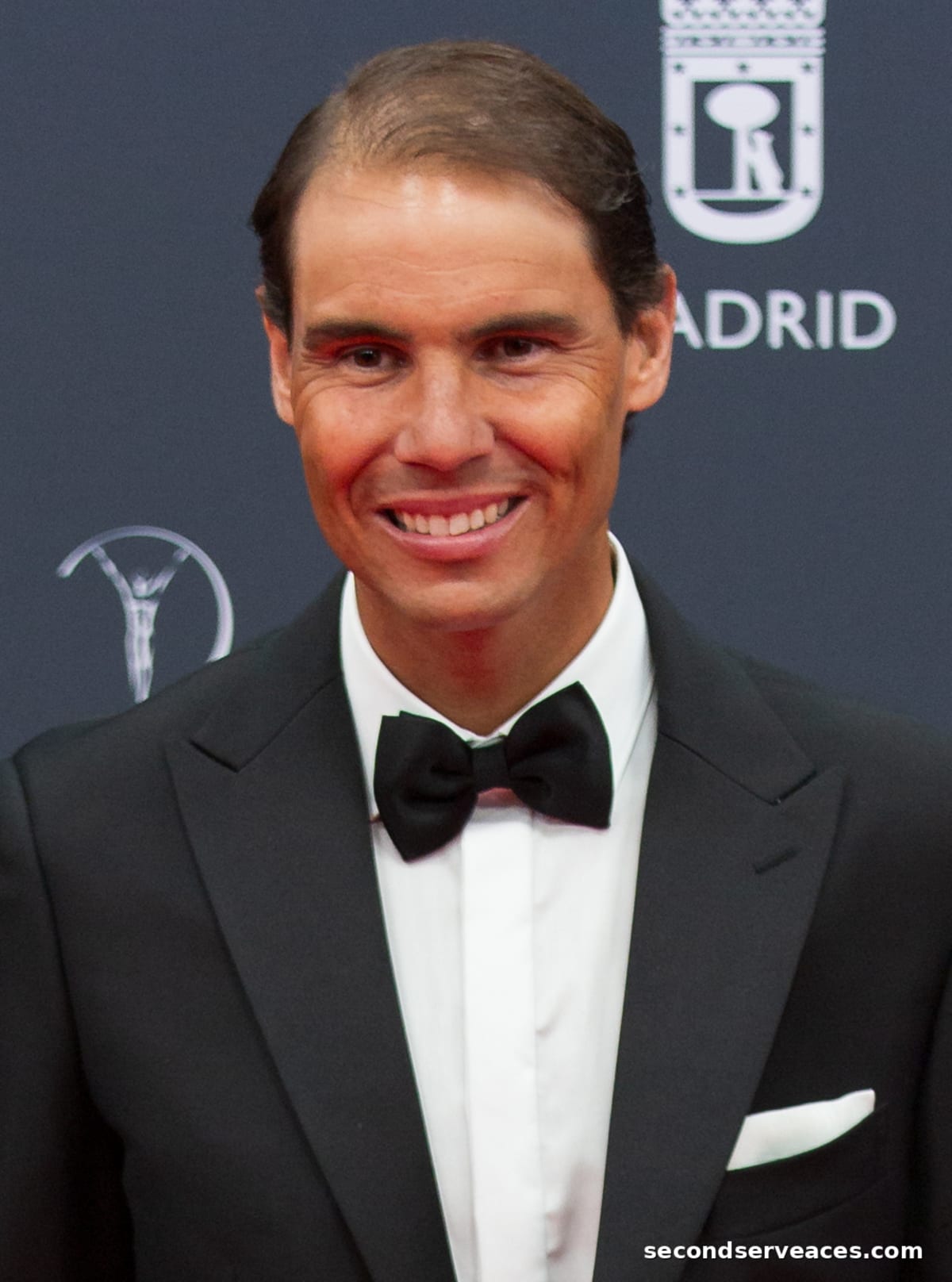
My dear compatriots of the court, there is an undeniable, comforting nostalgia that washes over us when we witness the legends of the game return to the clean, white lines of the tennis court. The modern game, with its relentless baseline bombardment and high-tech graphite frames, often lacks the romance of the classic 1970s circuit. Yet, the competitive fire of our sport's greatest champions remains an eternal flame. In a delightful development for tennis purists, Rafael Nadal is set to grace the court once more in an exhibition match on October 3, right in his homeland of Manacor, Mallorca.
Listen to the Second Serve Podcast
Get our daily AI-synthesized audio briefings and match reviews on the go.
This highly anticipated exhibition is not merely a casual hit-and-giggle; it marks a momentous milestone in the Spaniard's enduring legacy. The event celebrates the 10th anniversary of the Rafa Nadal Academy, an institution that opened its doors in October 2016. Over the past decade, this facility has grown from a local training ground into a global fortress of tennis excellence, preserving the traditional values of sportsmanship, discipline, and tactical rigor that Nadal championed throughout his illustrious career.
To watch the legendary left-hander step back onto the court—even in an exhibition capacity—is to witness history in motion. While the modern tour accelerates at a dizzying pace, this celebration in Manacor offers a moment of reflection. It allows us to appreciate how a boy from Mallorca constructed a tennis empire that continues to shape the next generation of clay-court masters and hard-court specialists alike.
The October 2016 Genesis of the Manacor Academy
When the Rafa Nadal Academy was inaugurated in the autumn of 2016, it was designed to be more than just a collection of pristine courts. Nadal sought to build a sanctuary where the traditional Spanish method of clay-court play could be synthesized with modern athletic training. Over the last ten years, the academy has successfully cultivated a unique environment that emphasizes physical resilience and mental fortitude, mirroring the very attributes that defined its founder's career.
The academy's influence on the professional tour has been profound. Promising young talents, such as Alexandra Eala and Casper Ruud, have roamed these Mallorcan courts, absorbing the competitive philosophy of the 22-time Grand Slam champion. The upcoming exhibition on October 3 serves as a testament to this decade-long journey of athletic development, bringing together past, present, and future stars to honor the institution's impact on the global game.
From a biomechanical standpoint, the academy has integrated advanced kinetic analysis to help players maximize their efficiency on court. In my day, training consisted of endless miles on heavy clay and rudimentary calisthenics. Today, the Manacor facility utilizes state-of-the-art technology to refine racket head speed and footwork patterns, ensuring that the heavy topspin style popularized by Nadal can be executed with reduced risk of injury.
The Fall 2026 Shift in the Men's Ranking Paradigm
While we celebrate Nadal's ceremonial return, we must also cast a pedantic eye on the current state of the professional rankings. A historic and somewhat sobering milestone has recently been reached. For the first time since October 2002, none of the legendary Big Three—Novak Djokovic, Rafael Nadal, or Roger Federer—reside within the top 10 of the ATP rankings. This represents a monumental shift in the hierarchy of men's professional tennis.
This rankings vacuum was solidified after "The Belgrade Gladiator," Novak Djokovic, suffered an early defeat at Flushing Meadows, causing him to slip out of the top ten. We previously discussed the broader implications of this decline in our analysis of the grim outlook on Djokovic's future following his recent New York campaign. The departure of these three titans from the top tier of the sport marks the conclusion of an unprecedented era of dominance.
For nearly twenty-four years, at least one member of this triumvirate stood sentinel at the gates of the top ten, turning back generations of aspiring challengers. From Federer's elegant slice to Nadal's bruising topspin and Djokovic's slide-and-strike defense, they redefined tennis excellence. Now, as the rankings reflect a new guard led by Jannik Sinner and Carlos Alcaraz, Nadal's exhibition reminds us of the golden era we so recently enjoyed.
The 92 Career Titles and the Grand Slam Legacy
To truly understand the weight of Nadal's presence on a tennis court, one must look at the cold, hard data of his professional career. The Mallorcan amassed an astonishing 92 ATP singles titles over his career, placing him among the most decorated champions in tennis history. Among those 92 crowns are his historic 22 Grand Slam titles, a tally that includes his unprecedented dominance on the red dirt of Paris.
Nadal's style of play was a physical marvel, demanding an extraordinary level of cardiovascular endurance and muscular power. Unlike the classic serve-and-volley specialists of the 1970s who relied on touch and finesse, Nadal weaponized heavy topspin from the baseline, forcing his opponents into deep, defensive positions. This grueling style required meticulous physical preparation, a standard that he has passed down to the students training at his academy.
Though his professional career has concluded, the legacy of those 92 titles remains a benchmark for excellence. The exhibition match in Mallorca is a celebration of this competitive spirit. It is an opportunity for fans to once again appreciate the legendary intensity of a champion who refused to give up on a single point, embodying the very essence of competitive grit.
Rivalry Matchup & Player Profiles
To contextualize the caliber of talent associated with the Rafa Nadal Academy, we look to one of its most successful alumni, Casper Ruud. The Norwegian has long trained under the guidance of the academy's staff, translating those clay-court lessons into a highly successful career on the ATP Tour. Below is a detailed profile comparison of the master and his prominent apprentice.
| Metric | Rafael Nadal | Casper Ruud |
|---|---|---|
| Rank | Retired | 18 |
| Country | Spain | Norway |
| Age | 40 | 27 |
| Handedness | Left-handed | Right-handed |
| Play Style | Aggressive baseliner | Aggressive baseliner |
| Career Titles | 92 | 14 |
In official professional competitions, Rafael Nadal leads their head-to-head record 2-0. Their most notable encounter took place on the red clay of Paris during the 2022 French Open final, where the master gave a masterclass in baseline construction. Their last official meeting occurred on the indoor hard courts of Turin at the 2022 Nitto ATP Finals, where Nadal secured a hard-fought 7-5, 7-5 victory over the Norwegian.
This matchup highlights the tactical similarities shared by both players. Both Nadal and Ruud construct their points around a devastating forehand wing, using heavy topspin to push their opponents behind the baseline. While Ruud's right-handed patterns differ from Nadal's famous left-handed angles, the strategic blueprint remains identical—a testament to the enduring training philosophy of the Manacor academy.
What Jannik Sinner Plays With
Head Speed MP 2024
Head Hawk Touch 1.25
Nike GP Challenge 1
Analyze Rafael Nadal vs. Casper Ruud
Predict tactical adjustments, momentum swings, and serve strategy options for this match-up using our AI simulator.
The Aces Tactical Panel
This report was curated and edited by Bhaskar Goel. Tactical analysis and technical insights were provided by our specialized panel of expert correspondents.
Julian Price
Senior Tactical Correspondent
Stuffy, pedantic British academic and historian specializing in match momentum and historical context.
Elena Cruz
Director of Analytical Research
Data scientist specializing in court surface physics and movement patterns.
Bhaskar
The Editor & Fan
Passionate tennis player and site editor bringing everyday amateur insights and relatable fan commentary.
Arthur Vance
Senior Existential Analyst
Deep, eccentric, and DFW-inspired. Models court metaphysics, kinetic beauty, and player psychology.
Leo Sterling
High-Performance Consultant
Hard-nosed ex-trainer from Melbourne with a no-nonsense view on tour fitness.
Related Reports
Quick Answers
What major ATP rankings milestone occurred for the Big Three recently?+
For the first time since October 2002, none of the Big Three (Novak Djokovic, Rafael Nadal, and Roger Federer) are ranked in the top 10 of the ATP rankings.
What is the head-to-head record between Rafael Nadal and Casper Ruud?+
Rafael Nadal leads his head-to-head record against Casper Ruud 2-0, with their last meeting occurring at the 2022 Nitto ATP Finals.