
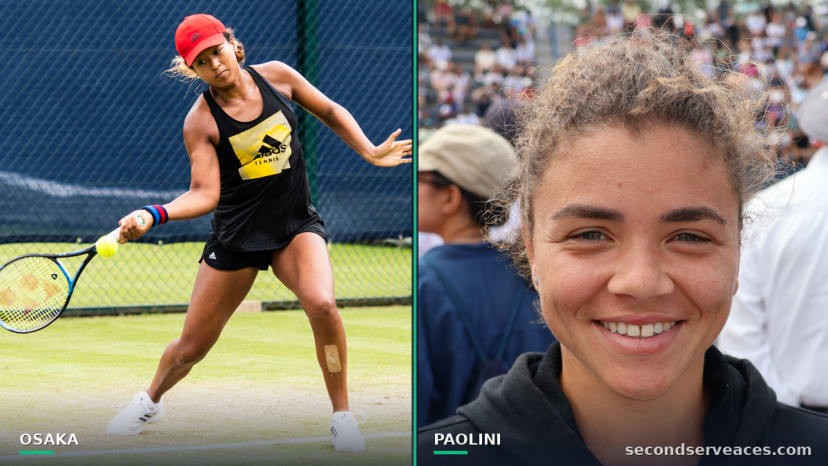
Naomi Osaka made a triumphant return to the hard courts of Tokyo, defeating Jasmine Paolini 6-3 7-6 (4) in the opening round of the Pan Pacific Open. The home crowd was treated to a showcase of pure power as Osaka, currently ranked No. 18 in the WTA singles rankings, asserted her dominance early in the first set. Stepping inside the baseline, Osaka took time away from her Italian opponent, utilizing her formidable first serve to dictate play from the very first ball.
Osaka's First-Strike Tennis Suffocates Paolini's Baseline Defense
From a technical standpoint, Osaka's serve was the defining weapon of the opening set. She consistently targeted the T on the deuce court, pulling Paolini out of her comfort zone and generating weak returns that were quickly punished with heavy forehand drives. Paolini, known for her exceptional court coverage and counter-punching skills, struggled to establish any rhythm as Osaka won 82% of her first-serve points, preventing the Italian from finding any look at a break point.
Osaka's court positioning remained aggressively forward throughout the first set. Rather than engaging in long, attritional baseline exchanges, she looked to end points within the first four shots. This high-risk, high-reward strategy paid off handsomely, allowing her to pocket the opening set 6-3 in just 34 minutes, leaving Paolini searching for answers on how to neutralize the Japanese star's weight of shot.
Listen to the Second Serve Podcast
Get our daily AI-synthesized audio briefings and match reviews on the go.
By refusing to yield ground along the baseline, Osaka effectively neutralized Paolini's heavy topspin. The fast-playing Tokyo court surface rewarded Osaka's flat groundstrokes, forcing Paolini to defend from deep behind the baseline, a position where she could not generate the angles necessary to disrupt Osaka's rhythm.
The Second-Set Tiebreak Surge and Tactical Adjustments under Pressure
The second set presented a far more complex tactical puzzle as Paolini adjusted her return position, dropping back an extra meter to cope with Osaka's pace. This adjustment allowed the Italian to put more balls in play and engage Osaka in extended rallies. Paolini began finding sharper angles with her crosscourt forehand, testing Osaka's lateral movement and forcing the former World No. 1 into committing unforced errors.
As the set progressed to a tiebreak, the pressure intensified under the Tokyo stadium lights. Osaka fell behind early but clawed her way back by dialing up the speed on her second serve and attacking Paolini's weaker backhand wing. At 4-4 in the tiebreak, Osaka produced a stunning forehand winner down the line that shifted the momentum entirely, allowing her to close out the match 6-3 7-6 (4) with an ace out wide.
This victory is particularly significant given the current state of the draw in Tokyo. With notable players like Belinda Bencic and Maja Chwalinska forced to pull out of the tournament due to injury, as detailed in our coverage of the Pan Pacific Open withdrawal list, the path has opened up for Osaka to make a deep run on her home soil. Her ability to navigate tight moments in the tiebreak suggests she is finding the competitive edge required to challenge the elite.
Contrasting Fortunes in Guangzhou and the Broader Tour Landscape
While Osaka celebrated a stellar homecoming, the story was vastly different for 46-year-old legend Venus Williams at the Guangzhou Open. Williams endured a swift first-round exit, falling 6-2 6-2 to Austrian teenager Lilli Tagger. Williams, currently ranked No. 599, struggled to find her range on the fast hard courts, committing numerous double faults and failing to match the movement and intensity of her teenage opponent.
Tagger exposed Williams' movement by constantly changing the direction of the ball, pulling the American forward with short slices before passing her at the net. It was a stark reminder of the relentless physical evolution of the modern game, where teenage prospects possess the power and fearlessness to challenge the sport's greatest icons. Despite the loss, Williams' competitive spirit remains undiminished as she continues to play on her own terms.
Meanwhile, action across the men's tour saw equally compelling battles. At the Vienna Open, Carlos Alcaraz overcame a stern test from Karen Khachanov, securing a 6-4 7-6 (5) victory to advance. Additionally, Britain's Cameron Norrie found his form with a commanding 6-4 6-1 win over Francisco Cerundolo, showcasing the high-octane tennis dominating the autumn swing across both the ATP and WTA circuits.
Rivalry Matchup & Player Profiles
| Metric | Naomi Osaka | Venus Williams |
|---|---|---|
| Rank | 18 | 599 |
| Country | Japan | United States |
| Age | 29 | 46 |
| Height | 5 ft 11 in (1.80 m) | 6 ft 1 in (1.85 m) |
| Handedness | Right-handed | Right-handed |
| Play Style | Aggressive baseliner | Aggressive baseliner |
| Career Titles | 7 | 49 |
Naomi Osaka and Venus Williams share a brief but fascinating history on court, currently tied at 1-1 in their head-to-head series. Both of their professional meetings took place during the 2017 season, marking a transitional period where a young Osaka was emerging as a powerhouse and Williams was experiencing a late-career resurgence. Williams claimed their first encounter on the grass courts of Wimbledon, utilizing her grass-court pedigree to dismantle the teenager.
However, Osaka exacted her revenge later that year at the Hong Kong Open, securing a convincing 7-5 6-2 victory. Both players employ an aggressive baseline style, relying on devastating first serves and flat, powerful groundstrokes to dictate rallies. While Williams' legendary career boasts 49 singles titles, Osaka's 7 titles include four Grand Slams, highlighting her efficiency on the biggest stages.
Looking at their current trajectories, Osaka's performance in Tokyo demonstrates she still possesses the elite firepower to compete at the highest level of the WTA Tour. In contrast, Williams' struggles in Guangzhou highlight the immense physical toll of competing against players nearly three decades her junior. Nonetheless, both champions continue to shape the narrative of modern tennis with their unique tactical identities and enduring legacies.
What Naomi Osaka Plays With
Yonex Ezone 98 (7th Gen)
Yonex Poly Tour Strike 125
Yonex Super Grap (12-Pack)
Analyze Naomi Osaka vs. Jasmine Paolini
Predict tactical adjustments, momentum swings, and serve strategy options for this match-up using our AI simulator.
The Aces Tactical Panel
This report was curated and edited by Bhaskar Goel. Tactical analysis and technical insights were provided by our specialized panel of expert correspondents.
Julian Price
Senior Tactical Correspondent
Stuffy, pedantic British academic and historian specializing in match momentum and historical context.
Elena Cruz
Director of Analytical Research
Data scientist specializing in court surface physics and movement patterns.
Bhaskar
The Editor & Fan
Passionate tennis player and site editor bringing everyday amateur insights and relatable fan commentary.
Arthur Vance
Senior Existential Analyst
Deep, eccentric, and DFW-inspired. Models court metaphysics, kinetic beauty, and player psychology.
Leo Sterling
High-Performance Consultant
Hard-nosed ex-trainer from Melbourne with a no-nonsense view on tour fitness.
Related Reports


Quick Answers
What was the final score of Naomi Osaka's match against Jasmine Paolini in Tokyo?+
Naomi Osaka defeated Jasmine Paolini 6-3 7-6 (4) in the opening round of the Pan Pacific Open.
Who defeated Venus Williams at the Guangzhou Open?+
Venus Williams was defeated 6-2 6-2 by Austrian teenager Lilli Tagger in the opening round of the Guangzhou Open.
Which players withdrew from the Pan Pacific Open due to injury?+
Belinda Bencic and Maja Chwalinska both withdrew from the Pan Pacific Open through injury.