By Marcus Thorne
Listen to the Second Serve Podcast
Get our daily AI-synthesized audio briefings and match reviews on the go.
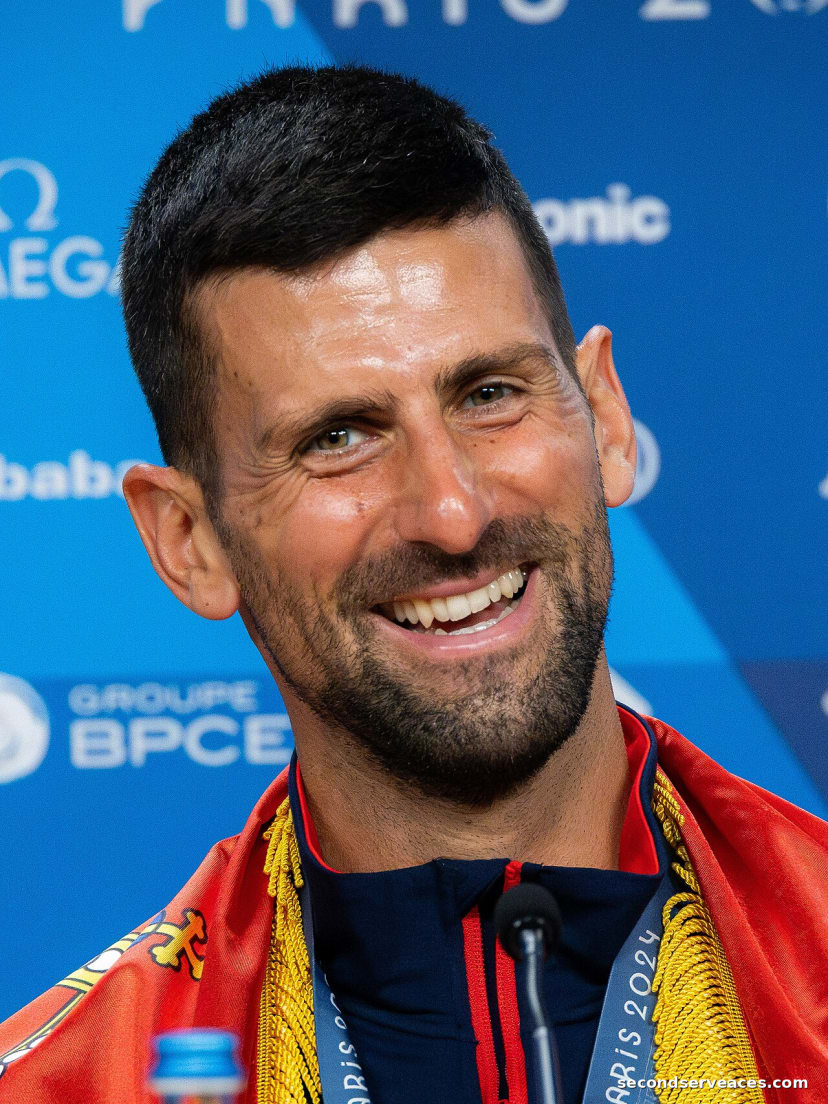
Let’s cut right to the chase, folks. The Sunshine Double just lost a massive chunk of its luster. Novak Djokovic has officially pulled the ripcord on the upcoming Miami Open, citing a shoulder injury as the culprit. But if you think a simple physical ailment is the end of the story, you clearly haven't been paying attention to the absolute circus unfolding online right now. We are looking at a full-blown controversy.
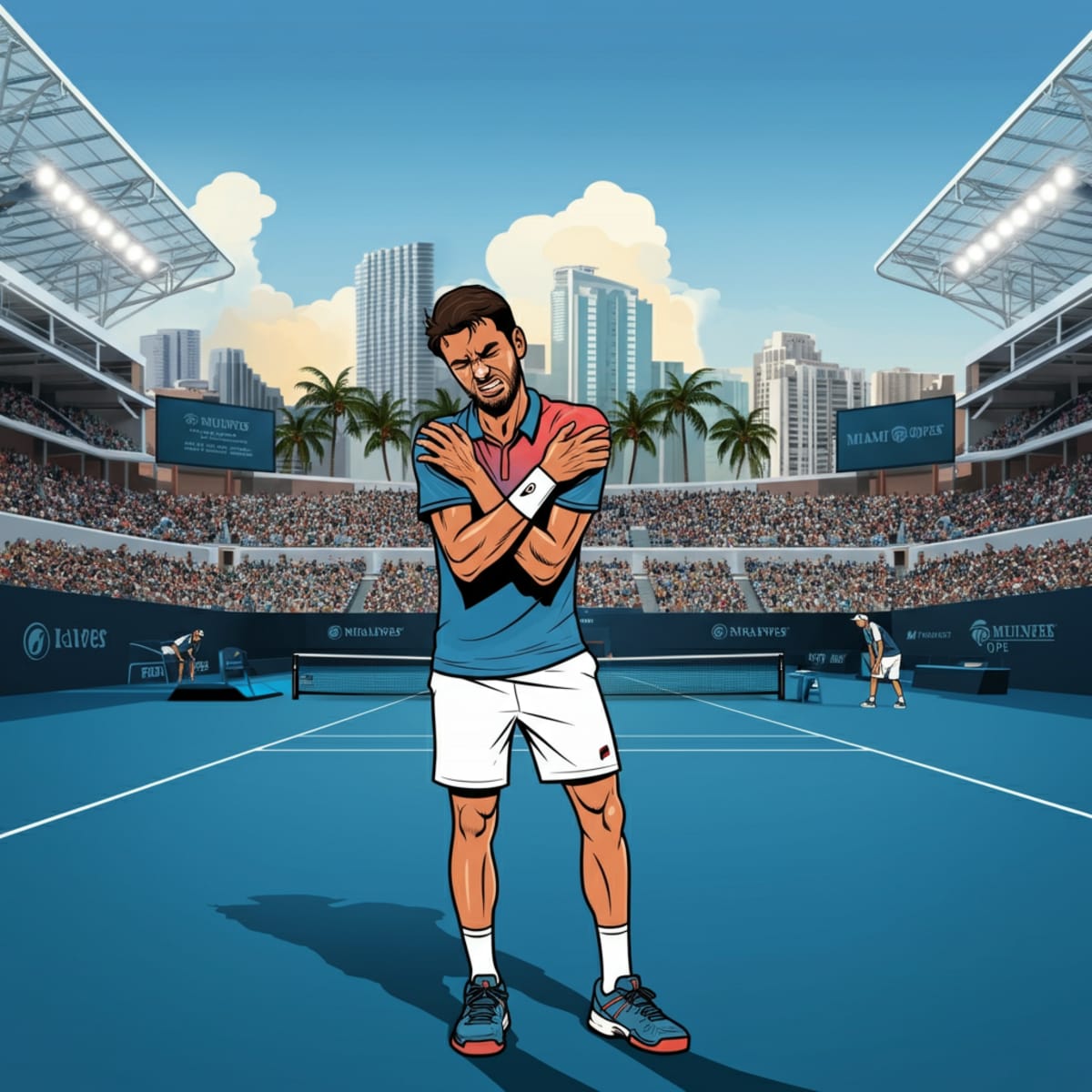
The Miami Open is scheduled to get underway immediately following the Indian Wells Open, leaving organizers scrambling and the draw wide open. Instead of preparing for the blistering heat of South Beach, the 24-time major champion is packing his bags to rehabilitate. Making matters infinitely worse, the official withdrawal announcement was accompanied by a highly controversial graphic. Someone in the PR department clearly dropped the ball, and the resulting social media backlash from fans has been nothing short of deafening.
Fans are outraged, the tournament loses its marquee draw, and we are left questioning what this means for the rest of the calendar. You cannot script this kind of off-court drama, but it severely alters the landscape of the early-season hard court swing.
The Tactical Breakdown
Since we won't see Djokovic swinging a racket in Florida, we need to analyze exactly why a compromised shoulder is an absolute death knell for a player of his caliber on these gritty North American hard courts. A shoulder issue isn't merely a localized pain; it is a fundamental disruption to the bio-mechanics that make elite tennis possible.
- Serve Mechanics and Pronation: The foundation of modern hard-court dominance is the first serve. A damaged shoulder severely limits the internal rotation required to snap through the ball. Without that terminal velocity, the serve loses its natural penetration, forcing the server to rely on placement rather than pace.
- Return Reach and Stability: We all know his return of serve is historically elite. However, successfully blocking back a 130-mph first serve requires rigid shoulder stability to absorb the heavy impact. If that joint is weak, the racket face twists upon contact, leading to short, attackable returns.
- Rally Tolerance and Court Geometry: When your shoulder hurts, generating heavy topspin becomes an agonizing chore. Without adequate topspin to push opponents deep, groundstrokes land short in the court. Opponents can step inside the baseline, alter the court geometry, and seize the match momentum with ease.
Ultimately, a nagging upper-body injury dictates match strategy. It reduces a player's net approach frequency because the transition volleys lack punch. Furthermore, any break point faced becomes significantly harder to defend when you cannot rely on a bailout ace out wide. Trying to grind through a Masters 1000 event with those tactical handicaps is a recipe for an early, ugly exit.
The Bigger Picture
Let’s be brutally honest about where we are in tennis history. Father Time remains undefeated, even against the most elastic athletes our sport has ever seen. Skipping Miami is not an isolated incident; it is a stark reminder of the physical toll professional tennis exacts on the human body.
Historically, the transition from the slow, high-bouncing hard courts of the California desert to the humid, slicker conditions in Miami has ruined plenty of campaigns. For a veteran managing long-term health, prioritizing recovery over ranking points is the only logical play. The ATP Tour is an unforgiving grind, and hard courts are notoriously brutal on the joints. By stepping away now, the focus undoubtedly shifts to the European clay-court swing.
The immediate fallout is twofold. First, the draw in Florida just blew wide open, offering a golden opportunity for the younger generation to snatch a Masters 1000 title without having to go through the ultimate final boss. Second, the fierce reaction to the withdrawal graphic proves that the intersection of sports administration, public relations, and fan expectation is more volatile than ever. Tennis is as much about the spectacle as the forehands, and right now, the spectacle is a complete mess.
What Novak Djokovic Plays With
Head Speed Pro
Luxilon ALU Power 125
Asics Court FF 3 Novak
Simulate Novak Djokovic Match Scenarios
Simulate high-pressure scenarios, score leverage points, and tactical responses for ATP and WTA players.
The Aces Tactical Panel
This report was curated and edited by Bhaskar Goel. Tactical analysis and technical insights were provided by our specialized panel of expert correspondents.
Julian Price
Senior Tactical Correspondent
Stuffy, pedantic British academic and historian specializing in match momentum and historical context.
Elena Cruz
Director of Analytical Research
Data scientist specializing in court surface physics and movement patterns.
Bhaskar
The Editor & Fan
Passionate tennis player and site editor bringing everyday amateur insights and relatable fan commentary.
Arthur Vance
Senior Existential Analyst
Deep, eccentric, and DFW-inspired. Models court metaphysics, kinetic beauty, and player psychology.
Leo Sterling
High-Performance Consultant
Hard-nosed ex-trainer from Melbourne with a no-nonsense view on tour fitness.