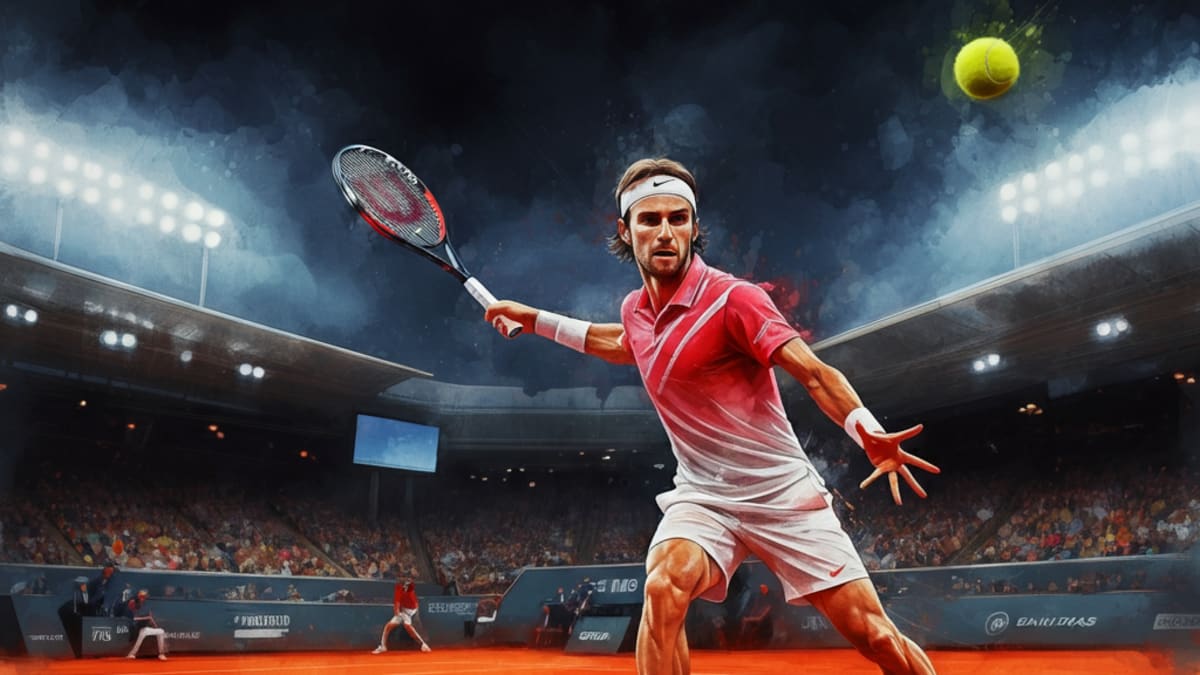
A Measured Absence from the Caja Mágica
The announcement that Novak Djokovic will not be making the trek to the Madrid Open in 2026 feels less like a sudden rupture and more like a precise calculation. In the high-stakes ecosystem of the modern ATP Tour, bodies are not mere machines but temperamental engines requiring calibration. Having already navigated the rigorous demands of the Australian Open and the desert heat of Indian Wells earlier this year, this withdrawal signals an intentional preservation of resources.
Listen to the Second Serve Podcast
Get our daily AI-synthesized audio briefings and match reviews on the go.
For the aficionados of the sport, the absence of such a primary protagonist at a marquee clay-court event creates a vacuum of intrigue. The 2026 French Open remains the horizon line, currently set for a Sunday, May 24th commencement. Every decision made in the preceding weeks, including skipping the altitude of Madrid, must be viewed through the lens of that impending Parisian fortnight.
Physical longevity is the silent arbiter of this era of tennis. As Djokovic looks to manage ongoing physical issues, the strategy shifts toward recovery cycles that prioritize specific surfaces. His absence in Madrid serves as a tactical pause, an acknowledgment that the cumulative load of a season requires intermittent withdrawals to sustain a competitive level at the majors.
The Refinement of the Vertical Motion
While the headlines focus on the absence, the true curiosity lies in the microscopic changes occurring within his service motion. Experts like Jim Courier and Mark Knowles have noted that the iteration of the serve we are seeing in 2026 is a byproduct of a deliberate evolution following previous elbow procedures. There is a perceptible smoothness now, a reduction in the jaggedness of the trophy position that previously risked structural integrity.
This technical metamorphosis did not happen in a vacuum. The period between 2019 and 2023, during which Goran Ivanisevic served as a coach, provided the foundational shift toward this more efficient, less taxing kinetic chain. The result is a serve that, while perhaps less violent than his rivals’ offerings, possesses a directional accuracy that is almost mathematical in its consistency.
To watch Djokovic serve in this current phase of his career is to observe the triumph of physics over raw velocity. By thinning the margins of his toss and optimizing the extension of his reach, he has managed to maintain a level of pressure on his service games that keeps opponents—even those with the blistering groundstrokes of Carlos Alcaraz or Jannik Sinner—perpetually on the back foot.
The Geometry of the Clay Court
The clay surface is unforgiving; it demands a specific relationship with momentum and slide that can exacerbate lingering injuries. When players like Djokovic or even the storied Rafael Nadal navigate these red-dirt environments, the physics of the sliding motion puts immense strain on the kinetic chain. The withdrawal from Madrid is, therefore, a nod to the friction-heavy nature of the surface.
One must consider the mental load of these decisions. The tour is a relentless churn, a calendar that rarely allows for a meditative pause. Yet, the current crop of players, including contemporaries like Jessica Pegula and Coco Gauff on the women's side, are increasingly treating their bodies as the central pivot point of their tactical planning. It is a mature, if cautious, approach to the profession.
As we pivot toward the clay season proper, the absence of the world's most consistent tactical mind creates a ripple effect. The field in Madrid will now adjust, the draw will open, and the rhythm of the tournament will undergo a shift. But for the observer, the fascination remains in the continued, quiet development of that remodeled serve—a mechanical evolution that will surely be the primary topic of conversation once he returns to the match court.
What Novak Djokovic Plays With
Head Speed Pro
Luxilon ALU Power 125
Head Prime Tour (12-Pack)
Asics Court FF 3 Novak
Analyze Novak Djokovic vs. Jessica Pegula
Predict tactical adjustments, momentum swings, and serve strategy options for this match-up using our AI simulator.
The Aces Tactical Panel
This report was curated and edited by Bhaskar Goel. Tactical analysis and technical insights were provided by our specialized panel of expert correspondents.
Julian Price
Senior Tactical Correspondent
Stuffy, pedantic British academic and historian specializing in match momentum and historical context.
Elena Cruz
Director of Analytical Research
Data scientist specializing in court surface physics and movement patterns.
Bhaskar
The Editor & Fan
Passionate tennis player and site editor bringing everyday amateur insights and relatable fan commentary.
Arthur Vance
Senior Existential Analyst
Deep, eccentric, and DFW-inspired. Models court metaphysics, kinetic beauty, and player psychology.
Leo Sterling
High-Performance Consultant
Hard-nosed ex-trainer from Melbourne with a no-nonsense view on tour fitness.


