A Career Defined by the Physical Limit
To watch a man reach the age of 39 in professional tennis is to watch a war against the clock. Novak Djokovic has spent two decades pushing his body past the point of exhaustion, crafting a career that defied common physiology. Yet, the current reality for the Serbian icon is etched in a silence that speaks louder than any baseline rally. Since his exit at the hands of Jack Draper at Indian Wells in early March 2026, the tour has felt remarkably empty of his specific, suffocating brand of pressure.
Listen to the Second Serve Podcast
Get our daily AI-synthesized audio briefings and match reviews on the go.
The ATP Tour is a relentless machine, and when you step off the court for an extended period, the rust sets in before you realize it. Djokovic has been open about the physical problems that have hampered his movement and hindered his ability to compete at the standard he demands of himself. It is the honesty of the aging athlete—a raw admission that the tank is not just running low, but requires a recalibration.
Skipping the Monte Carlo Masters was not just a scheduling decision; it was a tactical retreat to save the foundation of his season. The goal, clearly, is the European clay circuit, where the margin for error is razor-thin and the physical toll on the joints is at its zenith. When your body is your weapon, choosing where to fire it is the ultimate mental test.
The Marbella Practice Courts and the Return to Red Dirt
While the tour moved on through Monte Carlo, footage of a solitary figure grinding on the red dirt in Marbella provided the first glimmer of hope for those waiting for his return. There, away from the glare of stadium floodlights, Djokovic was filmed working through his forehand and backhand sequences. It is the work of a man who understands that rhythm on clay is not something you find in the middle of a tournament; you build it, brick by heavy brick, in isolation.
Seeing him back on the surface suggests that the internal clock is ticking toward the Madrid Open. Marbella acts as a crucible for his recovery, a place where he can test the limits of those physical problems without the pressure of a live scorecard. It is the classic Djokovic approach: total focus on the mechanics, ignoring the noise of the outside world, and treating the practice court as if it were a Grand Slam final.
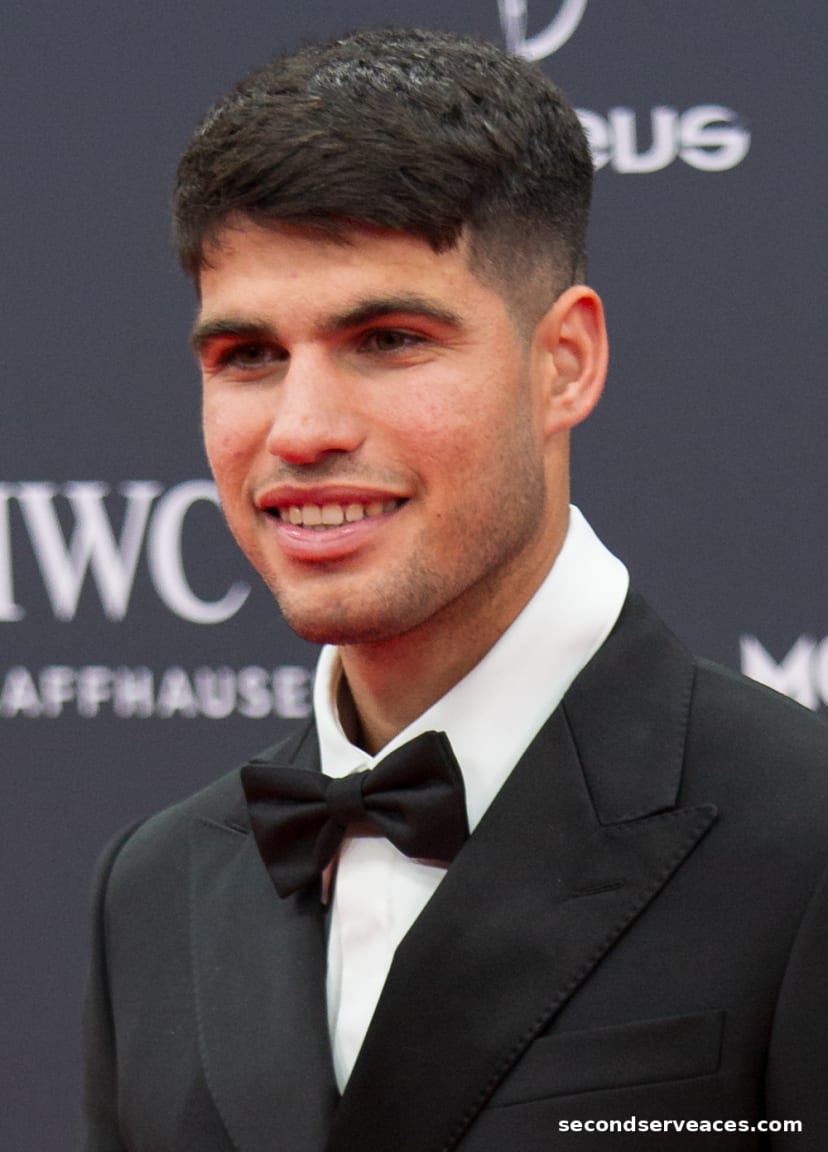
For the younger generation, these practice tapes are a reminder that the field hasn't yet inherited the throne. Whether it is the ascent of Carlos Alcaraz or the relentless baseline grinding of Roberto Bautista Agut, the tour is moving forward, but the shadow cast by a healthy Djokovic remains the benchmark. He isn't practicing to participate; he is practicing to reclaim the narrative.
The Silence Between the Matches
The gap since Indian Wells remains the most significant metric in his current statistical profile. It has been weeks since he last felt the heat of a high-leverage break point, and that lack of match momentum is a formidable opponent in its own right. At 39, the body takes longer to recover, and the intensity required to play three-out-of-five or even two-out-of-three on clay at the elite level is immense.
We are watching a transition period where the mental fortitude that carried him to the top of the sport must now reconcile with physical limitations. It is an open book, and the pages are currently being written in Marbella. Every forehand rotation, every slide on the clay, is an experiment in how much he can ask of his frame before the Madrid Open begins.
Fans and analysts alike are left waiting to see if this preparation will be enough to bridge the gap. He has navigated these waters before, pulling off impossible returns after lengthy layoffs, but the sport waits for no one. The question is no longer just about his game—it is about the integrity of his recovery and whether the court in Madrid will be the stage for a resurgence or a realization.
What Novak Djokovic Plays With
Head Speed Pro
Luxilon ALU Power 125
Asics Court FF 3 Novak
Analyze Novak Djokovic vs. Jack Draper
Predict tactical adjustments, momentum swings, and serve strategy options for this match-up using our AI simulator.
The Aces Tactical Panel
This report was curated and edited by Bhaskar Goel. Tactical analysis and technical insights were provided by our specialized panel of expert correspondents.
Julian Price
Senior Tactical Correspondent
Stuffy, pedantic British academic and historian specializing in match momentum and historical context.
Elena Cruz
Director of Analytical Research
Data scientist specializing in court surface physics and movement patterns.
Bhaskar
The Editor & Fan
Passionate tennis player and site editor bringing everyday amateur insights and relatable fan commentary.
Arthur Vance
Senior Existential Analyst
Deep, eccentric, and DFW-inspired. Models court metaphysics, kinetic beauty, and player psychology.
Leo Sterling
High-Performance Consultant
Hard-nosed ex-trainer from Melbourne with a no-nonsense view on tour fitness.