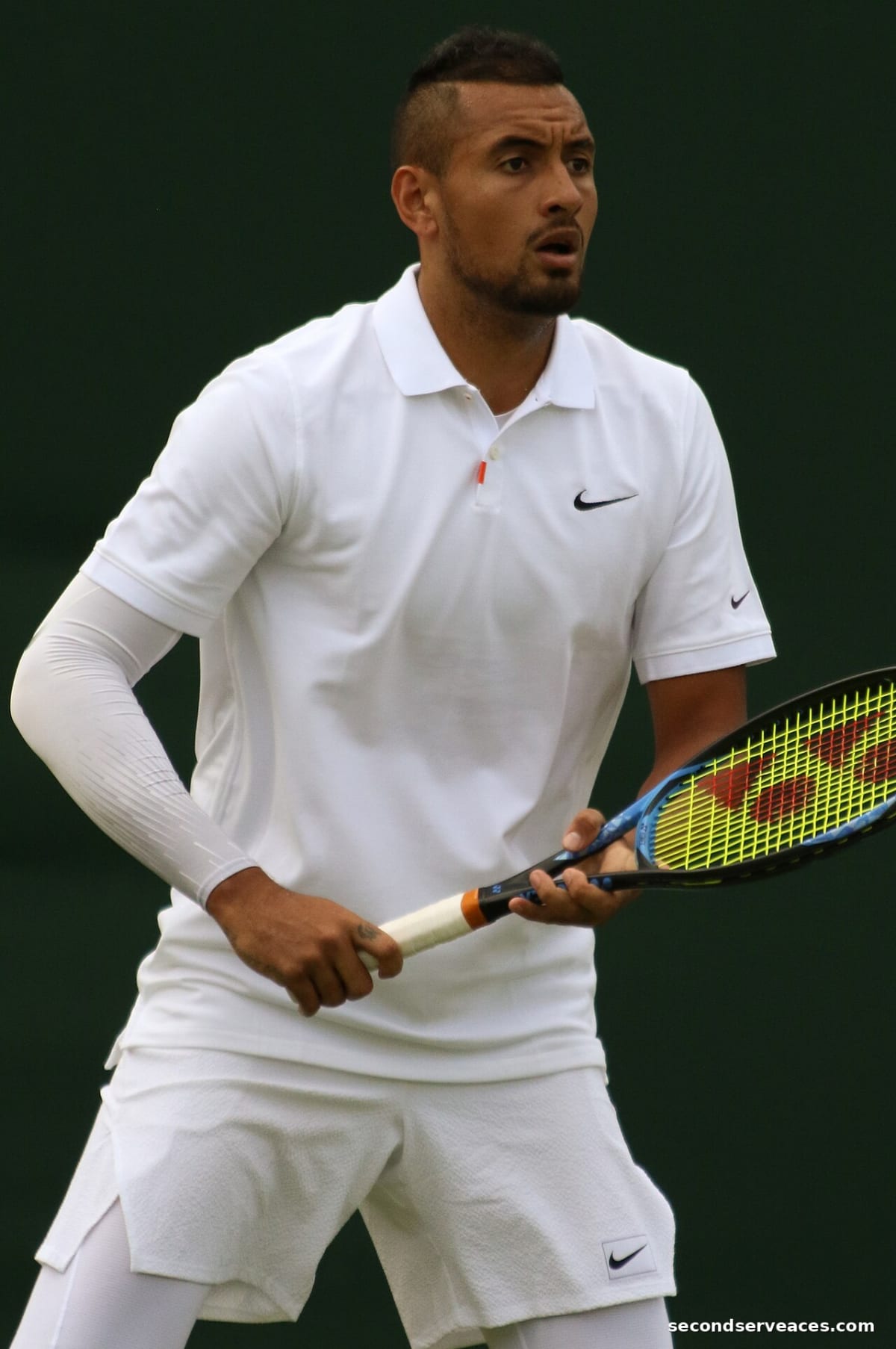
The International Tennis Integrity Agency (ITIA) has officially handed down a provisional suspension to Nick Kyrgios after he tested positive for benzoylecgonine, a metabolite of cocaine. The sample in question was provided during an ATP 250 event on the grass of Mallorca in June, with the provisional suspension active since August 4. This development introduces a stark administrative hurdle for the Australian, whose career has already been severely compromised by a series of physical setbacks.
Listen to the Second Serve Podcast
Get our daily AI-synthesized audio briefings and match reviews on the go.
For a player who relies heavily on explosive movement and an unpredictable, high-velocity serving rhythm, this forced sidelining halts any immediate plans of competitive rehabilitation. The suspension frozen his ability to compete or access official tour training grounds, leaving his immediate future on the professional circuit highly uncertain.
As the tennis world processes the ruling, the focus shifts to the technicalities of the World Anti-Doping Agency (WADA) code and the physical realities of a player whose ranking has suffered a catastrophic slide over the past twelve months.
The Mallorca Sample and the ITIA Ruling
The positive test for benzoylecgonine represents a serious administrative infraction under current anti-doping protocols. Benzoylecgonine is the primary compound screened in toxicology to confirm the ingestion of cocaine. Because the sample was collected in-competition during the Mallorca tournament in June, the ITIA was required to act swiftly, imposing the provisional ban on August 4 while a full investigation is conducted.
Unlike performance-enhancing substances that directly manipulate red blood cell production or muscle recovery, recreational stimulants are treated under a specific regulatory framework. However, the strict liability principle of the anti-doping program means that the presence of the metabolite in an athlete's system automatically triggers a provisional suspension, regardless of intent or performance benefit.
This administrative freeze prevents Kyrgios from utilizing ATP-sanctioned facilities, a restriction that severely disrupts his physical therapy. For an athlete trying to rebuild the kinetic chain required for his signature high-release serve, being barred from elite coaching and training environments is a massive setback.
Chronic Injuries and the Descent to No. 919
Kyrgios’s current standing in the professional game is a shadow of his former self, with his ranking plummeting to world No. 919 according to the latest ATP rankings. This decline is directly tied to a body that has repeatedly broken down under the demands of modern professional tennis. He has been limited to just four singles matches this season, unable to find any competitive continuity.
The primary culprits are chronic wrist and knee injuries that have severely limited his court coverage. When healthy, Kyrgios's tactical identity is built around keeping points short, using a rapid shoulder internal rotation to generate massive pace on his serve without telegraphing his spots. However, wrist instability has compromised his racquet-head speed, preventing him from hitting through his forehand with the necessary topspin to clear the net consistently.
Furthermore, his knee pathology has destroyed his lateral movement. On low-bouncing grass courts, players must bend deeply through the knees to maintain a stable base of support. Kyrgios's inability to load his lower body has forced him to rely on low-percentage, flat half-volleys from deep behind the baseline, leaving him highly vulnerable to opponents who can extend the rallies.
The Instagram Apology and WADA Code Realities
Following the public announcement of his suspension, Kyrgios released a direct apology on Instagram to his fans, family, and corporate sponsors. In the statement, he expressed deep regret and announced his intention to step away from public life for 28 days. This public admission represents a rare moment of vulnerability for a player who has often used a combative on-court persona to shield himself from scrutiny.
Under WADA guidelines, cocaine is classified as a "substance of abuse." This classification carries a standard three-month suspension if the athlete can establish that the use occurred out-of-competition and was unrelated to sports performance. Crucially, this sanction can be reduced to just one month if the athlete agrees to complete an approved treatment program, which explains Kyrgios's decision to enter a 28-day period of rehabilitation.
If the ITIA approves his treatment program, the reduction of the ban could allow Kyrgios to return to training by the end of the year. However, rebuilding a competitive ranking from No. 919 without the immediate aid of wildcards presents an incredibly steep psychological and physical mountain to climb.
Public Defense and the Mental Health Debate
In the wake of the suspension, Argentine tennis journalist Gonzalo Ferreyra spoke out publicly in defense of the Australian, urging the tennis community to view the situation as a mental health issue rather than a moral failure. Ferreyra emphasized that the isolation and frustration of long-term injury rehabilitation often drive athletes toward destructive coping mechanisms, a reality that the sport's governing bodies must address more compassionately.
The psychological toll of being away from the tour is immense, a theme that resonates deeply when examining the mental resilience required at the sport's highest levels, as we previously analyzed in our coverage of how Andy Roddick analyzed Novak Djokovic's US Open runs. While some players possess highly structured support networks to navigate extended layoffs, Kyrgios has frequently operated as an independent entity, leaving him highly exposed to the pressures of forced inactivity.
This situation has reignited a broader debate among tennis insiders, including veteran journalists like Jon Wertheim, regarding the ATP's duty of care. While drug testing must remain rigorous to protect the integrity of the sport, there is a growing consensus that recreational substance use often signals an underlying cry for help that requires medical intervention rather than purely punitive measures.
Rivalry Matchup & Player Profiles
While Gonzalo Ferreyra and Nick Kyrgios have never faced each other on a tennis court due to Ferreyra's role as a prominent Argentine journalist and commentator, their names have become linked in the public sphere following Ferreyra's vocal defense of the Australian's mental health during this suspension crisis.
| Metric | Nick Kyrgios | Gonzalo Ferreyra |
|---|---|---|
| Rank | No. 919 (Provisionally suspended) | N/A (Journalist) |
| Country | Australia | Argentina |
| Age | 31 | N/A |
| Height | 6'4" (1.93 m) | N/A |
| Handedness | Right-handed | N/A |
| Play Style | Aggressive baseliner with a powerful serve | N/A |
| Career Titles | 7 ATP Singles, 4 ATP Doubles | N/A |
This off-court dynamic highlights the complex relationship between active players and the media during personal crises. While some media figures have been quick to condemn the positive test, Ferreyra’s empathetic stance underscores a growing shift in sports journalism toward addressing the psychological pressures of elite athletics. Kyrgios's struggle to stay healthy and competitive remains one of the tour's most polarizing narratives, and his path back to active competition will undoubtedly be closely scrutinized by both supporters and critics alike.
What Jannik Sinner Plays With
Head Speed MP 2024
Head Hawk Touch 1.25
Head Prime Tour (12-Pack)
Nike GP Challenge 1
Analyze Nick Kyrgios vs. Gonzalo Ferreyra
Predict tactical adjustments, momentum swings, and serve strategy options for this match-up using our AI simulator.
The Aces Tactical Panel
This report was curated and edited by Bhaskar Goel. Tactical analysis and technical insights were provided by our specialized panel of expert correspondents.
Julian Price
Senior Tactical Correspondent
Stuffy, pedantic British academic and historian specializing in match momentum and historical context.
Elena Cruz
Director of Analytical Research
Data scientist specializing in court surface physics and movement patterns.
Bhaskar
The Editor & Fan
Passionate tennis player and site editor bringing everyday amateur insights and relatable fan commentary.
Arthur Vance
Senior Existential Analyst
Deep, eccentric, and DFW-inspired. Models court metaphysics, kinetic beauty, and player psychology.
Leo Sterling
High-Performance Consultant
Hard-nosed ex-trainer from Melbourne with a no-nonsense view on tour fitness.
Related Reports
Quick Answers
Why was Nick Kyrgios provisionally suspended by the ITIA?+
Nick Kyrgios was provisionally suspended after testing positive for benzoylecgonine, a metabolite of cocaine, during an ATP 250 event in Mallorca.
How long is the standard suspension for a substance of abuse under WADA rules?+
The standard sanction is three months, which can be reduced to one month if the athlete completes an approved treatment program.
What is Nick Kyrgios's current ATP ranking?+
Due to chronic wrist and knee injuries limiting him to just four singles matches this season, Kyrgios's ranking has fallen to world No. 919.