The Economics of the Red Dirt
There is a specific, granular tension that defines the Monte Carlo Country Club. It is not merely the salinity of the Mediterranean breeze or the way the ochre dust coats the baseline; it is the silent, hovering gravity of the prize money. For the 2026 edition, the ATP has calibrated the financial stakes to a total purse of €6,309,095. This is a sum that transforms the geometry of the game—the champion’s reward, fixed at €974,370, serves as a high-stakes anchor for the season’s clay-court transition, while the runner-up departs with a compensatory €532,120.
Listen to the Second Serve Podcast
Get our daily AI-synthesized audio briefings and match reviews on the go.
The Tactical Breakdown
Clay is a surface that rewards patience, a physical negotiation with entropy. When we look at the historical data, specifically the movement of players like Jannik Sinner—who navigated to consecutive semi-finals in 2023 and 2024—we see a tactical pivot toward heavy-spin stabilization and lateral recovery. The modern Monte Carlo campaigner does not just hit the ball; they orchestrate the rally's kinetic decay.
- Baseline Depth: Successful players here prioritize the 'heavy ball'—depth over pace, forcing the opponent to strike while falling backward.
- Surface Engagement: The slide is not merely movement; it is an extension of the racquet head, allowing for a stabilized platform on a surface that otherwise demands constant adjustment.
- High-Percentage Targets: With a purse approaching a million euros for the victor, the tactical shift is toward risk-mitigation: serve-plus-one patterns that dictate the rhythm rather than chase it.
The Bigger Picture
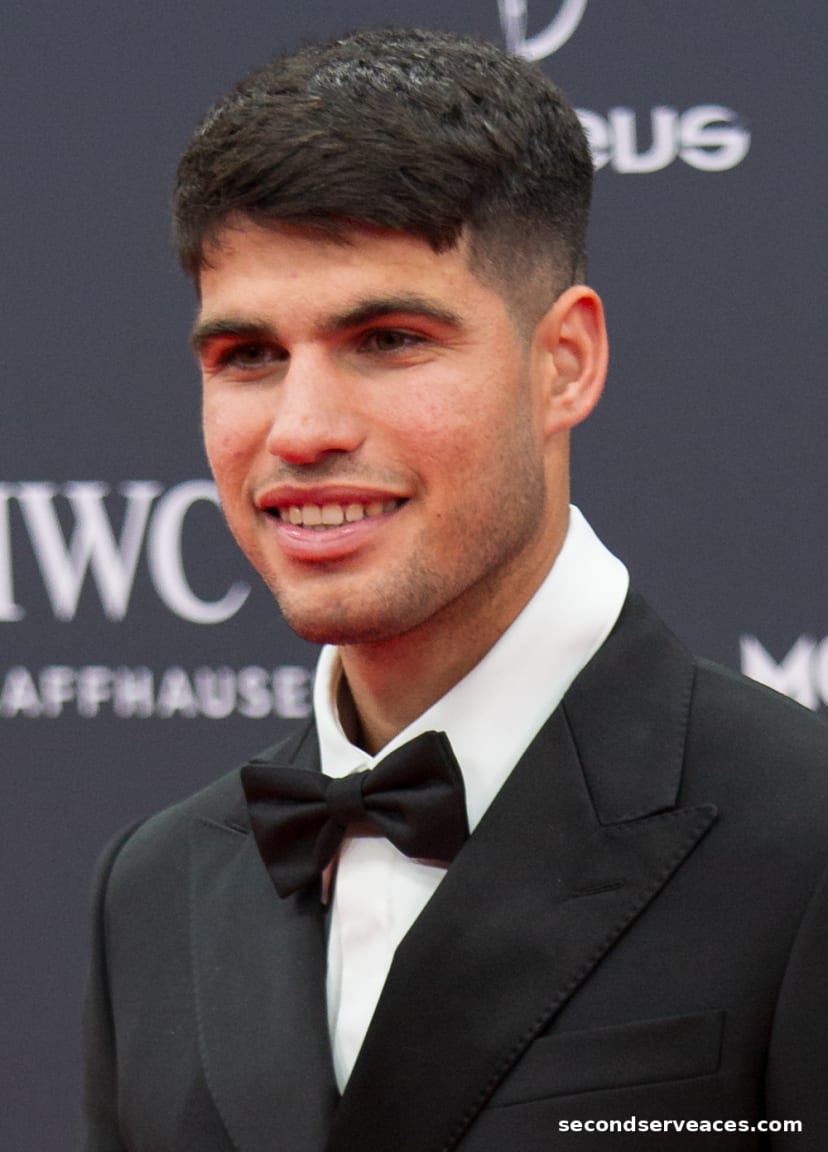
The Monte Carlo Masters occupies a liminal space in the professional calendar. It is the first true test of the European clay swing, a proving ground for those—like Stefanos Tsitsipas, whose 2025 triumph over Andrey Rublev demonstrated the efficacy of a singular, dominant forehand—looking to build momentum toward Roland-Garros. We are watching the maturation of a generation. Carlos Alcaraz, Holger Rune, and Sinner are no longer interlopers; they are the architects of the court's current geometry. As players like Gael Monfils or Marco Trungelliti continue to navigate the peripheral challenges of the tour, the focus remains on this core cohort and their ability to sustain intensity across the distinct, slow-motion brutality that defines the Monte Carlo experience.
What Carlos Alcaraz Plays With
Babolat Pure Aero 98
Babolat RPM Blast 1.30
Nike Vapor Pro 2
Analyze Carlos Alcaraz vs. Jannik Sinner
Predict tactical adjustments, momentum swings, and serve strategy options for this match-up using our AI simulator.
The Aces Tactical Panel
This report was curated and edited by Bhaskar Goel. Tactical analysis and technical insights were provided by our specialized panel of expert correspondents.
Julian Price
Senior Tactical Correspondent
Stuffy, pedantic British academic and historian specializing in match momentum and historical context.
Elena Cruz
Director of Analytical Research
Data scientist specializing in court surface physics and movement patterns.
Bhaskar
The Editor & Fan
Passionate tennis player and site editor bringing everyday amateur insights and relatable fan commentary.
Arthur Vance
Senior Existential Analyst
Deep, eccentric, and DFW-inspired. Models court metaphysics, kinetic beauty, and player psychology.
Leo Sterling
High-Performance Consultant
Hard-nosed ex-trainer from Melbourne with a no-nonsense view on tour fitness.