A Statistical Anomaly
It is a rare, almost violent disruption of the natural order when a player of Daniil Medvedev’s defensive architecture—a man who essentially functions as a brick wall with a geometry degree—is dismantled without the concession of a single game. In forty-nine minutes, Matteo Berrettini rendered the world’s most recalcitrant retriever obsolete, posting a 6-0, 6-0 scoreline that marks the first time in Medvedev’s storied career he has suffered such an unequivocal erasure. This was not merely a loss; it was a cessation of function.
Listen to the Second Serve Podcast
Get our daily AI-synthesized audio briefings and match reviews on the go.
The Tactical Breakdown
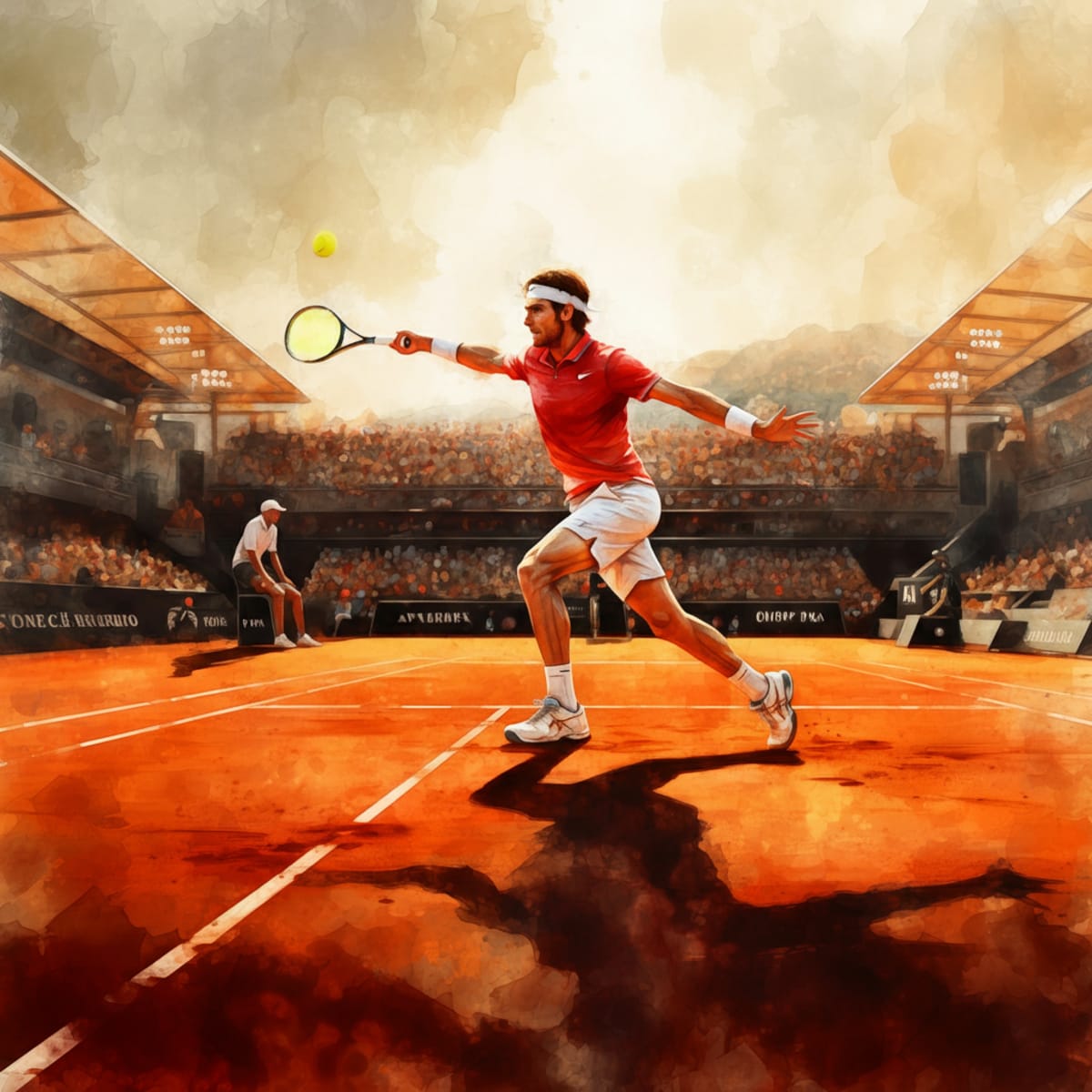
To understand the mechanics of this result, one must look at the way clay courts punish the player who insists on playing ten feet behind the baseline. Berrettini, whose game relies on the brute-force architecture of a thunderous serve and a whip-crack forehand, exploited the court’s surface friction. On clay, time is the commodity most easily devalued. By shortening rallies and attacking the short ball, Berrettini prevented Medvedev from entering his preferred state of rhythmic, lateral attrition.
- Serve Placement: By hitting wide and then immediately dictating with the inside-out forehand, Berrettini forced Medvedev into positions where his reach—usually an asset—became a liability.
- Rally Tolerance: The decisive factor here was Berrettini’s refusal to be drawn into the "Metronome Game." Medvedev wins by forcing the opponent to miss; Berrettini instead chose to accept the inherent variance of high-risk, high-reward hitting.
The Bigger Picture
While the scoreboard at the Monte-Carlo Country Club read like a typographical error, the broader narrative of the tournament suggests a genuine shift in the clay-court hierarchy. Alexander Zverev’s 4-6, 6-4, 7-5 victory over Cristian Garin serves as a necessary antithesis to the Berrettini result. Where Berrettini found flow, Zverev found friction, highlighting the grinder’s reality of this sport—the necessity of winning ugly when the clean, efficient strokes abandon you.
The field has thinned in unexpected ways:
- Zizou Bergs’ 6-4, 6-1 dismissal of 2023 champion Andrey Rublev signals that even the most established defensive templates are susceptible to a lower-ranked player who plays with absolute, unburdened liberty.
- Valentin Vacherot’s 7-6 (8/6), 7-5 win over Lorenzo Musetti reinforces the precariousness of seeding in a tournament defined by the idiosyncratic bounce of the Mediterranean clay.
As we observe the draw narrowing, we are left to ponder the fragility of the "expected." When a player as tactically rigid as Medvedev is stripped of his foundation, it invites us to reconsider the physics of the game. Clay is a surface that demands not just power, but a certain humility before the bounce. Today, those who respected the surface thrived; those who attempted to impose their will against its unique grain were, quite literally, left with nothing.
What Daniil Medvedev Plays With
Tecnifibre T-Fight 305 Isoflex
Tecnifibre Razor Soft
Analyze Daniil Medvedev vs. Matteo Berrettini
Predict tactical adjustments, momentum swings, and serve strategy options for this match-up using our AI simulator.
The Aces Tactical Panel
This report was curated and edited by Bhaskar Goel. Tactical analysis and technical insights were provided by our specialized panel of expert correspondents.
Julian Price
Senior Tactical Correspondent
Stuffy, pedantic British academic and historian specializing in match momentum and historical context.
Elena Cruz
Director of Analytical Research
Data scientist specializing in court surface physics and movement patterns.
Bhaskar
The Editor & Fan
Passionate tennis player and site editor bringing everyday amateur insights and relatable fan commentary.
Arthur Vance
Senior Existential Analyst
Deep, eccentric, and DFW-inspired. Models court metaphysics, kinetic beauty, and player psychology.
Leo Sterling
High-Performance Consultant
Hard-nosed ex-trainer from Melbourne with a no-nonsense view on tour fitness.