The Changing of the Guard
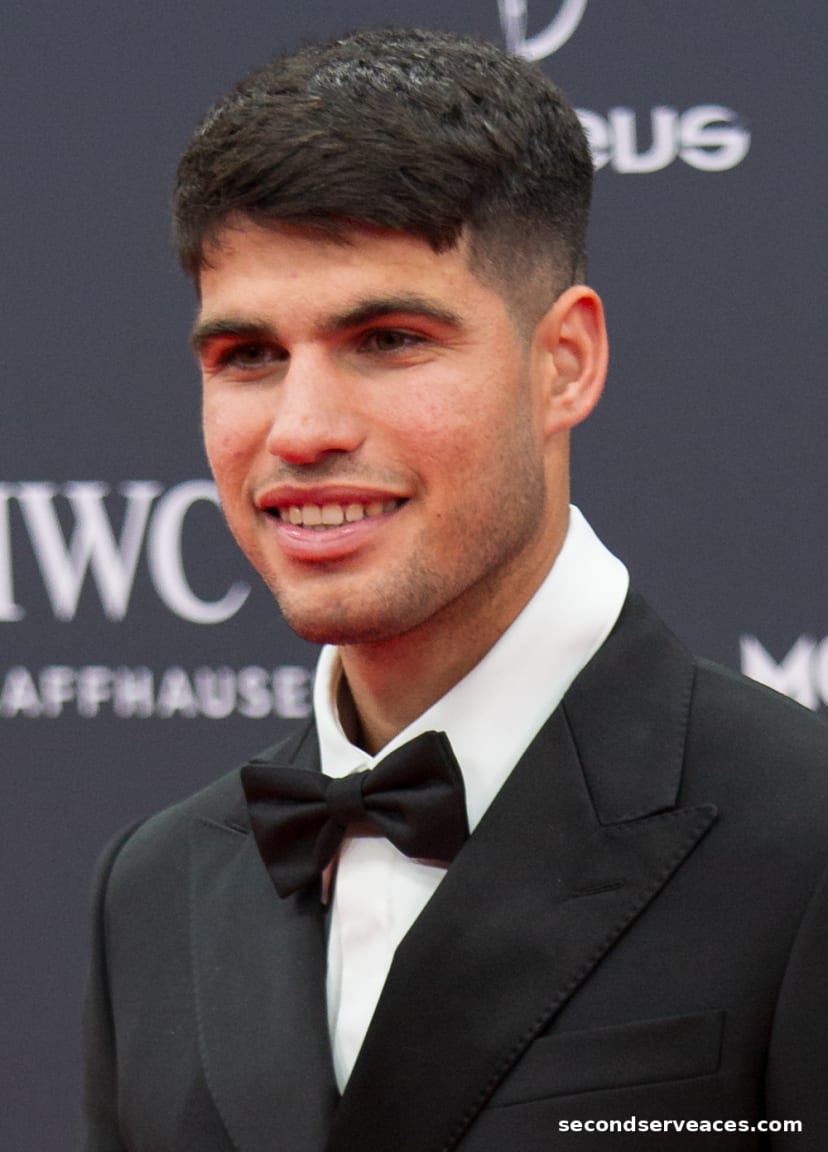
The historical baseline for greatness in men's tennis has shifted. When we track the development of Carlos Alcaraz and Jannik Sinner, we aren't just watching young talent; we are witnessing a condensed acceleration of professional development. Alcaraz, having completed his career Grand Slam in under four years—capped by his 2026 Australian Open victory—has bypassed the typical decade-long gestation period for such a feat. Meanwhile, Jannik Sinner’s efficiency is equally striking, with all four of his Grand Slam titles secured since 2024.
Listen to the Second Serve Podcast
Get our daily AI-synthesized audio briefings and match reviews on the go.
The Tactical Breakdown
To understand how this duo thrives, one must look at their rally tolerance and court geometry. Both players prioritize extreme offensive positioning, rarely conceding the baseline. Their success stems from:
- Offensive Transition: Unlike the attrition-based game of earlier decades, Alcaraz and Sinner prioritize early-ball strikes, utilizing a high frequency of net approaches to shorten points.
- Baseline Aggression: By taking the ball on the rise, they negate the opponent’s ability to set up defensive patterns, forcing rapid-fire exchanges where their foot speed becomes the primary equalizer.
- Surface Adaptability: While legends like Jimmy Connors notoriously struggled with the transition to the French Open clay—never claiming the title—the modern archetype is built to be surface-agnostic, favoring high-RPM topspin that translates across various court speeds.
The Bigger Picture
The rarefied air of the Golden Slam—held by Novak Djokovic, Rafael Nadal, and Andre Agassi—remains the sport's ultimate barometer. However, the current era demands a different kind of endurance. Historical context reminds us that even giants have blind spots, such as Connors’ absence from the Parisian winner’s circle. As we look at the legacy of Rod Laver, Roger Federer, and the current leaders, it is clear that Alcaraz and Sinner are not just chasing records; they are changing the mathematical probability of what a player can achieve before their mid-twenties.
What Novak Djokovic Plays With
Head Speed Pro
Luxilon ALU Power 125
Asics Court FF 3 Novak
Analyze Novak Djokovic vs. Rafael Nadal
Predict tactical adjustments, momentum swings, and serve strategy options for this match-up using our AI simulator.
The Aces Tactical Panel
This report was curated and edited by Bhaskar Goel. Tactical analysis and technical insights were provided by our specialized panel of expert correspondents.
Julian Price
Senior Tactical Correspondent
Stuffy, pedantic British academic and historian specializing in match momentum and historical context.
Elena Cruz
Director of Analytical Research
Data scientist specializing in court surface physics and movement patterns.
Bhaskar
The Editor & Fan
Passionate tennis player and site editor bringing everyday amateur insights and relatable fan commentary.
Arthur Vance
Senior Existential Analyst
Deep, eccentric, and DFW-inspired. Models court metaphysics, kinetic beauty, and player psychology.
Leo Sterling
High-Performance Consultant
Hard-nosed ex-trainer from Melbourne with a no-nonsense view on tour fitness.