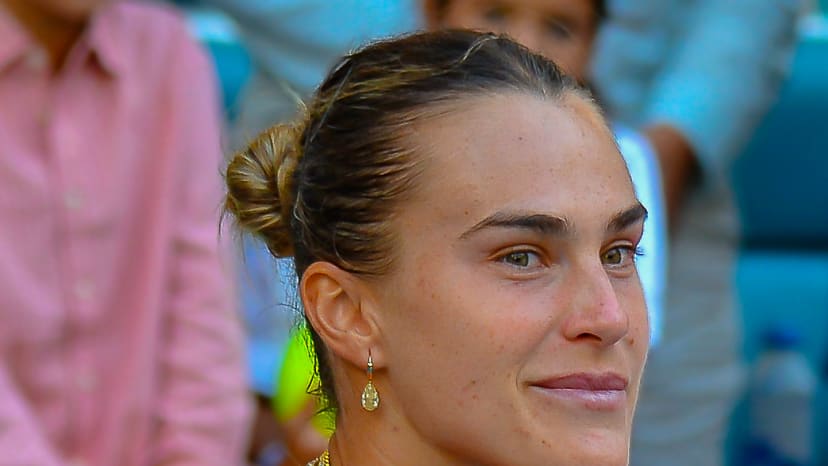
Professional tennis is a game of millimeters and split-second decisions, but the most suffocating pressure often exists off the court. Markéta Vondroušová, the 2023 Wimbledon champion and current world No. 46, now finds herself in a match she cannot win with a racquet. The International Tennis Integrity Agency (ITIA) has confirmed the Czech star is under investigation after being charged with refusing a doping test, an incident tracing back to early December.
Listen to the Second Serve Podcast
Get our daily AI-synthesized audio briefings and match reviews on the go.
For an athlete, the daily routine is a rigid architecture of travel, training, and the unrelenting glare of the anti-doping clock. Vondroušová has publicly attributed this failure to an acute stress reaction—a stark reminder that beneath the aesthetic brilliance of her left-handed game lies the same frailty that haunts every player on the WTA Tour.
The Anatomy of an ITIA Charge
The stakes here are cold, clinical, and potentially career-altering. Under the strict guidelines of the Tennis Anti-Doping Protocol (TADP), the refusal to submit to testing is treated with the same severity as a positive result. Vondroušová faces a maximum ban of four years, a duration that would effectively freeze her movement up the rankings and force a complete reconstruction of her rhythm and physical conditioning.
Her camp is not retreating. Lawyer Jan Exner has signaled a defiant path forward, maintaining that his client intends to compete at the Madrid Open starting April 21. It is a bold move to maintain the status quo while the investigation looms, testing the mental fortitude required to walk onto a court when the court of public opinion is already delivering its verdict.
Navigating the Mental Grind
We often talk about 'break points' in terms of service games, but there is an invisible mental toll that comes with regulatory scrutiny. To maintain the focus required to compete against the likes of Aryna Sabalenka or Elena Rybakina while navigating a potential four-year absence requires a compartmentalization that few possess. The stress that she claims led to this incident is the same fuel that burns out many players long before their bodies quit.
The tennis calendar waits for no one. While Vondroušová navigates the legal fallout, the tour moves on. Whether she can find the mental space to execute her shots in Madrid, knowing the shadow of the ITIA investigation follows her into every practice session, will be the truest test of her career to date.
The Road to Madrid and Beyond
As of now, the numbers remain unchanged—No. 46 in the world. The transition from the baseline to the courtroom is one no player ever wants to make, but it is a reality of the modern game. We watch the trajectory of players like Tereza Valentová and look for the next star, forgetting how quickly the landscape shifts from glory to uncertainty.
The Madrid Open will serve as a bellwether for her resolve. Will she perform under the weight of this uncertainty, or will the pressure of the investigation prove too heavy to carry? We will be watching the baseline closely to see if her footwork remains as precise as the legal maneuvers being orchestrated behind the scenes.
What Aryna Sabalenka Plays With
Wilson Blade 98 v9 (16x19)
Luxilon ALU Power 125
Wilson Pro Overgrip (12-Pack)
Analyze Markéta Vondroušová vs. Petra Kvitová
Predict tactical adjustments, momentum swings, and serve strategy options for this match-up using our AI simulator.
The Aces Tactical Panel
This report was curated and edited by Bhaskar Goel. Tactical analysis and technical insights were provided by our specialized panel of expert correspondents.
Julian Price
Senior Tactical Correspondent
Stuffy, pedantic British academic and historian specializing in match momentum and historical context.
Elena Cruz
Director of Analytical Research
Data scientist specializing in court surface physics and movement patterns.
Bhaskar
The Editor & Fan
Passionate tennis player and site editor bringing everyday amateur insights and relatable fan commentary.
Arthur Vance
Senior Existential Analyst
Deep, eccentric, and DFW-inspired. Models court metaphysics, kinetic beauty, and player psychology.
Leo Sterling
High-Performance Consultant
Hard-nosed ex-trainer from Melbourne with a no-nonsense view on tour fitness.