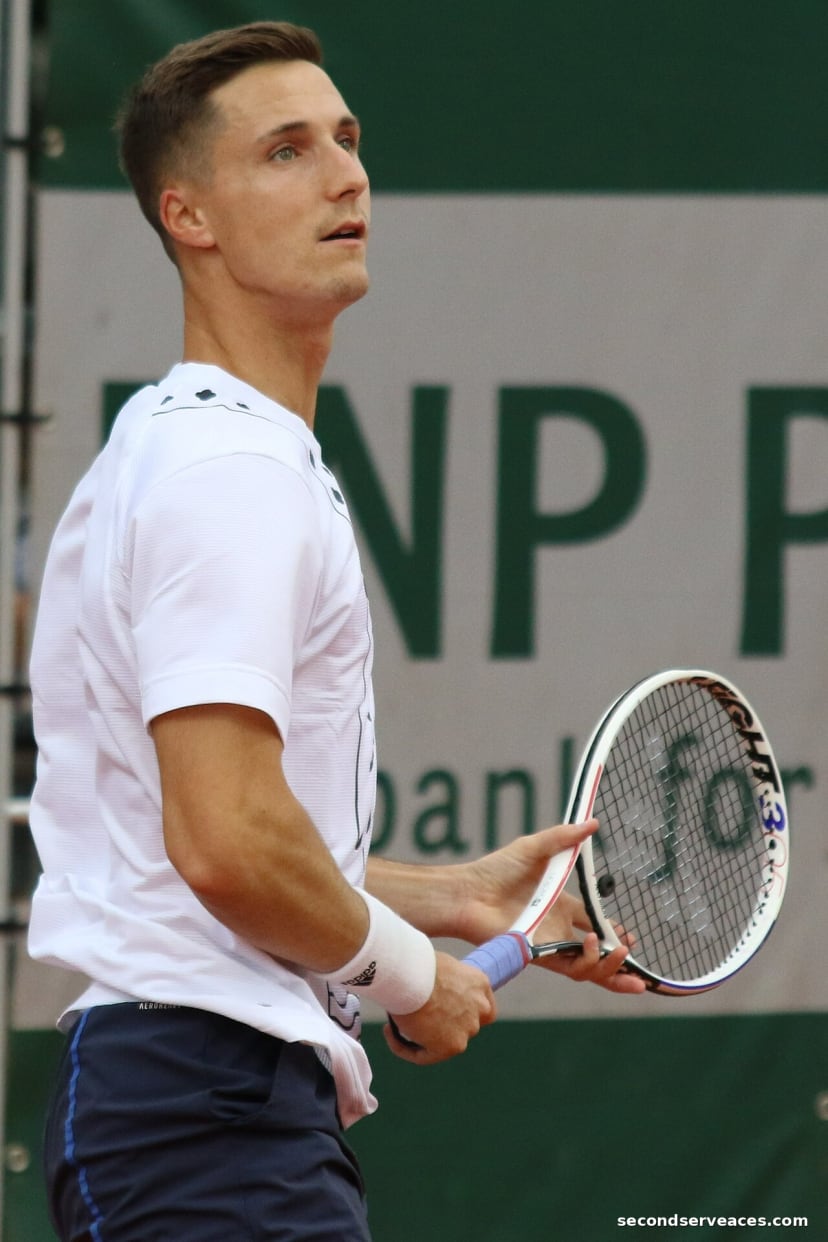
A December Morning and the Weight of Compliance
In the rarefied air of professional tennis, the machinery of regulation is as precise as a freshly strung racquet. For Marketa Vondrousova, the 2023 Wimbledon champion whose Wikipedia profile highlights a career defined by left-handed variety and tactical patience, the off-season has shifted from recovery to an existential legal crisis. On December 3, 2025, an incident occurred at her private residence that has now prompted the International Tennis Integrity Agency (ITIA) to formally charge the Czech star with refusing a doping test.
Listen to the Second Serve Podcast
Get our daily AI-synthesized audio briefings and match reviews on the go.
The severity of this charge is not to be minimized; the regulatory framework governing professional sport is unforgiving, and Vondrousova now stares down the barrel of a potential four-year ban. Such a sanction would, in the literal sense of the tour, erase the possibility of returning to the WTA Tour for a significant stretch of her prime. The physics of professional competition demand total availability, both physical and administrative, and the breach of this implicit contract has sent shockwaves through the tennis ecosystem.
It is worth noting that for a player who has navigated the physical rigors of the Madrid Open and other premier clay-court events, the pressure is no longer just about topspin or court coverage. It has become a matter of legal scrutiny. The ITIA, the body tasked with maintaining the integrity of the sport, does not often reach into the domestic sanctuaries of players unless the necessity for compliance enforcement is absolute.
The Intersection of Clinical Diagnosis and Legal Defense
Following the December incident, the narrative surrounding Vondrousova’s absence from the tour has shifted from athletic withdrawal to medical necessity. Reports indicate that the player has been diagnosed with an acute stress reaction (F43.0) alongside generalized anxiety disorder (F41.1). In the context of high-performance sports, where the internal monologue is often suppressed in favor of kinetic output, such diagnoses offer a haunting look at the toll exacted by a life lived in the public eye.
Dr. Jan Exner, serving as lead counsel for Vondrousova, has signaled a rigorous intent to contest the ITIA’s charges. The strategy, while currently obscured by the deliberate pacing of legal discourse, is clearly aimed at establishing a nexus between her mental health state at the time of the incident and the procedural failure to provide a sample. The expectation is that a resolution will materialize before the onset of the summer 2026 circuit.
Whether this defense can mitigate the rigidity of international anti-doping protocols remains a point of deep speculation. The law, much like a perfectly placed drop shot, is indifferent to intent; it cares only for whether the ball lands within the white lines. The upcoming months will be a period of significant uncertainty, not just for the player, but for a fanbase that has long admired her unique style of play.
The Mechanics of Risk in the Professional Circuit
Tennis is a game of marginal gains and catastrophic slips. While we analyze her tactical flexibility and her historic win at Wimbledon, it is important to remember that the administrative burdens placed upon top-tier athletes are a form of relentless, background noise. The doping control process is designed to be rigorous, sometimes bordering on the invasive, and any failure to adhere to the standard operating procedures of the ITIA results in immediate, non-negotiable consequences.
Vondrousova’s current step away from the sport is an acknowledgement that the psychological cost of maintaining this professional veneer has reached a breaking point. For those who watch the game through the lens of pure athleticism, this is a sobering reminder that the human element—fragile and volatile—is the underlying constant. No amount of practice on a clay surface can prepare a player for the cold reality of an investigation of this magnitude.
As the legal teams and governing bodies prepare their respective positions, the community is left to wonder about the future of a player who only recently climbed the sport's greatest peak. The path forward for Vondrousova is complex, fraught with administrative peril and the personal challenge of reconciling her health with the demands of the international tennis community.
Analyze Petra Kvitova vs. Marketa Vondrousova
Predict tactical adjustments, momentum swings, and serve strategy options for this match-up using our AI simulator.
The Aces Tactical Panel
This report was curated and edited by Bhaskar Goel. Tactical analysis and technical insights were provided by our specialized panel of expert correspondents.
Julian Price
Senior Tactical Correspondent
Stuffy, pedantic British academic and historian specializing in match momentum and historical context.
Elena Cruz
Director of Analytical Research
Data scientist specializing in court surface physics and movement patterns.
Bhaskar
The Editor & Fan
Passionate tennis player and site editor bringing everyday amateur insights and relatable fan commentary.
Arthur Vance
Senior Existential Analyst
Deep, eccentric, and DFW-inspired. Models court metaphysics, kinetic beauty, and player psychology.
Leo Sterling
High-Performance Consultant
Hard-nosed ex-trainer from Melbourne with a no-nonsense view on tour fitness.