The Geometry of a Remarkable Return
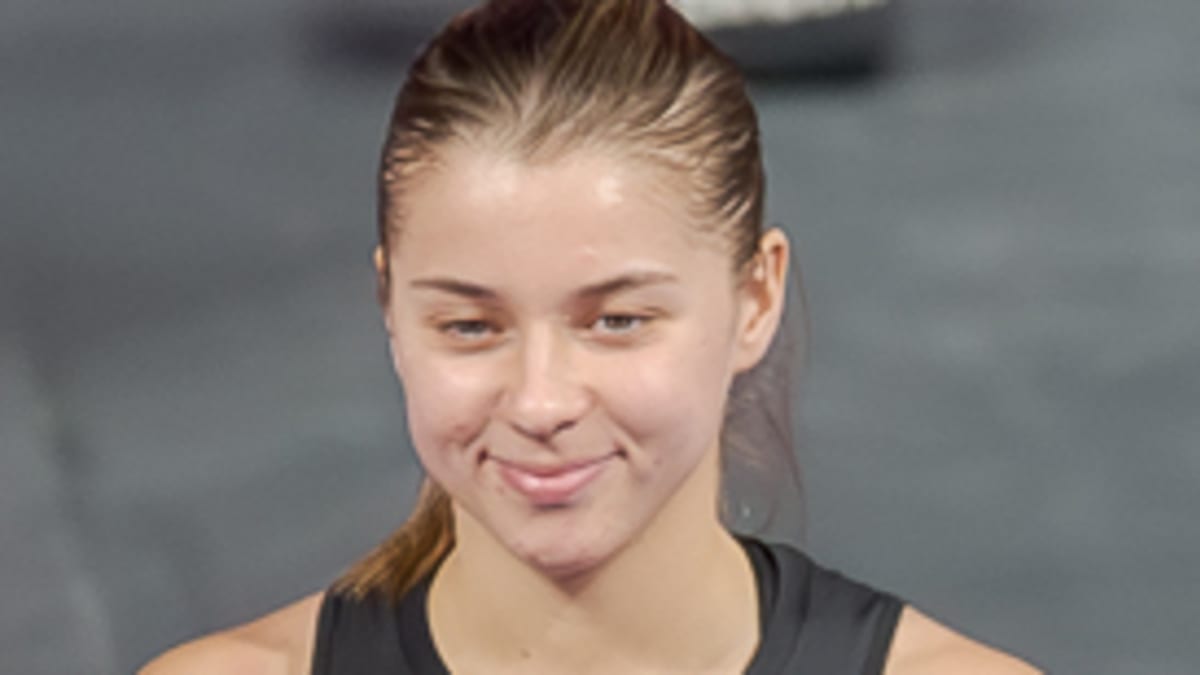
In the quiet, red-dust cathedral of Roland-Garros, the physics of tennis often reveal truths that transcend mere ball velocity. Maja Chwalinska, a 24-year-old Pole, has navigated the chaotic entropy of the qualifying draw to become the first qualifier in the history of the French Open to stand on the precipice of the trophy. She is only the second such player in the history of all Grand Slams to achieve this, a statistical anomaly that speaks to a profound recalibration of both technique and temperament.
Listen to the Second Serve Podcast
Get our daily AI-synthesized audio briefings and match reviews on the go.
Her trajectory to the final was not a matter of fortune but of systematic dismantling. To reach this stage, Chwalinska systematically neutralized the baseline aggression of Qinwen Zheng, the veteran craft of Elise Mertens, and the shifting tactical gears of both Anna Kalinskaya and Diana Shnaider. Each match served as a crucible, testing the structural integrity of her game under the suffocating pressure of a major tournament.
As we analyzed in our previous coverage of the draw’s volatility, the clay surface at Roland-Garros acts as a magnifying glass for a player’s deficiencies. Chwalinska, however, has used this surface to amplify her strengths, utilizing heavy topspin and court coverage that recalls a different era of tennis, one where patience was the ultimate weapon.
From the Shadows of 2019 to the Center Court
The arc of Chwalinska’s career is etched with the scars of a necessary departure. In 2019, she stepped away from the relentless, grinding circuit to address a struggle with depression—a silent, internal opponent that is often more formidable than any baseline adversary. The decision to exit the professional sphere was not a surrender, but a fundamental reconstruction of her relationship with the game.
This hiatus, while externally perceived as a career disruption, functioned as a period of psychological hardening. When she returned, the raw talent she displayed during her 2017 Australian Open girls’ final appearance had evolved. The fragility of her youth was replaced by a pragmatic, almost clinical approach to match momentum. She now carries three WTA 125 singles titles and three doubles trophies, a ledger that confirms her transition from a promising prospect to a genuine professional force.
Her current run in Paris is a testament to the resilience required to thrive in the modern WTA environment. She has successfully recalibrated her expectations, treating each point not as a definition of her identity, but as a discrete problem to be solved through disciplined footwork and tactical patience.
The Technical Evolution of a Qualifier
Chwalinska’s game is built upon a foundation of tactical variation. Unlike the power-heavy baseline exchanges common in the current era, she employs a wider palette of shots. Her ability to transition from defense to offense on the red clay has been the defining metric of her tournament. By forcing opponents into uncomfortable, high-bouncing rallies, she disrupts their rhythm, effectively turning their own pace against them.
This technical depth is perhaps best illustrated by her consistency during high-leverage moments. As noted in our recent analysis of the semifinal landscape, the ability to control the break point is the final frontier for any contender. Chwalinska has shown a remarkable aptitude for serving with purpose, avoiding the unforced errors that typically plague qualifiers as they fatigue late in the second week.
Looking ahead to the final, her clash with eighth-seeded Mirra Andreeva represents a collision of contrasting philosophies. While Andreeva brings a youthful, aggressive intensity, Chwalinska offers the calculated calm of someone who has already survived the darkest moments of the professional journey. The match will likely be decided by who can better manage the psychological density of the Roland-Garros final.
Defining the Legacy of the Underdog
History rarely favors the qualifier, yet Chwalinska has already rewritten the narrative of what is possible within a two-week span. Her performance invites us to reconsider the traditional markers of success in professional tennis. It is not merely the ranking or the seeding that dictates the outcome, but the ability to maintain a state of presence—a concept that legendary figures like Roger Federer and Rafael Nadal have long mastered.
By reaching this final, she has validated the long road of recovery. The statistics—the titles, the wins, the historic final appearance—are merely the external manifestation of an internal victory. Regardless of the result against Andreeva, Chwalinska has already secured her place in the chronicle of the game, proving that the most difficult matches are often those played against oneself.
We are witnessing a player who has found a rare, crystalline clarity. The clay of Paris, with all its history and demand for endurance, provides the perfect stage for her to complete this cycle of renewal. Whatever happens in the final, the narrative of Maja Chwalinska has shifted from a story of comeback to a story of emergence.
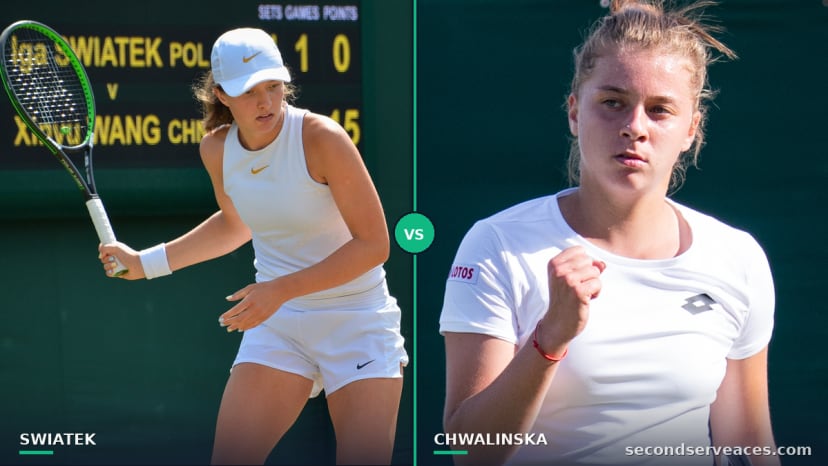
What Iga Swiatek Plays With
Tecnifibre Tempo 298 Iga
Tecnifibre Razor Code 1.25
Tecnifibre Pro Contact Overgrip
Analyze Maja Chwalinska vs. Lois Boisson
Predict tactical adjustments, momentum swings, and serve strategy options for this match-up using our AI simulator.
The Aces Tactical Panel
This report was curated and edited by Bhaskar Goel. Tactical analysis and technical insights were provided by our specialized panel of expert correspondents.
Julian Price
Senior Tactical Correspondent
Stuffy, pedantic British academic and historian specializing in match momentum and historical context.
Elena Cruz
Director of Analytical Research
Data scientist specializing in court surface physics and movement patterns.
Bhaskar
The Editor & Fan
Passionate tennis player and site editor bringing everyday amateur insights and relatable fan commentary.
Arthur Vance
Senior Existential Analyst
Deep, eccentric, and DFW-inspired. Models court metaphysics, kinetic beauty, and player psychology.
Leo Sterling
High-Performance Consultant
Hard-nosed ex-trainer from Melbourne with a no-nonsense view on tour fitness.
Related Reports


Quick Answers
What makes Maja Chwalinska's French Open run historic?+
Maja Chwalinska is the first qualifier to reach a French Open final and only the second in the history of all Grand Slam tournaments.
Who will Maja Chwalinska face in the French Open final?+
Maja Chwalinska is set to face the eighth-seeded Mirra Andreeva in the championship match.
What path did Maja Chwalinska take to the final?+
Chwalinska defeated a challenging slate of opponents including Qinwen Zheng, Elise Mertens, Anna Kalinskaya, and Diana Shnaider to reach the final.