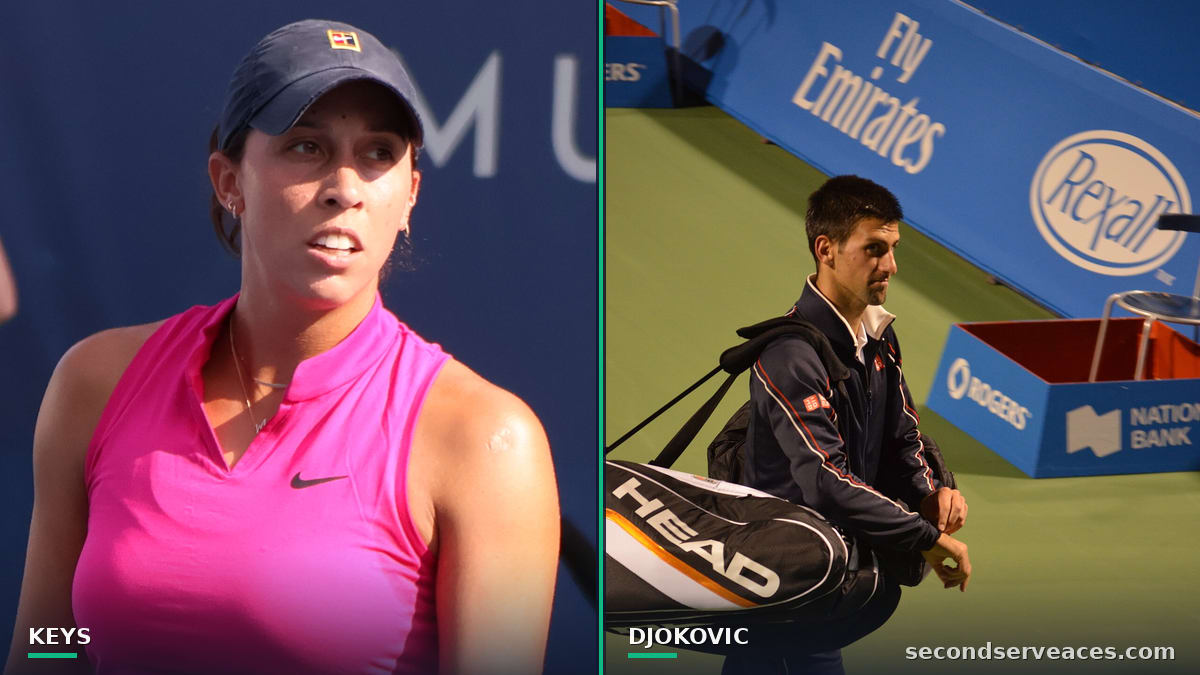
Novak Djokovic’s modern schedule reads like a masterclass in load management. Rather than playing through the standard 18 to 22 tournaments per year, the 24-time Grand Slam champion has stripped his calendar down to absolute essentials. Across the entire 2026 season, Djokovic has entered just nine professional events, treating his physical longevity as a premium engineering problem where maximum output must be achieved with minimal wear and tear.
The Golden Apex in Paris and a Minimalist 2026 Campaign
This ultra-selective approach reached its zenith with his performance at the 2024 Paris Olympics, where he secured the elusive gold medal by defeating Carlos Alcaraz in a high-intensity final. That victory solidified his legacy and proved that his peak performance envelope remains fully accessible even without the continuous match play that younger competitors rely upon. By prioritizing peak physical readiness over tour volume, he has redefined the aging curve of modern tennis.
However, this minimalist approach leaves very little margin for error when it comes to the season-ending rankings. While his rivals accumulate points across a dense schedule, Djokovic must rely on deep runs in the few events he selects. To understand his current trajectory, one can look at our analysis of his qualification path for the ATP Finals, which highlights the pressure of this low-volume, high-stakes strategy.
Listen to the Second Serve Podcast
Get our daily AI-synthesized audio briefings and match reviews on the go.
With limited tournaments on his record, every single match becomes a critical data point. The decision to bypass minor swing events in favor of targeted training blocks means Djokovic must arrive at major tournaments fully calibrated. This strategy requires an unprecedented level of self-knowledge and technical discipline, as there are no warm-up rounds to shake off competitive rust.
Madison Keys Evaluates the Mechanics of Elite Physical Preservation
Speaking on the Player's Box Podcast, American tennis star Madison Keys expressed immense admiration for Djokovic’s unique operational efficiency. Keys, currently ranked World No. 21 according to the WTA singles rankings, understands the physical toll of the professional tour. At 31 years old and with 11 career titles to her name, Keys noted that maintaining title-winning form with such limited competitive play is an extraordinary technical feat.
"To be able to play as little as he does and still enter any tournament as an immediate title contender is unbelievable," Keys remarked during the podcast. She highlighted how difficult it is for most players to find their timing, spatial awareness, and pressure-point execution without the constant feedback loop of weekly tournament matches. Djokovic's ability to bypass this ramp-up phase points to a highly optimized training regime that simulates match-level stress.
Keys, known for her aggressive baseline play and powerful groundstrokes, analyzed this from a player's perspective, emphasizing that the mental stamina required to transition instantly from training blocks to high-stakes competition is rare. Djokovic's formula relies on extreme technical precision and a deep understanding of his own biomechanics, ensuring his strokes remain calibrated even after weeks away from the match court.
The Indoor Hard-Court Crucible Awaiting in Basel
The next test of this high-efficiency model occurs under the fast, indoor conditions of the Basel Open. Indoor hard courts place a premium on first-strike tennis, low-bounce movement, and rapid reaction times. For a player with limited match play this autumn, the lack of natural light and the slicker underfoot conditions demand immediate adjustments to footwork and racket-head speed.
Compounding this challenge is a highly dangerous opening-round draw. Djokovic is scheduled to face French left-hander Ugo Humbert, a proven indoor hard-court specialist whose flat, penetrating groundstrokes thrive in controlled environments. Humbert's ability to take the ball early and redirect pace will test Djokovic's defensive positioning and baseline stability from the very first point.
This high-stakes entry into the tournament has drawn significant attention from peers and fans alike. Interestingly, Djokovic's presence in Switzerland has also been marked by off-court camaraderie, including his coordination with tournament organizers, which we detailed in our report on his special request for Stan Wawrinka's farewell.
The Mathematical Reality of the Turin Qualification Bracket
Beyond the immediate tactical challenge of Humbert, Djokovic faces a strict mathematical equation to secure his place at the prestigious ATP Finals in Turin. He currently sits 11th in the live race and must climb into the top nine to earn qualification. With only a handful of opportunities remaining on the calendar, every match win in Basel carries immense weight for his year-end prospects.
According to the official ATP singles rankings, the point margins separating positions eight through twelve are incredibly thin. A deep run in Basel would inject 500 crucial points into his tally, potentially vaulting him back into qualifying position. Conversely, an early exit would leave him dependent on wildcard decisions or late withdrawals from other competitors.
This tension between physical preservation and the necessity of ranking points defines the twilight of Djokovic's career. While younger players sweep up points across the globe, the Serbian master continues to bet on his ability to deliver under maximum pressure. Whether this calculated gamble pays off in Basel will determine if the tennis world gets to see him defend his crown in Turin.
Rivalry Matchup & Player Profiles
| Metric | Madison Keys | Novak Djokovic |
|---|---|---|
| Rank | 21 | 4 |
| Country | United States | Serbia |
| Age | 31 | 37 |
| Handedness | Right-handed | Right-handed |
| Height | 5 ft 10 in (178 cm) | 6 ft 2 in (188 cm) |
| Play Style | Aggressive baseliner | All-court counterpuncher |
| Career Titles | 11 | 99 |
While Madison Keys and Novak Djokovic compete on separate tours, their analytical connection highlights the shared physical demands of modern professional tennis. Keys' perspective as an aggressive, hard-hitting baseliner gives her unique insight into how Djokovic manages to protect his body while maintaining his elite technical standards. Her own career, marked by 11 WTA titles, has required similar physical adaptation over her 31 years on tour.
Djokovic's ability to maintain a top-tier ranking while playing less than half the schedule of his peers remains one of the most statistically anomalous achievements in tennis history. As he enters the Basel Open, his baseline efficiency and return mechanics will be tested to their absolute limits against a field of younger, highly active opponents.
What Madison Keys Plays With
Yonex Ezone 98 (7th Gen)
Yonex Poly Tour Rev 125
Yonex Super Grap (12-Pack)
Analyze Madison Keys vs. Novak Djokovic
Predict tactical adjustments, momentum swings, and serve strategy options for this match-up using our AI simulator.
The Aces Tactical Panel
This report was curated and edited by Bhaskar Goel. Tactical analysis and technical insights were provided by our specialized panel of expert correspondents.
Julian Price
Senior Tactical Correspondent
Stuffy, pedantic British academic and historian specializing in match momentum and historical context.
Elena Cruz
Director of Analytical Research
Data scientist specializing in court surface physics and movement patterns.
Bhaskar
The Editor & Fan
Passionate tennis player and site editor bringing everyday amateur insights and relatable fan commentary.
Arthur Vance
Senior Existential Analyst
Deep, eccentric, and DFW-inspired. Models court metaphysics, kinetic beauty, and player psychology.
Leo Sterling
High-Performance Consultant
Hard-nosed ex-trainer from Melbourne with a no-nonsense view on tour fitness.
Related Reports


Quick Answers
How many events has Novak Djokovic played in the 2026 season?+
Novak Djokovic has competed in only nine professional events across the 2026 season.
Where does Novak Djokovic currently stand in the race to the ATP Finals?+
Djokovic is currently 11th in the race to qualify for the ATP Finals and needs to reach the top nine to secure a spot.
Who is Novak Djokovic scheduled to play in the first round of the Basel Open?+
Djokovic is scheduled to face French indoor hard-court specialist Ugo Humbert in the opening round.