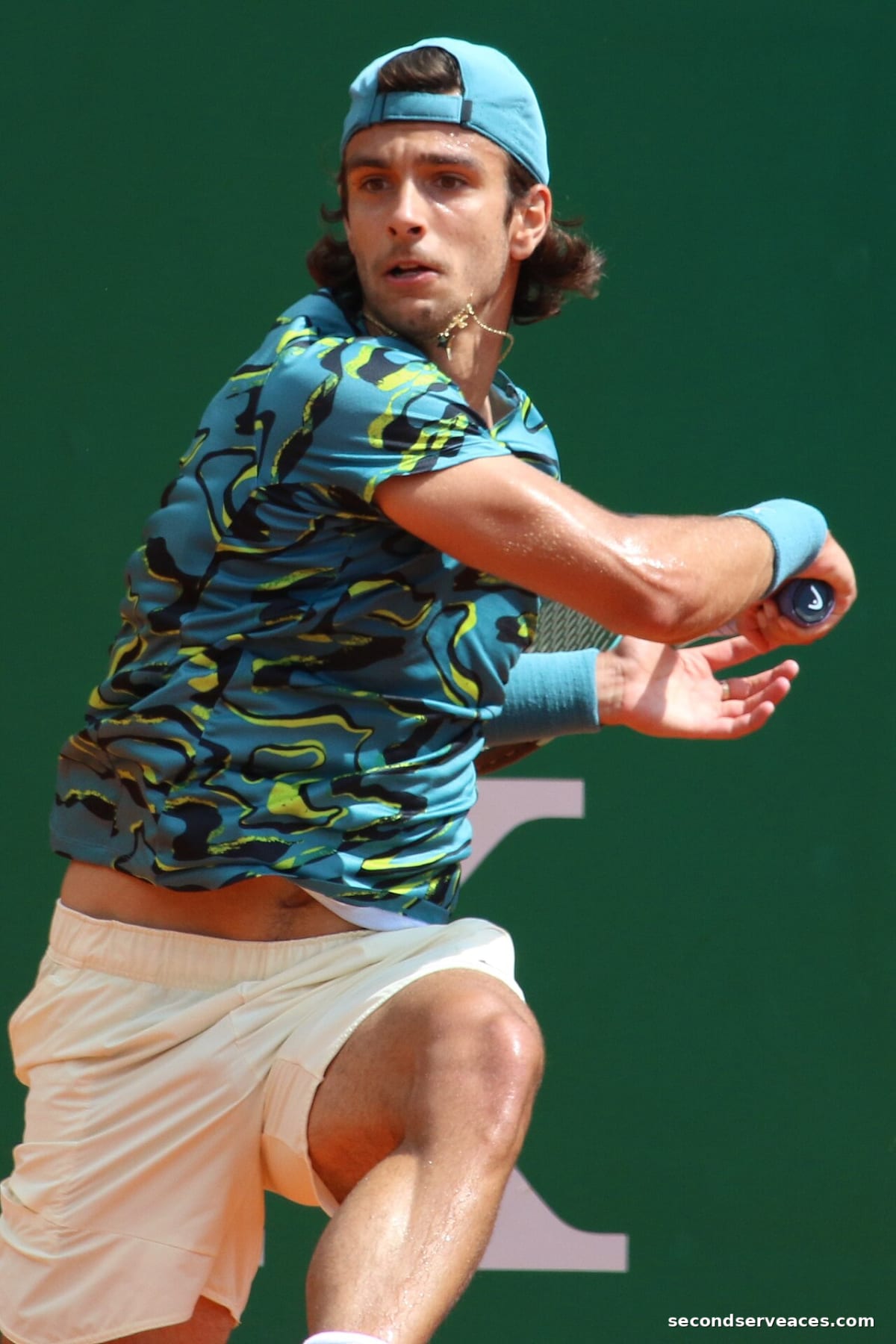
Tennis is a brutal, unforgiving ledger of physical debt. You push your body to the absolute limit on the sliding clay of Rome, demanding that your muscles slide, grip, and explode on every single point. For Lorenzo Musetti, the bill came due during the grueling stretches of the Italian Open back in May. A sharp, searing pull in his left thigh didn't just halt his momentum in front of a passionate home crowd; it set off a ticking clock that has ultimately derailed his entire summer grass-court campaign.
Listen to the Second Serve Podcast
Get our daily AI-synthesized audio briefings and match reviews on the go.
The clay of Rome requires a unique kind of violence from the lower body. When you are ranked No. 15 in the world, like Musetti, every opponent treats you like a target, forcing you into deep, defensive corners where your adductors and quadriceps bear the brunt of the load. The moment his left thigh gave way, it wasn't just a physical tear; it was a psychological fracture. The mental grind of knowing your body is betraying you is a dark room every professional athlete fears entering.
We often talk about the beauty of Musetti's one-handed backhand, but that elegant stroke is entirely dependent on a rock-solid foundation. Without the ability to load his weight onto that left leg, the whip-like torque of his signature shot becomes impossible to execute. The Italian Open was supposed to be a springboard, but instead, it became the origin point of a lingering physical nightmare that has now stretched into the grass-court season.
The Painful Decision to Skip Roland Garros
When you are young and rising, you believe your body is bulletproof. You convince yourself that a few days of intense physical therapy and sheer willpower can override a physiological tear. But the clay of Paris is even more demanding than Rome, and the decision to withdraw from the French Open was a bitter pill for Musetti to swallow. It was an open admission that the injury was not a temporary hiccup, but a systemic shutdown that required absolute rest.
Sitting on the sidelines during a Grand Slam is a slow, agonizing torture. You watch the draw unfold, seeing players you know you can beat advance through the rounds, while you are confined to treatment tables and gym sessions that feel entirely disconnected from the thrill of competition. According to the official ATP Tour Home, Musetti's absence from the clay courts of Paris severely disrupted his competitive rhythm, leaving him physically isolated during one of the most critical stretches of the calendar.
The transition from clay to grass is already the most jarring adjustment in tennis, requiring low center-of-gravity movement and pristine footwork. Attempting that transition with a compromised left thigh is a recipe for career-threatening disaster. By choosing to protect his long-term health, Musetti had to make the devastating call to pull out of the year's second major, hoping against hope that the extra weeks of rehabilitation would salvage his aspirations for the lawns of London.
The SW19 Door Opens for the 2021 Finalist
In this sport, one man's heartbreak is another's salvation. Musetti's official withdrawal from Wimbledon has cracked open the door for his compatriot, Matteo Berrettini. Currently sitting at No. 49 in the ATP rankings, Berrettini was facing the stressful prospect of qualifying or relying on late withdrawals to secure his place in the main draw. Now, the 2021 finalist finds himself thrust back onto the stage where he played the most inspired tennis of his life.
Berrettini knows all about the cruel nature of injuries, having seen his own career derailed by abdominal tears and hand surgeries. His explosive game—built around a devastating first serve and a heavy, punishing forehand—is perfectly tailored for the slick lawns of the All England Club. As we noted when analyzing how top players manage their schedules in our coverage of the Sinner and Djokovic bold Wimbledon strategy, grass-court preparation is a delicate tightrope walk of physical preservation and explosive timing.
For Berrettini, this entry is more than just a lucky break; it is a chance to reassert his status as one of the elite grass-court threats of his generation. The fast-skidding surface rewards his ability to protect his service games and exploit short balls with absolute authority. While the Italian tennis community mourns the loss of Musetti's artistic flair, they gain a battle-tested warrior who has stood on the very precipice of Wimbledon glory.
The Hard Truths of Modern Tennis Longevity
The modern tour is an absolute meat grinder. The transition from the slow, heavy clay of Europe to the lightning-fast, low-bouncing grass of SW19 requires an athletic versatility that pushes the human body to its absolute limits. Musetti's withdrawal is a stark reminder that the margin between peak performance and physical collapse is razor-thin. For a player who relies so heavily on movement and court coverage, entering a best-of-five-set tournament on slick grass with a healing thigh is a gamble not worth taking.
As the tournament prepares to get underway on June 29, the spotlight shifts to how Berrettini will capitalize on this sudden twist of fate. He enters the draw without the heavy burden of expectation that plagued him during his top-10 days, making him an incredibly dangerous floater that no seeded player will want to see in their section. The mental shift from alternate to main draw competitor is instantaneous, requiring a rapid realignment of focus and intensity.
Ultimately, tennis is an open book where every injury, every comeback, and every physical struggle is laid bare before the world. Musetti will watch from home, focusing on rebuilding his body for the hard-court summer, while Berrettini steps back onto the sacred lawns of Wimbledon. It is a poignant reminder that in this game, the court never waits for you to heal; it simply demands the next gladiator step into the arena.
What Novak Djokovic Plays With
Head Speed Pro
Luxilon ALU Power 125
Asics Court FF 3 Novak
Analyze Lorenzo Musetti vs. Matteo Berrettini
Predict tactical adjustments, momentum swings, and serve strategy options for this match-up using our AI simulator.
The Aces Tactical Panel
This report was curated and edited by Bhaskar Goel. Tactical analysis and technical insights were provided by our specialized panel of expert correspondents.
Julian Price
Senior Tactical Correspondent
Stuffy, pedantic British academic and historian specializing in match momentum and historical context.
Elena Cruz
Director of Analytical Research
Data scientist specializing in court surface physics and movement patterns.
Bhaskar
The Editor & Fan
Passionate tennis player and site editor bringing everyday amateur insights and relatable fan commentary.
Arthur Vance
Senior Existential Analyst
Deep, eccentric, and DFW-inspired. Models court metaphysics, kinetic beauty, and player psychology.
Leo Sterling
High-Performance Consultant
Hard-nosed ex-trainer from Melbourne with a no-nonsense view on tour fitness.
Related Reports
Quick Answers
Why did Lorenzo Musetti withdraw from Wimbledon?+
Lorenzo Musetti withdrew from Wimbledon due to a left thigh injury originally sustained during the Italian Open in May.
Who replaced Lorenzo Musetti in the Wimbledon main draw?+
Fellow Italian and 2021 Wimbledon finalist Matteo Berrettini entered the main draw following Musetti's withdrawal.
What is the current ranking difference between Lorenzo Musetti and Matteo Berrettini?+
Musetti is currently ranked No. 15 in the world, while Berrettini holds the No. 49 spot.