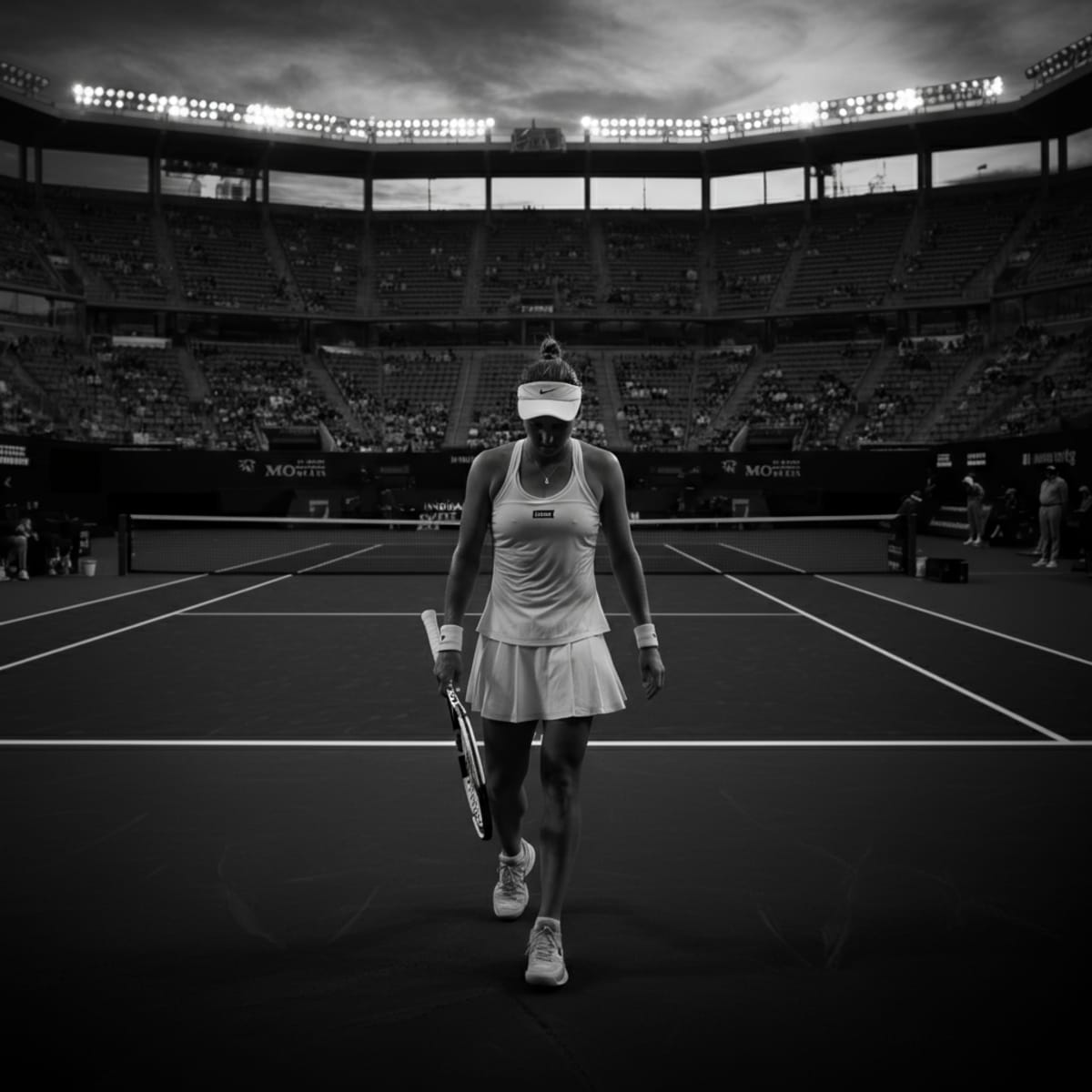
Tennis is an agonizingly lonely sport. When you are out there between the baseline and the net, there are no teammates to hide behind, no coach who can call a timeout to stop the bleeding. It is just you, your racquet, and the relentless echo of your own mind. That isolation is never more apparent than when a prodigy hits the wall.
Listen to the Second Serve Podcast
Get our daily AI-synthesized audio briefings and match reviews on the go.
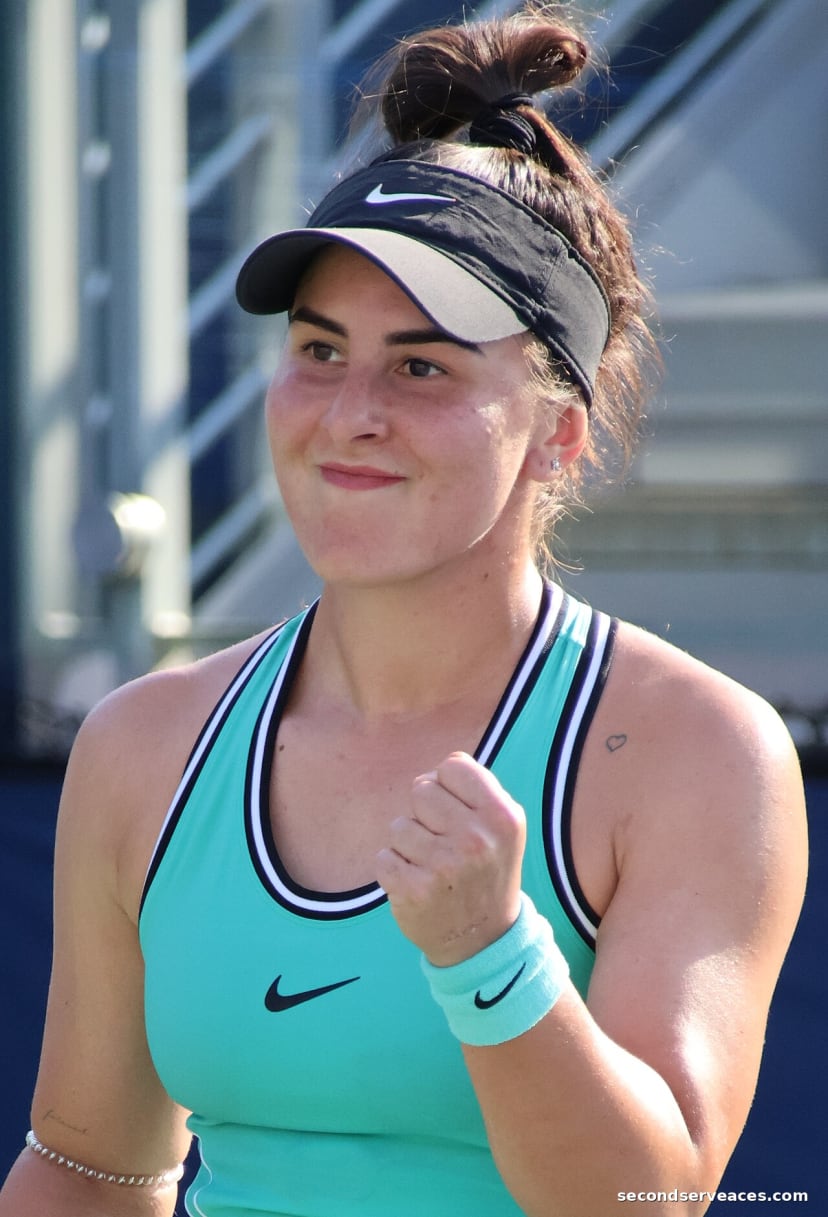
The desert air at Indian Wells carries a unique weight, and for teenage sensation Mirra Andreeva, that weight proved suffocating. In a grueling encounter against the veteran Katerina Siniakova, the young Russian found herself entirely stripped of her rhythm, ultimately suffering a bitter defeat. But the story didn't end with the final handshake. Carrying the heavy, almost bewildering burden of being referred to as the defending champion in the eyes of the crowd and media, Andreeva's composure finally shattered.
As she made her way off the hard courts of Tennis Paradise, Andreeva expressed visible displeasure, her frustration boiling over as she was heard shouting expletives. It was a raw, unfiltered moment of agony from a player who is still learning to navigate the intense, unforgiving spotlight of the WTA tour. The outburst sent ripples through the tennis world, prompting Hall of Famer Kim Clijsters to weigh in on the situation.
The Tactical Breakdown
To understand the sheer frustration that led to Andreeva's post-match eruption, we have to look closely at the X's and O's of this matchup. Katerina Siniakova is a tactical nightmare for a rhythm-based baseliner like Andreeva.
Andreeva thrives when she can lock into a baseline rally. She wants to dictate the match momentum through depth, consistency, and an uncanny ability to absorb pace. But Siniakova, possessing one of the highest tennis IQs on tour and a glittering resume in doubles, refuses to play that game. Here is how the veteran systematically dismantled the teenager's comfort zone:
- Disruptive Court Geometry: Siniakova doesn't just hit through the court; she uses the angles. By deploying a heavy topspin forehand out wide and following it up with a biting backhand slice, she kept the ball out of Andreeva's strike zone.
- Net Approaches: As a supreme doubles specialist, Siniakova possesses world-class volleys. She likely used the slow, gritty surface of Indian Wells to hit heavy approach shots, closing the net and rushing Andreeva’s passing shots. When a younger player is constantly rushed, the court feels claustrophobic.
- Denying Match Momentum: Every time Andreeva looked to build a string of points, Siniakova would break the rhythm. Whether through an unexpected drop shot or a sudden serve-and-volley play on a crucial break point, Siniakova controlled the emotional tempo of the match.
When your game plan is built around out-rallying the opponent, and the opponent refuses to give you the same ball twice, the mental fatigue sets in far before the physical exhaustion. Siniakova didn't just beat Andreeva's racquet; she tangled her mind.
The Bigger Picture
The locker room is an open book. When a young prodigy breaks onto the scene, they initially win on sheer talent and the element of surprise. But eventually, the tour adapts. Opponents watch the tape. They find the foundational cracks. Andreeva is currently navigating this exact transition—the agonizing sophomore phase of professional tennis.
This brings us to Kim Clijsters' involvement. The fact that Clijsters weighed in on Andreeva's outburst is profoundly fitting. Clijsters herself was a teenage prodigy. She knows exactly what it feels like to be thrust onto the global stage, expected to perform like a seasoned veteran while still dealing with the emotional turbulence of youth. Clijsters evolved from a highly emotional, immensely talented teenager into one of the most mentally resilient champions in the history of the sport.
The Crucible of Expectations
Andreeva's outburst is not a sign of weakness; it is a sign of raw, unrefined passion. The greats of the game—from Agassi to McEnroe to Williams—have all experienced moments where the pursuit of perfection drives them to absolute madness. The hard courts of Indian Wells demand everything from a player physically, but it is the mental taxation that leaves the deepest scars.
Being referred to as a defending champion—whether literal, spiritual, or tied to a specific tier of expectation—adds a layer of pressure that is hard to articulate. Every mistake feels magnified. Every break point missed feels like a referendum on your potential. For Andreeva, the loss to Siniakova is a harsh lesson in the realities of tour-level emotional management.
Moving forward, the true test for Andreeva will not be whether she can hit a cleaner backhand or generate more topspin. Her true test will be how she channels this exact frustration. The tour is a grind that will chew up the fragile and spit out the unprepared. Andreeva has the raw physical tools to be a generational talent, but as Siniakova brilliantly exposed in the desert, and as Clijsters so deeply understands, the mind is the ultimate battleground.
Analyze Kim Clijsters vs. Mirra Andreeva
Predict tactical adjustments, momentum swings, and serve strategy options for this match-up using our AI simulator.
The Aces Tactical Panel
This report was curated and edited by Bhaskar Goel. Tactical analysis and technical insights were provided by our specialized panel of expert correspondents.
Julian Price
Senior Tactical Correspondent
Stuffy, pedantic British academic and historian specializing in match momentum and historical context.
Elena Cruz
Director of Analytical Research
Data scientist specializing in court surface physics and movement patterns.
Bhaskar
The Editor & Fan
Passionate tennis player and site editor bringing everyday amateur insights and relatable fan commentary.
Arthur Vance
Senior Existential Analyst
Deep, eccentric, and DFW-inspired. Models court metaphysics, kinetic beauty, and player psychology.
Leo Sterling
High-Performance Consultant
Hard-nosed ex-trainer from Melbourne with a no-nonsense view on tour fitness.