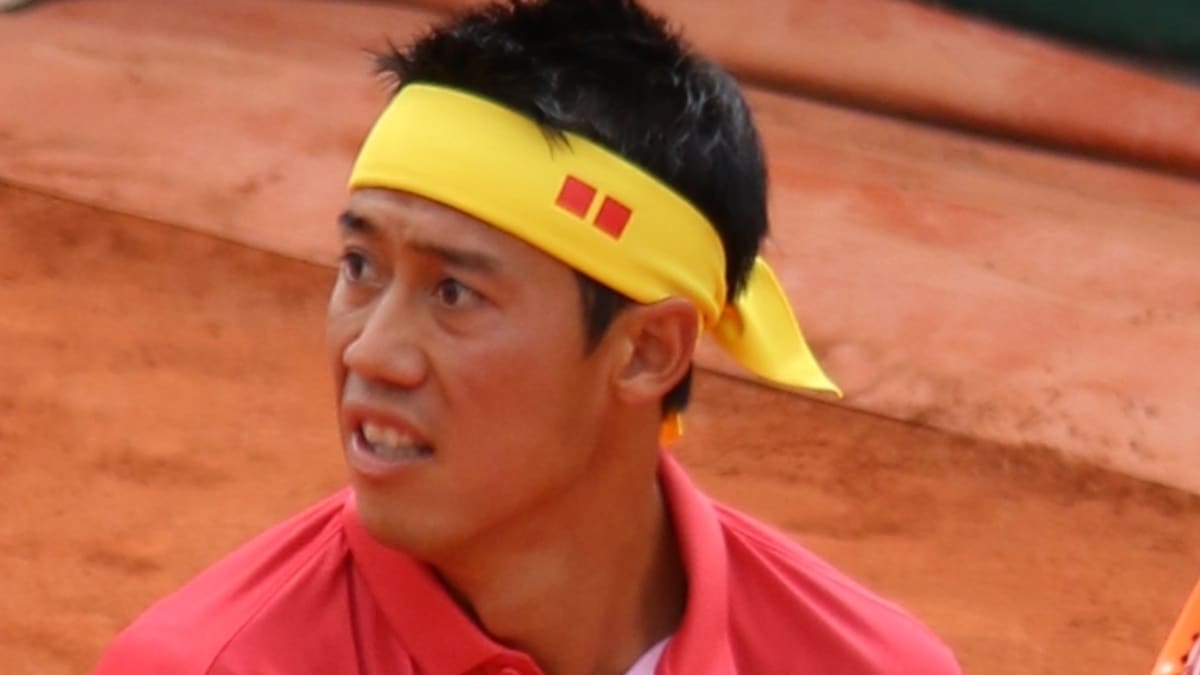
The final chapter of one of tennis’s most resilient baseline careers closed on the hard courts of New York. In the third round of qualifying, 20-year-old Rei Sakamoto defeated his childhood idol Kei Nishikori 6-4, 7-6(3), marking the emotional end of Nishikori’s Grand Slam journey. The 36-year-old veteran, who announced in April that he will retire at the end of the season, fought valiantly but ultimately succumbed to the raw power and modern court positioning of his younger compatriot.
Listen to the Second Serve Podcast
Get our daily AI-synthesized audio briefings and match reviews on the go.
The 2014 Flushing Meadows Breakthrough and the Burden of Trailblazing
Twelve years ago, the hard courts of New York bore witness to a run that redefined Asian tennis. Kei Nishikori, with his aggressive baseline style, dismantled the draw to become the first Asian man to reach a Grand Slam singles final at the US Open. His historic victory over Novak Djokovic in the semifinals that year showcased a relentless return game and unmatched lateral speed, proving that a sub-six-foot player could dominate from the back of the court through timing and anticipation.
That legendary run in 2014 did more than just establish Nishikori as a global superstar; it placed an immense weight of expectation on his shoulders. For over a decade, he carried the hopes of Japanese tennis, battling through grueling five-setters and earning 12 career titles along the way. His flat, early-taken backhand became a blueprint for compact, efficient ball-striking, inspiring a new generation of players across Asia who sought to replicate his court positioning and timing.
As we reflect on his legacy, it is impossible to ignore how his presence elevated the sport's popularity in Japan. While contemporaries like Marin Cilic—who ultimately defeated him in that 2014 final—possessed massive serves, Nishikori relied on sheer tactical intelligence, redirecting pace with laser-like precision. His career, though hampered by persistent physical setbacks, remains a masterclass in clean ball-striking and competitive grit.
The Physical Toll of an Uncompromising Baseline Game
Playing as an aggressive baseliner at 1.78 meters requires an extraordinary physical output, and the toll on Nishikori’s body ultimately hastened his departure from the sport's biggest stages. In April of this season, the former world number four announced his decision to retire at the end of the year, setting up an emotional farewell tour. His current ranking of 477 on the official ATP rankings reflects the long battles with hip, wrist, and shoulder injuries that kept him sidelined for extended stretches.
To understand Nishikori's career is to appreciate the sheer kinetic demands of his style, where every point was a lesson in court coverage. Lacking the free points of a powerhouse serve, he had to earn every hold of serve through meticulous pattern construction, often taking the ball on the rise to rob opponents of recovery time. This high-octane style brought him to the pinnacle of the sport but left his joints vulnerable to the brutal friction of modern hard courts.
While other veteran champions are aiming for final glory—much like how Djokovic chases history at US Open events—Nishikori's path became a quiet, dignified battle just to compete. His decision to enter the qualifying draw in New York was a testament to his love for the game, choosing to grind through the lower rungs rather than ask for unearned privileges. It was a fittingly humble approach for a player who always let his racquet do the talking.
A Passing of the Torch in the Final Qualifying Rounds
The final qualifying match on the New York hard courts presented a poetic, if painful, transition for Japanese tennis. Standing across the net was 20-year-old Rei Sakamoto, a towering 1.93-meter prospect representing the modern archetype of the sport. Sakamoto, currently ranked 157th in the world, displayed a sophisticated all-court game that combined raw power with surprising variety, keeping Nishikori off-balance from the opening game.
From a technical perspective, the match was decided by Sakamoto’s ability to protect his service games and dictate play with his heavy forehand. Nishikori struggled to find his rhythm on return, as Sakamoto used his height advantage to create steep bounce, winning the opening set 6-4. In the second set, Nishikori showed flashes of his classic counter-punching brilliance, forcing a tiebreak, but the younger Japanese player remained composed, sealing the match 6-4, 7-6(3) with aggressive baseline depth.
This victory marks a massive step for Sakamoto, who now advances to the main draw where he will face Aleksandar Vukic in the first round. For Nishikori, the loss concludes his Grand Slam career, leaving a legacy of competitive excellence that will not soon be forgotten. The transition of power was stark; Sakamoto’s modern, explosive game proved too much for the battle-weary veteran, signaling a new era for Japanese men's tennis.
Rivalry Matchup & Player Profiles
| Metric | Kei Nishikori | Rei Sakamoto |
|---|---|---|
| Rank | 477 | 157 |
| Age | 36 | 20 |
| Country | Japan | Japan |
| Height | 1.78 m (5 ft 10 in) | 1.93 m (6 ft 4 in) |
| Handedness | Right-handed | Right-handed |
| Play Style | Aggressive baseliner | Aggressive all-court player with variety |
| Career Titles | 12 | 0 (3 ATP Challenger titles) |
The head-to-head record between these two Japanese competitors stands at 1-0 in favor of the emerging star, Rei Sakamoto. Their sole professional meeting in the final qualifying round of the US Open was a symbolic bridge between two eras of Japanese tennis, contrasting Nishikori’s compact, aggressive baseline style with Sakamoto’s modern, high-variety all-court game. The physical differences are striking, with Sakamoto holding a 15-centimeter height advantage that allowed him to dictate service points with ease.
While Nishikori retires with 12 ATP titles and a career-high ranking of world number four, Sakamoto represents the future with three ATP Challenger titles already under his belt at just 20 years of age. Sakamoto's ability to transition from defense to offense seamlessly suggests he has the tools to climb the rankings rapidly. This match showed that while Nishikori's legendary anticipation remains intact, the raw athletic power of the younger generation is becoming increasingly difficult to overcome.
As Sakamoto prepares to make his main draw debut against Aleksandar Vukic, the tennis world bids a fond farewell to one of its most resilient competitors. Nishikori’s career may be winding down, but his influence on players like Sakamoto ensures that his impact on the game will endure for decades. The torch has been passed, and Japanese tennis remains in highly capable hands.
What Novak Djokovic Plays With
Head Speed Pro
Luxilon ALU Power 125
Head Prime Tour (12-Pack)
Asics Court FF 3 Novak
Analyze Kei Nishikori vs. Rei Sakamoto
Predict tactical adjustments, momentum swings, and serve strategy options for this match-up using our AI simulator.
The Aces Tactical Panel
This report was curated and edited by Bhaskar Goel. Tactical analysis and technical insights were provided by our specialized panel of expert correspondents.
Julian Price
Senior Tactical Correspondent
Stuffy, pedantic British academic and historian specializing in match momentum and historical context.
Elena Cruz
Director of Analytical Research
Data scientist specializing in court surface physics and movement patterns.
Bhaskar
The Editor & Fan
Passionate tennis player and site editor bringing everyday amateur insights and relatable fan commentary.
Arthur Vance
Senior Existential Analyst
Deep, eccentric, and DFW-inspired. Models court metaphysics, kinetic beauty, and player psychology.
Leo Sterling
High-Performance Consultant
Hard-nosed ex-trainer from Melbourne with a no-nonsense view on tour fitness.
Related Reports

Quick Answers
What was the final score of the match between Kei Nishikori and Rei Sakamoto?+
Rei Sakamoto defeated Kei Nishikori 6-4, 7-6(3) in the third round of US Open qualifying.
When did Kei Nishikori announce his retirement from professional tennis?+
Kei Nishikori announced in April that he will retire at the end of the current season.
Who will Rei Sakamoto play in the first round of the US Open main draw?+
Following his qualifying victory, Rei Sakamoto will face Aleksandar Vukic in the first round of the main draw.