The Collision of Commerce and Kinetic Reality
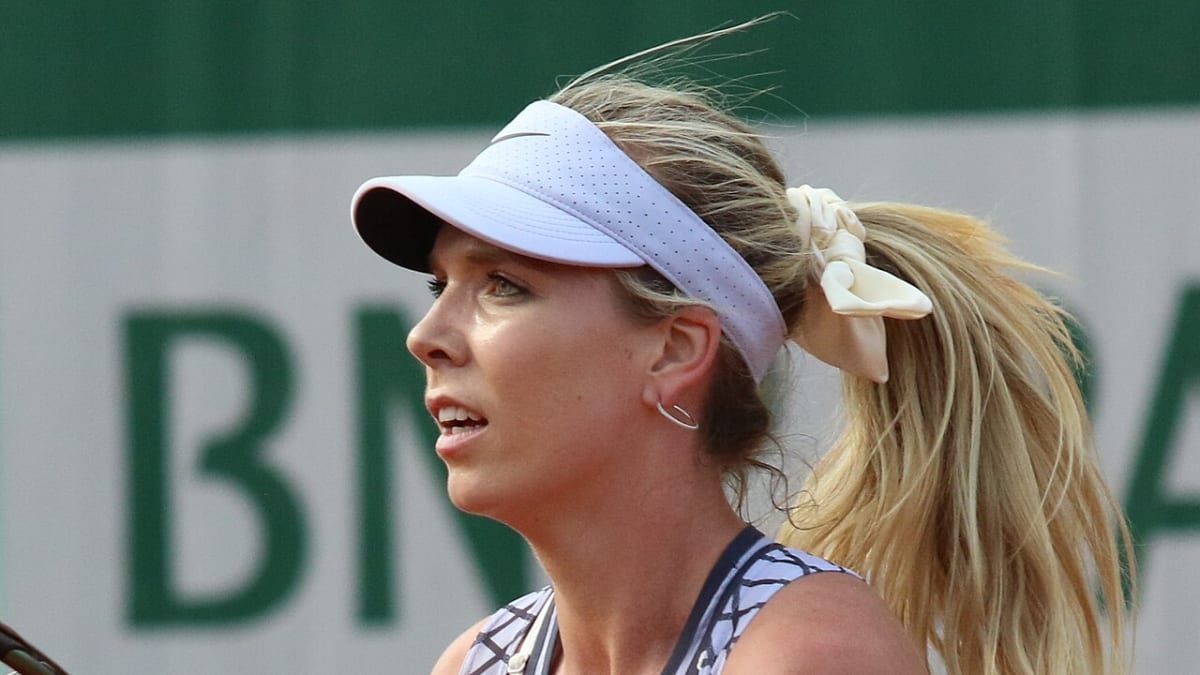
Tennis is a game of exquisite spatial awareness. At the elite level, a player’s brain is a continuous processor of vectors, velocity, and the unforgiving geometry of the court. Yet, at the French Open, that geometry has been compromised by the very elements meant to frame the spectacle. The recent exit of Katie Boulter from the tournament was not merely a tactical defeat; it was a physical confrontation with poorly placed Lacoste branding blocks on Court 13, a collision that underscored a systemic oversight in tournament infrastructure.
Listen to the Second Serve Podcast
Get our daily AI-synthesized audio briefings and match reviews on the go.
The physics of a professional tennis slide on clay is a delicate, calculated loss of friction. When a player like Boulter or Zeynep Sonmez—who was forced to retire from her second-round match after requiring stitches following a trip over a hoarding—commits to the ball, they are effectively trusting the space outside the white lines to be an extension of the field of play. When that space is occupied by rigid, unforgiving advertising structures, the game ceases to be a contest of skill and becomes a gamble against architectural negligence.
This is not a matter of aesthetic preference, but of fundamental safety. The reports emerging from Paris, including the withdrawal of Alexander Blockx due to an ankle injury sustained from these same blocks, paint a picture of a playing environment that prioritizes commercial visibility over the kinetic requirements of the athletes. As noted by Pat Shriver, these structural issues—compounded by concerns regarding sightlines and shade—suggest that the WTA Tour standard for court safety is currently being tested by the very venue hosting one of the sport's four pillars.
The Anatomy of an Avoidable Injury
When an athlete like Zeynep Sonmez falls, the injury is a function of momentum meeting an immovable object. The court-side hoardings at Roland-Garros are designed to catch the eye of the camera, not to withstand the impact of a professional athlete operating at top speed. The requirement for medical intervention, specifically the stitches required for Sonmez, transforms a routine match into a cautionary tale about the encroachment of marketing assets onto the field of play.
We must ask ourselves what the baseline of professional duty is for tournament organizers. In our previous coverage of tournament conditions, we noted that the environment dictates the rhythm of the match. Here, the rhythm has been interrupted by unnecessary physical risk. The anecdotal evidence provided by the players—who are, in effect, the primary stakeholders of the tennis ecosystem—is consistent and damning: the current layout is actively hazardous.
The response from the tournament organizers to adjust the area around the playing surface is a necessary concession, yet it feels reactive rather than proactive. A professional court should be a sanctuary of pure athletic competition, devoid of the clutter that forces players to truncate their range of motion. If the sport is to maintain its integrity, the physical boundaries of the court must be treated with the same reverence as the baseline itself.
When Sightlines Obscure Safety
The critique from figures like Pat Shriver regarding sightlines and shade is not peripheral; it is central to the player experience. High-performance tennis requires a level of visual clarity that allows for the tracking of a ball traveling at speeds exceeding 120 mph. When the periphery is crowded with intrusive branding, it creates a visual noise that can distract from the critical task of reading the opponent’s serve or return depth.
Safety is the silent partner of strategy. A player who is subconsciously aware of a looming obstacle at the edge of their vision is a player who is not fully committed to their movement. This creates a subtle but profound degradation of match quality. If the top players are forced to navigate around physical obstacles, we are not witnessing the full realization of their capability.
The French Open occupies a unique place in history, a cathedral of red clay that demands the utmost respect for the game’s traditions. However, tradition cannot be used as a shield for safety failures. The current configuration of the courts requires an immediate, data-driven audit to ensure that the pursuit of commercial success does not come at the cost of the athletes' health.
The Path Toward Structural Integrity
Moving forward, the conversation must shift toward a standardized safety protocol for court-side infrastructure. It is not enough to simply move a block here or there; there must be a rigorous, universal standard that defines the 'clear zone' required for a player to operate safely. This is a matter of professional liability as much as it is of player welfare.
We have seen the ATP Tour and WTA evolve in their approach to technology, surface consistency, and ball quality. Infrastructure safety is the next logical frontier. The players have been vocal, and their collective voice is a signal that the status quo is no longer tenable. The sport must respond by ensuring that the only thing a player needs to worry about is the next ball over the net.
As the tournament continues, the focus should return to the tactical brilliance of the remaining field. But the shadow cast by these injuries remains. It is our hope that by the time the next Grand Slam cycle begins, the lessons learned on the red clay of Paris will have been codified into a safer, more transparent environment for all competitors.
Essential Matchday Add-Ons
Tournament-tested accessories and high-frequency consumables every competitive player keeps in their bag.
Tourna Grip Original Dry Feel Overgrip (10-Pack)
4.8 ★ (12,000+ reviews)
The gold standard for sweaty hands. Proprietary dry feel absorbs moisture better as play intensifies.
Luxilon ALU Power 125 Silver String Set
4.9 ★ (3,500+ reviews)
Unrivaled control and spin potential used by over 50% of the ATP Top 100 players.
Babolat Custom Damp Vibration Dampener (2-Pack)
4.7 ★ (4,200+ reviews)
Customizable dampening with removable central O-ring for fine-tuning court feedback and sound.
Penn Championship Extra Duty Tennis Balls (4-Can Pack)
4.7 ★ (8,900+ reviews)
Official ball of USTA League Tennis with extra-duty felt designed for abrasive hard courts.
Analyze Katie Boulter vs. Zeynep Sonmez
Predict tactical adjustments, momentum swings, and serve strategy options for this match-up using our AI simulator.
The Aces Tactical Panel
This report was curated and edited by Bhaskar Goel. Tactical analysis and technical insights were provided by our specialized panel of expert correspondents.
Julian Price
Senior Tactical Correspondent
Stuffy, pedantic British academic and historian specializing in match momentum and historical context.
Elena Cruz
Director of Analytical Research
Data scientist specializing in court surface physics and movement patterns.
Bhaskar
The Editor & Fan
Passionate tennis player and site editor bringing everyday amateur insights and relatable fan commentary.
Arthur Vance
Senior Existential Analyst
Deep, eccentric, and DFW-inspired. Models court metaphysics, kinetic beauty, and player psychology.
Leo Sterling
High-Performance Consultant
Hard-nosed ex-trainer from Melbourne with a no-nonsense view on tour fitness.
Related Reports


Quick Answers
Why are players complaining about the court-side hoardings at the French Open?+
Players have reported that the rigid branding blocks are placed too close to the playing surface, leading to trips and injuries, including one that required stitches.
Which players have been affected by the court-side safety issues?+
Katie Boulter, Zeynep Sonmez, and Alexander Blockx have all been affected by injuries caused by the court-side hoarding structures.
Have the French Open organizers responded to these safety concerns?+
Yes, Roland-Garros organizers have pledged to make adjustments to the area around the playing surface to address the complaints raised by players.