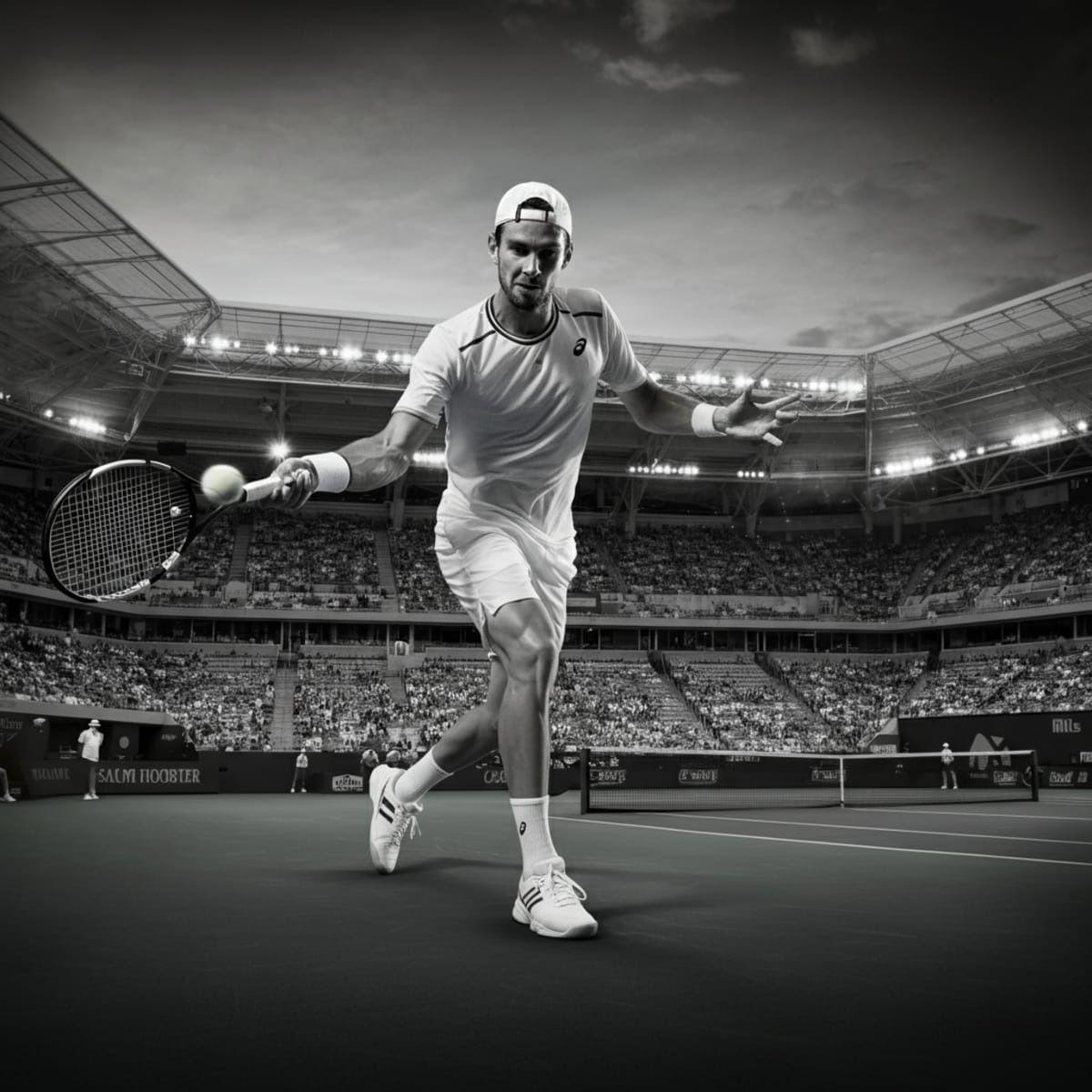
The unforgiving hard courts of Miami serve as the ultimate proving ground for a historic Sunday final.
The mental grind of the tour separates the contenders from the champions. We arrive at the Miami Open men's final, scheduled to start no earlier than 7pm GMT on Sunday 29 March. It represents a brutal collision of baseline resilience on the South Florida hard courts. Jannik Sinner, riding a wave of elite conditioning, stands on the precipice of history. Across the net is Jiri Lehecka, stepping into uncharted territory—his first-ever Masters 1000 final.
To reach Sunday's climax, Sinner dispatched third seed Alexander Zverev 6-3, 7-6 in the semi-finals. He absorbed the big German's heavy pace, redirected angles with punishing accuracy, and managed the critical break points with ice in his veins. Lehecka, meanwhile, fought past the dynamic Arthur Fils to book his ticket to the biggest match of his young career.
The Tactical Breakdown
How does Lehecka solve a puzzle he hasn't even taken a piece from yet? Sinner holds a flawless 3-0 head-to-head record against the Czech. More daunting: Sinner hasn't dropped a single set in those previous encounters.
Sinner’s game is built on suffocating court position. He hugs the baseline, taking the ball painfully early, constantly rushing his opponent's recovery steps. His heavy topspin off both wings dictates the match momentum. For Lehecka, the upcoming challenge is inherently geographic.
- Center-Court Command: If the Czech allows Sinner to control the center of the baseline, the geometry heavily favors the Italian.
- Disruptive Pace: Lehecka must flatten out his forehand down the line, forcing Sinner to defend on the run rather than swinging freely from a stationary stance.
- Net Approaches: Lehecka's net approach frequency requires a significant uptick. Staying rooted to the back of the court and trading neutral rallies with Sinner ensures a rapid exit.
Facing a break point against the current iteration of Jannik Sinner feels like trying to breathe underwater. Lehecka will need remarkably high first-serve percentages to protect his service games and keep the scoreboard pressure balanced.
The Bigger Picture
Sinner is chasing ghosts and legends this weekend. A victory would make him the first man since Roger Federer in 2017 to complete the elusive Sunshine Double—sweeping Indian Wells and Miami back-to-back. The physical and mental toll of winning these two hard-court behemoths in succession is immense. It requires peak fitness, unyielding psychological focus, and the rare ability to hit the reset button after every grueling match.
For Lehecka, this Florida run already marks a monumental career milestone. Reaching a Masters final elevates him into a new tier of tour contenders, drawing him closer to the elite circles occupied by peers like Carlos Alcaraz, Arthur Fils, and Jakub Mensik. Stepping onto the stadium court against a red-hot Sinner remains the ultimate litmus test of a player's mental fortitude. The Czech arrives as the heavy underdog, an open book against an opponent who knows exactly how to read his game. The question is whether he can draft a completely new chapter when the stadium lights turn on.
The Aces Tactical Panel
This report was curated and edited by Bhaskar Goel. Tactical analysis and technical insights were provided by our specialized panel of expert correspondents.
Julian Price
Senior Tactical Correspondent
Distinguished British academic and historian specializing in match momentum.
Elena Cruz
Director of Analytical Research
Data scientist specializing in court surface physics and movement patterns.
Marcus Thorne
Global Tour Insider
Veteran reporter with deep ties to the global ATP/WTA locker rooms since '98.
Arthur Vance
Technical Equipment Analyst
Former club player obsessed with technical specs, racket tension, and underdog grit.
Leo Sterling
High-Performance Consultant
Hard-nosed ex-trainer from Melbourne with a no-nonsense view on tour fitness.