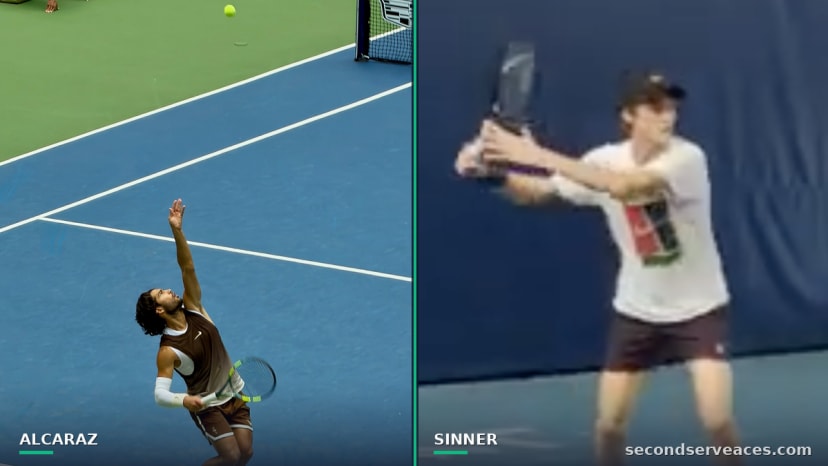
A Masterclass in Maintaining Momentum
There is a specific, cold stillness to Jannik Sinner’s game right now. While the rest of the ATP Tour scrambles to find solutions against his baseline barrage, Sinner remains an island of focus. His recent straight-sets clinical dismantling of Elmer Moller at the Madrid Open wasn't just a win; it was a statement of technical efficiency. By securing his 24th consecutive victory at the Masters 1000 level, he now sits firmly in third place on the all-time list, a feat that speaks to a level of physical discipline that is becoming increasingly rare.
Listen to the Second Serve Podcast
Get our daily AI-synthesized audio briefings and match reviews on the go.
This isn't about luck or favorable draws. It is the result of a machine-like dedication to the process. With Claudio Zimaglia anchoring his fitness team, Sinner has refined his movement on the clay to minimize unnecessary exertion, allowing him to peak when the point construction demands absolute precision. He isn't just hitting balls; he is dismantling the geometry of the court, piece by piece.
Looking ahead to his fourth-round clash against 19th seed Cameron Norrie, the focus shifts to adaptation. Norrie’s ability to grind and vary the pace will be the primary obstacle, but for Sinner, the plan remains static: control the baseline, limit the unforced errors, and dictate the tempo. The Wikipedia profile of this rising star is currently being rewritten in real-time, one Masters 1000 milestone after another.
The Absence of a Rival
The tour is a smaller place without Carlos Alcaraz. His withdrawal from the upcoming Italian Open and Roland Garros due to a right wrist issue has sent a ripple through the locker room. Sinner, ever the professional, has made no secret of his concern, acknowledging that the sport thrives when its biggest names are physically capable of colliding on the biggest stages.
Injury is the silent reaper of any tennis career. To see a talent like Alcaraz forced to step back serves as a stark reminder of the brutality of the clay-court season. It changes the dynamic of the tournament, leaving a void where a marquee rivalry was beginning to simmer. For those of us watching from the press box, it adds a layer of somber reality to the otherwise clinical dominance of the remaining field.
Sinner’s reaction to the news was tempered and respectful. There is no gloating here, only the recognition of a shared journey. They are two young men pushing the sport into a new era, and Sinner understands that his own evolution is mirrored by the health and progress of his peers. When the top players fall, the burden to deliver excellence shifts entirely to those left standing.
The Language of Ambition
Off the court, Sinner is expanding his world. He has made his intent to learn Spanish a public goal, a move that reflects his broader desire to connect with the global nature of his work. In a career defined by borders and travel, picking up a language is a metaphor for his mental state: he is constantly expanding his reach, refusing to be pigeonholed by his origins.
It is easy to forget that these athletes are students of the world. While the physical toll of tennis is heavy, the mental demand to balance media, recovery, and personal growth is arguably higher. Sinner’s interest in Spanish isn't just a hobby; it is a tactical choice to be present, engaged, and comfortable in the environments where he competes.
As the Madrid heat intensifies, expect to see him continue his methodical climb. He isn't worried about the noise surrounding his ranking or the pressure of his win streak. He is here to play, to recover, and to move on to the next match. That, more than any forehand, is why he is winning.
What Jannik Sinner Plays With
Head Speed MP 2024
Head Hawk Touch 1.25
Head Prime Tour (12-Pack)
Nike GP Challenge 1
Analyze Jannik Sinner vs. Elmer Moller
Predict tactical adjustments, momentum swings, and serve strategy options for this match-up using our AI simulator.
The Aces Tactical Panel
This report was curated and edited by Bhaskar Goel. Tactical analysis and technical insights were provided by our specialized panel of expert correspondents.
Julian Price
Senior Tactical Correspondent
Stuffy, pedantic British academic and historian specializing in match momentum and historical context.
Elena Cruz
Director of Analytical Research
Data scientist specializing in court surface physics and movement patterns.
Bhaskar
The Editor & Fan
Passionate tennis player and site editor bringing everyday amateur insights and relatable fan commentary.
Arthur Vance
Senior Existential Analyst
Deep, eccentric, and DFW-inspired. Models court metaphysics, kinetic beauty, and player psychology.
Leo Sterling
High-Performance Consultant
Hard-nosed ex-trainer from Melbourne with a no-nonsense view on tour fitness.