By Simon Croft
Listen to the Second Serve Podcast
Get our daily AI-synthesized audio briefings and match reviews on the go.
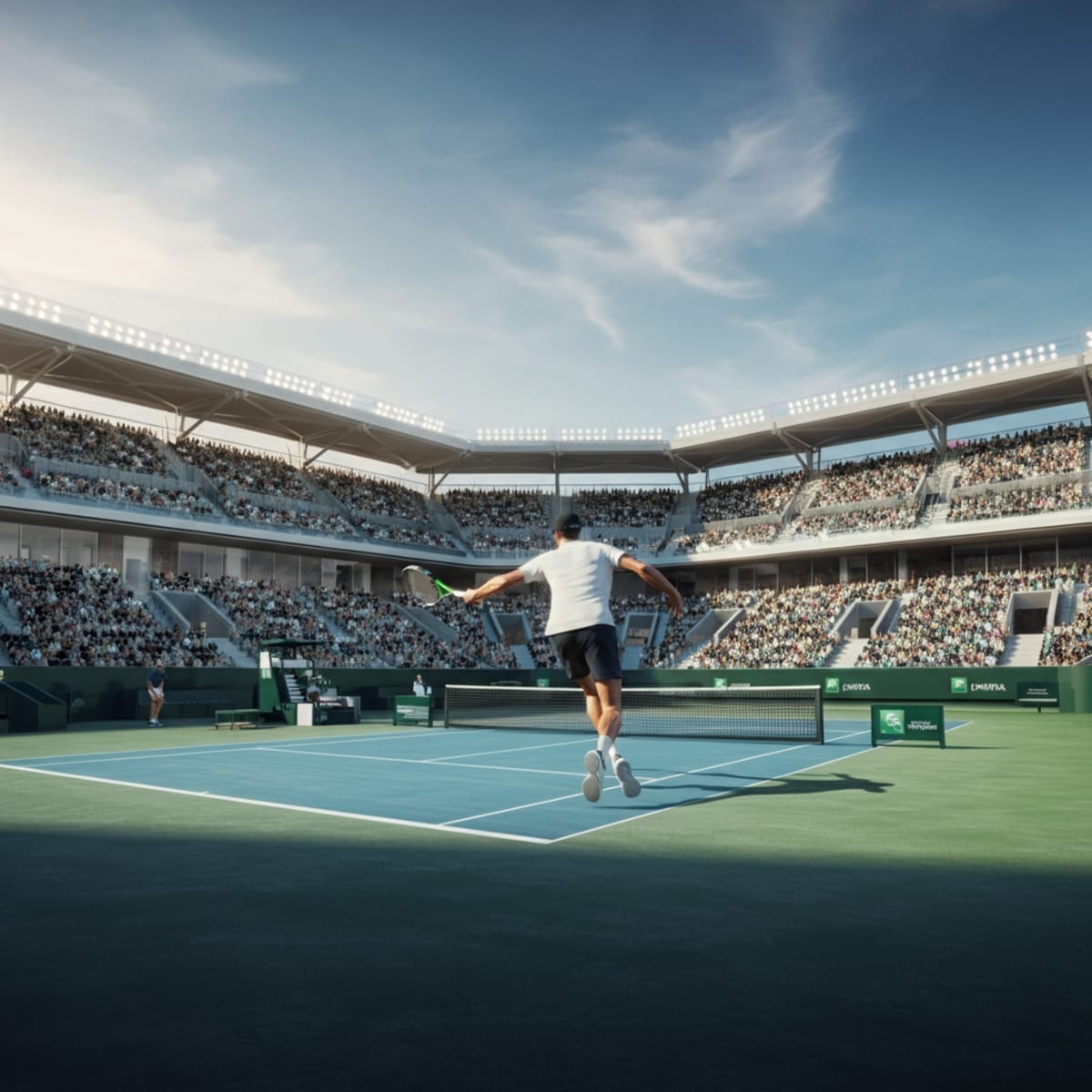
There is a distinct, resonant sound that a tennis ball makes when struck perfectly in the thin, dry air of the Coachella Valley. On March 15, that sound belonged exclusively to Jannik Sinner. Capturing the BNP Paribas Open title, the Italian phenom didn't just hoist another trophy in the desert; he completed a historic hardcourt set that fundamentally reshapes the current landscape of the ATP Tour.
For years, the tennis establishment has engaged in endless debates about the homogenization of surfaces and the shifting baseline physics required to succeed on them. Sinner’s victory at Indian Wells is the ultimate rebuttal to the game's traditionalists. He is not merely participating in the modern hardcourt era—he is actively monopolizing it. The intelligence data surrounding this latest triumph points to a fascinating, albeit staggering, conclusion: we are currently tracking a player on a legitimate trajectory to potentially become the greatest hardcourt player of all time.
To understand the gravity of that assertion, we must look beyond the gleaming crystal of the Indian Wells trophy and examine the underlying architectural shifts in professional tennis that Sinner has so brilliantly exploited.
The Tactical Breakdown
At the highest echelons of professional tennis, matches are rarely decided by sheer athleticism alone. They are won in the margins of court geometry, rally tolerance, and the ability to dictate match momentum. Jannik Sinner’s game is a marvel of modern biomechanical efficiency, designed specifically to dismantle opponents on hard surfaces.
Historically, players facing heavy topspin on high-bouncing hard courts—like the gritty Plexipave-style surfaces of Indian Wells—would retreat. They would concede ground to buy time. Sinner operates on a completely different set of tactical algorithms.
- Aggressive Court Positioning: Instead of dropping back, Sinner maintains a ruthlessly tight proximity to the baseline. By taking the ball exceptionally early, he robs his opponents of recovery time. This creates a suffocating pressure that forces uncharacteristic errors, particularly during high-stress moments.
- Neutralizing Break Point Pressure: When facing a break point, the instinct for most players is to rely on defensive rally tolerance. Sinner, conversely, utilizes a highly calibrated first serve to target the outer thirds of the service box, immediately opening the court for a linear, punishing plus-one forehand.
- Bilateral Power Generation: While many top-tier professionals possess a dominant wing, Sinner’s ability to inject sudden, overwhelming pace off both his forehand and backhand makes him nearly impossible to trap in a tactical corner. If an opponent tries to exploit his backhand, they are frequently met with a laser down the line that shifts the match momentum instantly.
The Mechanics of Time Theft
What truly separates the Italian from his peers on concrete and acrylic is his kinetic chain. Sinner employs a remarkably wide base. This lower-body stability allows him to absorb massive pace without losing his balance. When an opponent attempts to hit through him, Sinner effortlessly redirects that kinetic energy. It is a seamless transition from defense to offense, executed with a fluidity that masks the sheer violence of the ball strike. He is not just returning the ball; he is mathematically shrinking the court for the player across the net.
The Bigger Picture
The phrase "hardcourt GOAT" is hallowed ground. For decades, it was a title softly whispered in reverence to Pete Sampras, later firmly attached to Roger Federer, and ultimately claimed by the statistical behemoth that is Novak Djokovic. Suggesting that a 22-year-old is on a trajectory to eclipse those titans requires substantial empirical backing.
Yet, completing a historic hardcourt set—a feat achieved by conquering the sport's most prestigious and physically demanding hardcourt venues—is an undeniable indicator of a paradigm shift. The ATP Tour's schedule is heavily weighted toward hard courts, from the Australian summer through the North American swings and culminating in the indoor season. To dominate this specific surface ecosystem is to effectively control the lifeblood of the tour's ranking points.
We are witnessing the evolution of surface specialization. In the 1990s, hardcourt specialists relied heavily on the serve-and-volley to bypass the grit of the court. In the 2010s, the blueprint shifted toward elite defensive retrieval and counter-punching. Sinner represents the third wave: the aggressive baseliner who possesses the rally tolerance of a defensive stalwart but strikes with the terminal velocity of a first-strike attacker.
Redefining the Future of the ATP
This March 15th victory at the BNP Paribas Open solidifies a crucial narrative: Jannik Sinner has solved the hardcourt equation. The consistency he has established across varying speeds of hard courts—from the slick indoor surfaces of Europe to the high-bouncing, abrasive courts of the California desert—suggests that his game is surface-agnostic within the hardcourt family. He doesn't rely on specific conditions to win; his baseline methodology imposes its own conditions on the match.
As the tour presses forward, the burden of adaptation now falls squarely on the rest of the locker room. The traditional methods of dismantling a baseliner—hitting heavier topspin, altering slice trajectories, or dragging them into lateral footraces—have all proven ineffective against Sinner's suffocating baseline presence. Unless a new tactical blueprint is drafted by his rivals, the Italian’s march toward hardcourt immortality will continue unabated, one historic milestone at a time.
What Jannik Sinner Plays With
Head Speed MP 2024
Head Hawk Touch 1.25
Nike GP Challenge 1
Simulate Jannik Sinner Match Scenarios
Simulate high-pressure scenarios, score leverage points, and tactical responses for ATP and WTA players.
The Aces Tactical Panel
This report was curated and edited by Bhaskar Goel. Tactical analysis and technical insights were provided by our specialized panel of expert correspondents.
Julian Price
Senior Tactical Correspondent
Stuffy, pedantic British academic and historian specializing in match momentum and historical context.
Elena Cruz
Director of Analytical Research
Data scientist specializing in court surface physics and movement patterns.
Bhaskar
The Editor & Fan
Passionate tennis player and site editor bringing everyday amateur insights and relatable fan commentary.
Arthur Vance
Senior Existential Analyst
Deep, eccentric, and DFW-inspired. Models court metaphysics, kinetic beauty, and player psychology.
Leo Sterling
High-Performance Consultant
Hard-nosed ex-trainer from Melbourne with a no-nonsense view on tour fitness.