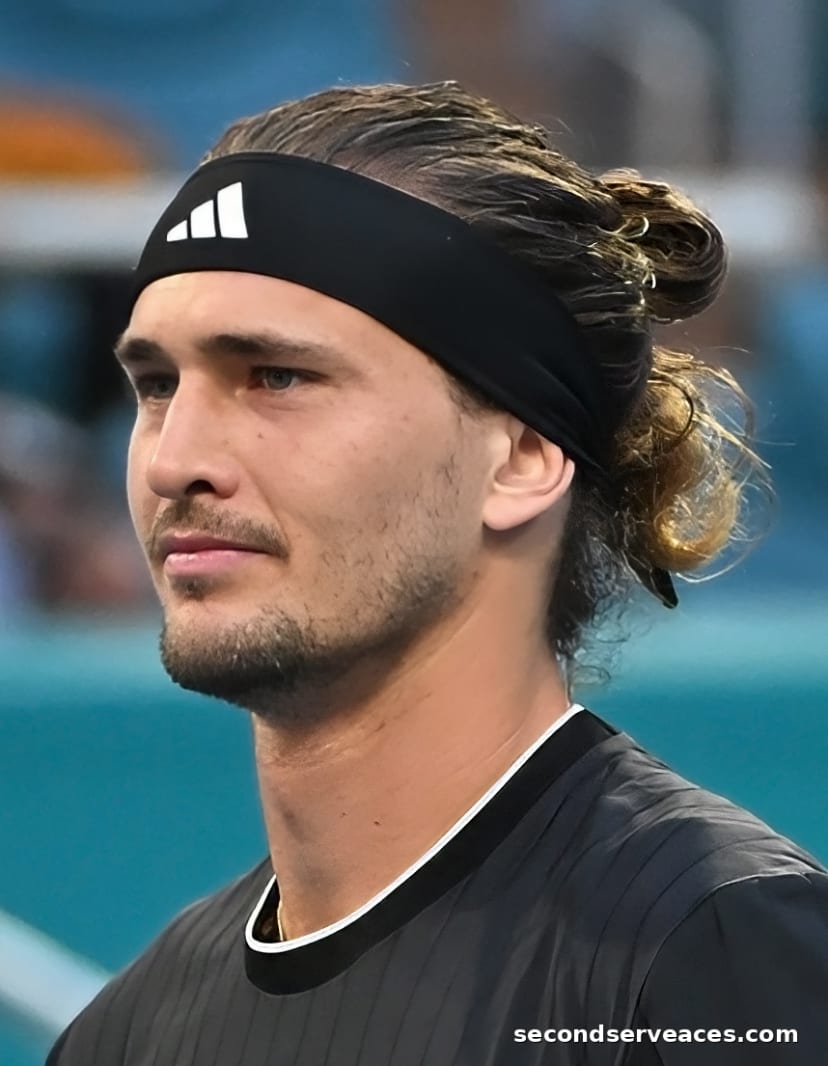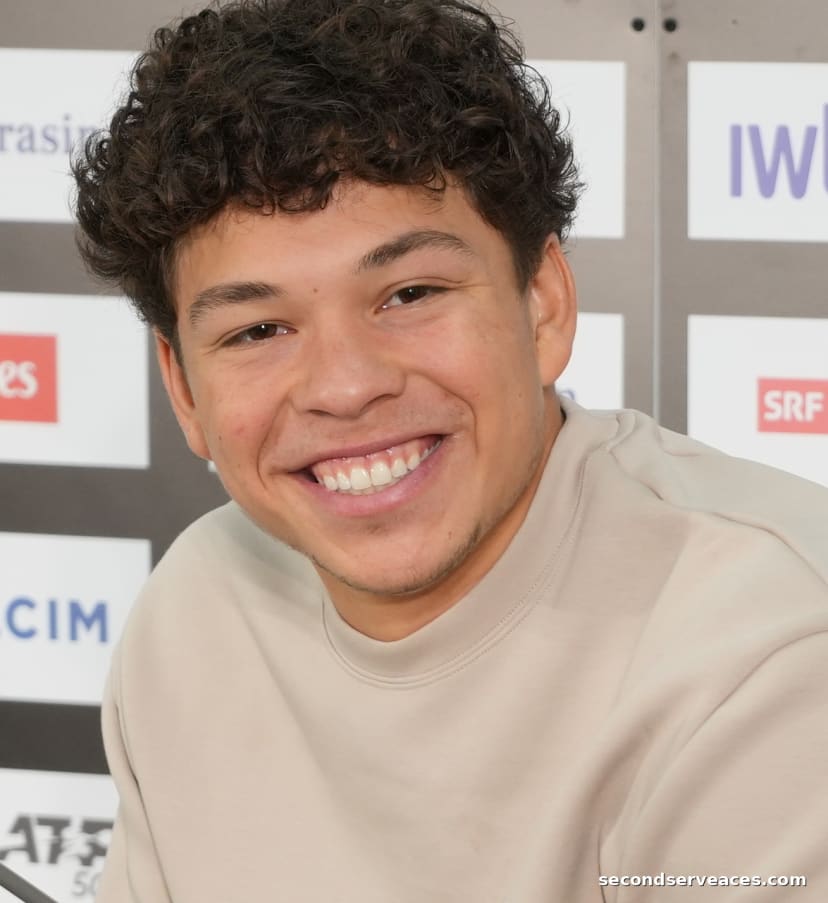
There is a specific kind of silence that descends upon the Indian Wells Tennis Garden when a paradigm shifts. It isn’t the silence of an empty stadium, but rather the breathless, collective intake of air from a crowd realizing they are witnessing tennis history. In an epic encounter that stretched well beyond the two-and-a-half-hour mark, British No. 1 Jack Draper authored a career-defining chapter, defeating Novak Djokovic 4-6, 6-4, 7-6 (5) to advance to the quarter-finals.
Listen to the Second Serve Podcast
Get our daily AI-synthesized audio briefings and match reviews on the go.
For Draper, this was not merely a victory; it was a resurrection. To beat Djokovic is a milestone for any player, but to do so in only your second ATP event back from a grueling eight-month absence due to an arm injury borders on the mythical. Throw in the fact that Draper is the defending champion in the desert, and you have a narrative ripe for the annals of structural ATP history.
The Anatomy of an Upset
Let’s frame the reality of what just occurred. The tour has spent over a decade existing under the heavy, oppressive shadow of the Big Three. Upsets happen, yes, but rarely do they occur under circumstances stacked so heavily against the victor. Here are the undeniable facts of the afternoon:
- The Scoreline: Jack Draper defeated Novak Djokovic 4-6, 6-4, 7-6 (5) in a grueling three-set marathon.
- The Milestone: This marks Draper's first-ever career victory over the Serbian legend.
- The Comeback: This tournament is only Draper's second ATP appearance following an eight-month layoff caused by an arm injury.
- The Defense: Draper keeps his remarkable title defense at Indian Wells alive, marching into the quarter-finals.
- The Endurance: The physical toll of the match exceeded two-and-a-half hours of punishing desert hard-court tennis.
The Tactical Breakdown
To overcome Novak Djokovic on a slow-to-medium hard court requires more than just baseline ball-striking; it demands a tactical masterclass and the ability to dictate match momentum when the margins are razor-thin. Djokovic is the premier problem solver in the history of the sport, a supercomputer capable of downloading an opponent's weaknesses and exploiting them relentlessly.
Draper, however, brings a unique architectural advantage to the court: his left-handedness combined with a violently heavy topspin forehand. Historically, Djokovic has feasted on predictable pace, using his world-class elasticity to absorb and redirect energy. But the Indian Wells surface—notoriously gritty and high-bouncing—amplifies heavy spin. By utilizing his lefty slider out wide on the Ad court, Draper was able to routinely pull Djokovic off his base, opening up the vast expanse of the deuce side for a punishing first strike.
When the match reached its crucible moments, particularly in the third-set tiebreak, the dynamic of the modern break point came to the forefront. Djokovic thrives on extending rallies in pressure situations, testing his opponent's lungs and lactic acid threshold. Draper’s counter-tactic was rooted in controlled aggression. Rather than playing into Djokovic’s looping, suffocating web, Draper flattened out his backhand down the line—a low-percentage shot, but a mathematically necessary one to disrupt Djokovic's lateral rhythm. Surviving a two-and-a-half-hour physical war with an arm that recently sidelined him for eight months suggests that Draper and his coaching team have not just rehabilitated his body, but completely optimized his biomechanical efficiency.
The Bigger Picture
The institutional fabric of men's tennis is changing. For years, we have discussed the 'changing of the guard' as a theoretical future state. Draper’s victory is a concrete data point proving we have arrived. Defending a Masters 1000 title is one of the most arduous tasks in the sport; doing so immediately after a catastrophic, eight-month injury layoff is practically unheard of.
In the broader context of the ATP Tour, this result exposes a fascinating vulnerability in the old world order. The tour is increasingly dominated by a younger, larger, more explosive prototype of player—athletes who can generate absurd amounts of pace and spin from defensive positions. Draper fits this modern mold perfectly. His ability to hit through the heavy desert air and command the baseline against the game's greatest returner signals that he is not just a participant in the top tier of men's tennis, but a foundational pillar of its next decade.
For Djokovic, this loss will sting, but it also reflects the brutal, unforgiving nature of the contemporary schedule. The margins at the top have shrunk. No longer can the titans of the game play at 80% capacity in the early rounds of a Masters 1000 event and expect to coast into the weekend. The depth of the tour—spearheaded by talents like Draper—demands absolute perfection.
As the sun sets over the Coachella Valley, Jack Draper’s title defense breathes onward. He has slain the dragon. Now, the question that permeates the locker room is simply this: If an eight-month layoff couldn’t break him, and Novak Djokovic couldn’t stop him, who can?
What Novak Djokovic Plays With
Head Speed Pro
Luxilon ALU Power 125
Asics Court FF 3 Novak
Analyze Jack Draper vs. Novak Djokovic
Predict tactical adjustments, momentum swings, and serve strategy options for this match-up using our AI simulator.
The Aces Tactical Panel
This report was curated and edited by Bhaskar Goel. Tactical analysis and technical insights were provided by our specialized panel of expert correspondents.
Julian Price
Senior Tactical Correspondent
Stuffy, pedantic British academic and historian specializing in match momentum and historical context.
Elena Cruz
Director of Analytical Research
Data scientist specializing in court surface physics and movement patterns.
Bhaskar
The Editor & Fan
Passionate tennis player and site editor bringing everyday amateur insights and relatable fan commentary.
Arthur Vance
Senior Existential Analyst
Deep, eccentric, and DFW-inspired. Models court metaphysics, kinetic beauty, and player psychology.
Leo Sterling
High-Performance Consultant
Hard-nosed ex-trainer from Melbourne with a no-nonsense view on tour fitness.